
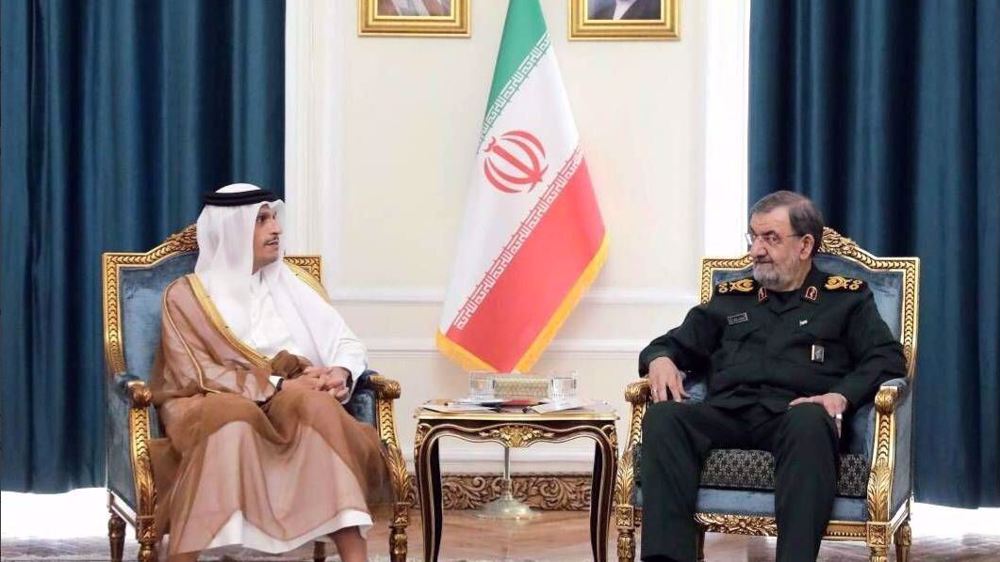
Iran has warned the United States that any new military aggression against the Islamic Republic would draw a forceful response against American military and economic interests, while stressing that Washington must take concrete steps before Tehran reopens the Strait of Hormuz.
Iran’s Secretary of the Supreme National Security Council (SNSC) Major General Mohsen Rezaei issued the warning during a meeting with Qatari Prime Minister Sheikh Mohammed bin Abdulrahman Al Thani in Tehran on Thursday.
“We do not trust the US, and they have repeatedly betrayed diplomacy and negotiations,” Rezaei remarked.
“If the United States commits any evil against Iran, we will inflict such affliction on its military and economic interests that it will be recorded in history,” he warned.
Rezaei also stressed that Washington must first take practical steps to meet Iran’s conditions before Tehran considers reopening the Strait of Hormuz.
Al Thani, for his part, expressed gratitude for Iran’s assistance to Qatar during difficult circumstances and reaffirmed the strong ties between the two sides.
“We have never had any hesitation in cooperating with the Islamic Republic of Iran,” the Qatari prime minister stated.
He also expressed Doha’s readiness to continue cooperating with Tehran amid the sensitive regional situation, saying Qatar was acting out of a sense of responsibility.
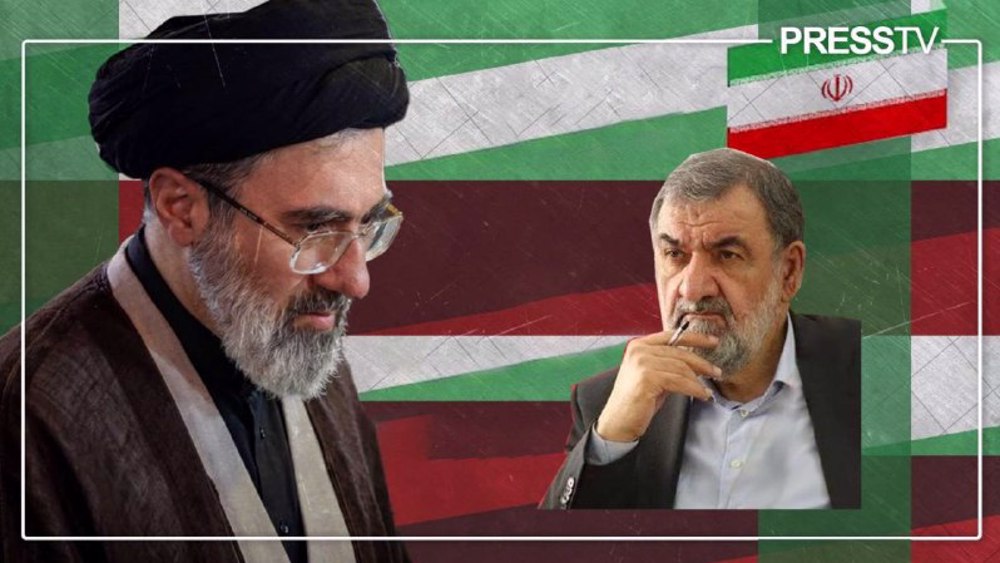
Al Thani also met with Iranian Parliament Speaker Mohammad Baqer Qalibaf, who warned that any US attempt to impose an economic blockade on Iran would fail and Washington must honor its commitments under the Islamabad Memorandum of Understanding (MoU).
Qatar was among the mediators involved in the agreement, Qalibaf noted, stating that the Trump administration makes "wrong decisions based on false information and, through such miscalculations, is not only wasting America’s financial, military and human resources and the region’s future, but also targeting the interests of the Iranian people.”
He described the proposed economic blockade as another hostile US measure, stressing that the Iranian people would ultimately reclaim their rights with dignity.
On the Strait of Hormuz, Al Thani welcomed an understanding reached between Iran and Oman on maritime traffic, saying the diplomatic process could contribute to restoring stability in the region.
He also reaffirmed Qatar’s commitment to continuing diplomatic efforts aimed at easing tensions and advancing solutions to the regional crisis.
In a separate meeting with Iranian Foreign Minister Abbas Araghchi, Al Thani discussed bilateral ties, regional developments and Qatar’s mediation efforts.
Iranian Foreign Ministry spokesman Esmaeil Baghaei described the visit as part of “continuing Iran-Qatar engagement aimed at expanding bilateral ties and strengthening peace and security in the region.”
He said Qatar had played an active role in recent months in efforts to prevent further escalation following the US-Israeli military aggression against Iran, adding that Tehran and Doha would discuss ways to continue the Qatari mediation initiative.
The latest round of US-Israeli aggression began on February 28, when the US and Israel launched large-scale strikes against the Islamic Republic.
Iran responded with daily waves of missile and drone strikes targeting US and Israeli assets in the region.
Tehran and Washington later signed the Islamabad MoU on June 17 in an effort to end the aggression. However, repeated US attacks on southern Iran violated the agreement.
Iran has since suspended contact with the US, maintaining that dialogue will not resume until the US ends its military attacks and hostile rhetoric.
 This makes it easy to access the Press TV website