
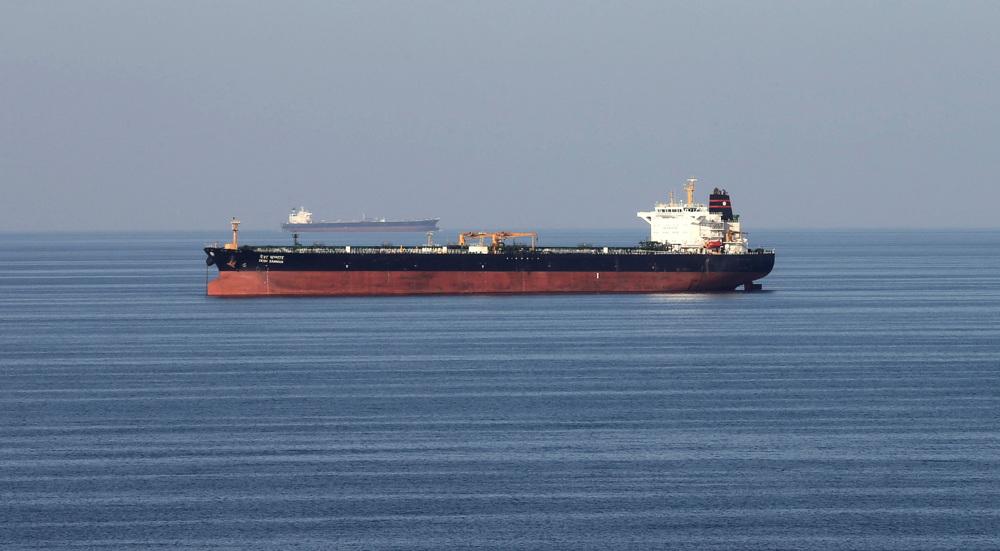
The United States Department of Justice is reportedly exploring the revival of an obscure, 19th-century maritime legal framework known as "Prize Courts" to accelerate the seizure of Iranian oil tankers and their cargo.
According to a Thursday report by Bloomberg, the move is designed to bypass the lengthy procedures of modern civil forfeiture, allowing US authorities to confiscate sanctioned vessels and their contents with unprecedented speed during ongoing hostilities.
Proponents of the strategy argue that such measures are a necessary component of modern economic warfare.
Aaron Reitz, a Houston-based attorney collaborating with the DOJ, stated that national security imperatives may soon require the US military to directly intercept vessels or cargo aiding adversarial states.
If enacted, the revenue generated from confiscated Iranian crude would be funneled directly into the US Treasury.
Despite the strategic appeal, legal experts warn that dusting off a statute largely untouched since the Spanish-American War of 1898 presents formidable modern challenges.
Allison Luzwick, a maritime law specialist, cautioned that the vast evolution of international maritime law and the laws of armed conflict over the past century makes the application of this archaic framework highly problematic.
Russia dismisses the US president’s latest threat of economic war against Iran, saying Tehran has demonstrated its ability to withstand Trump's so-called “maximum pressure” policy.
— Highlights (@highlightsnews1) August 21, 2026
Follow: https://t.co/Kl2Pka5XU9 pic.twitter.com/mwfOjtdxDV
"This is a historical area of law that remains untested in the modern era," she noted, adding that contemporary legal standards would heavily complicate any proceedings initiated under the Prize Act.
Furthermore, the initiative could spark domestic legal battles. Commercial shipping entities and families claiming to be victims of Iranian-backed activities could file competing lawsuits, demanding a share of the funds generated from the seized assets.
Any such cases would likely be funneled through the US Southern District Court of Texas in Houston, a major hub for the American energy sector.
The China factor
Beyond domestic legal hurdles, the strategy carries severe geopolitical risks, particularly concerning Beijing.
Jill Goldenziel, a law professor at the US National Defense University, warned that weaponizing prize law could set a dangerous international precedent.
Goldenziel pointed out that it "could also open the door for China to apply prize law against the United States," creating a highly volatile scenario for American and neutral shipping in any future conflict with Beijing.
This legal maneuvering coincides with the recent launch of "Operation Economic Outcast" by US Treasury Secretary Scott Bessent.

The initiative claims it will completely isolate Tehran from the global financial system by severing its remaining revenue streams.
However, the campaign conspicuously avoids any direct confrontation with the People’s Republic of China.
Beijing remains the primary purchaser of Iranian crude and the essential financial conduit that allows Tehran to receive payments while circumventing American secondary sanctions.
As highlighted by the Wall Street Journal, Washington’s reluctance to aggressively challenge China’s role stems from deep-seated fears of triggering a broader economic or diplomatic retaliation.
 This makes it easy to access the Press TV website