
By Ali Zeraatpisheh
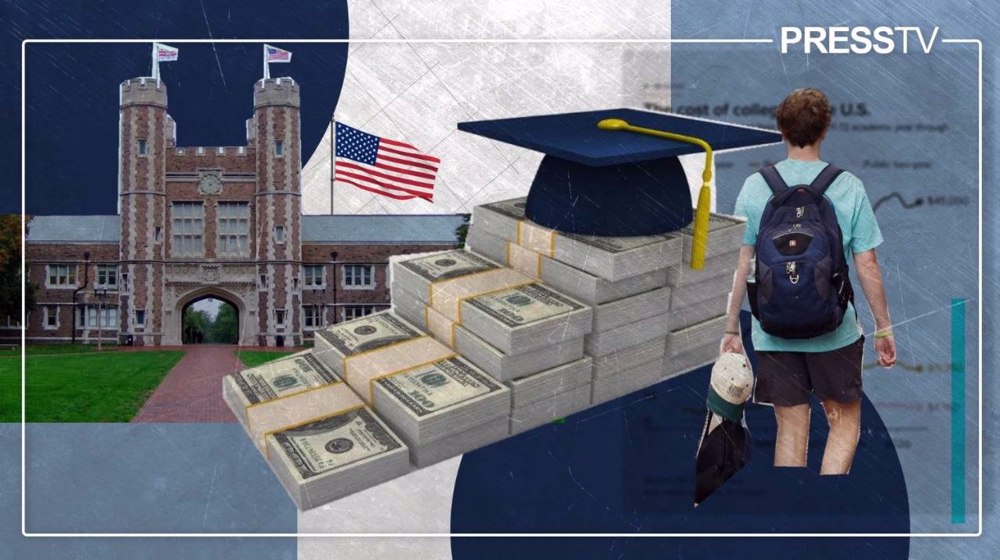
The six-figure college bill is no longer a warning about what may happen in America. It is already a reality. For the 2026–27 academic year, a growing number of American universities are approaching – or surpassing – $100,000 in total annual costs once tuition, fees, housing, food and other expenses are included.
According to the College Board, the average annual student budget at a private nonprofit four-year institution reached $65,470 in 2025-26. At public four-year institutions, the average was $30,990 for in-state students and $50,920 for out-of-state students.
Over four years, the cost of a degree can therefore run into the hundreds of thousands of dollars. For many families, college is no longer simply an investment in the future. It is a major financial burden, one that can shape their choices, strain their finances and affect nearly every part of their lives.
How are American families paying the bill?
Families rely on multiple sources of money to cover college costs, including current income, savings, scholarships, grants and loans. Financial aid can reduce the bill, but it does not eliminate the burden.
And the cost continues to rise. Average published tuition and fees at private nonprofit four-year institutions increased from $43,250 in 2024–25 to $45,000 in 2025–26, a 4 percent increase. At public four-year institutions, average in-state tuition rose 2.9 percent to $11,950.
The differences between states are striking as well. In 2025-26, average in-state tuition and fees at public four-year institutions ranged from $6,360 in Florida to $18,090 in Vermont.
For families, these numbers can mean years of saving followed by years of financial pressure. Parents may cut back on retirement savings or spend money that had been set aside for other needs. Students, meanwhile, may take on debt before they have even begun their careers.
The cost of college can therefore extend far beyond graduation, shifting the financial burden into the future – and, in some cases, onto the next generation.
Why have the government’s promises failed?
The federal government has built a vast financial system around higher education, but it has not solved the underlying problem of affordability.
For the 2026-27 session, the maximum Pell Grant – the main federal grant for low-income undergraduate students – is $7,395. That assistance can be significant for families who receive it, but it remains small compared with the cost of attending many US colleges. At an in-state public four-year university, for example, it covers only about 24 percent of the average $30,990 annual student budget.
Washington has also made federal borrowing a central part of the higher-education system. Millions of Americans rely on federal student loans to bridge the gap between what their families can afford and what colleges charge.
This has created a difficult contradiction. For decades, the federal government has expanded financial aid and access to loans even as college prices have continued to rise. Rather than bringing the underlying cost down, policymakers have often focused on giving families more ways to finance it.
The result is a system in which the price of college keeps rising while the government provides increasingly more ways to pay for it.
What is the status of the debt trap?
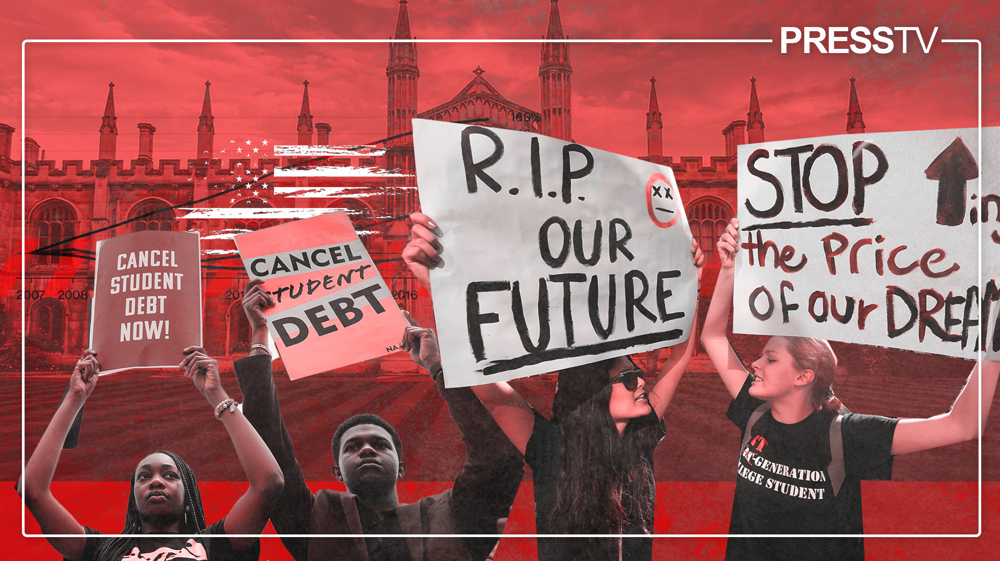
The financial consequences can extend for years after graduation. According to the College Board, bachelor’s degree recipients who borrowed to finance their education had an average of $29,560 in student debt in 2023-24. Many borrowers leave college owing considerably more.
The federal government has now begun changing the rules. The One Big Beautiful Bill Act, signed by Donald Trump on July 4, 2025, made major changes to the federal student-aid system.
Beginning July 1, 2026, new limits will be imposed on federal borrowing for graduate and professional programs, while Grad PLUS loans will be eliminated for new borrowers.
The changes could help curb excessive borrowing. But they also create another problem: students who can no longer borrow enough through federal programs will still face the same college bills. Limiting access to loans does not make tuition, housing or food any cheaper.
For students with no other way to pay, the choice may simply become a different one: borrow from private lenders, attend a less expensive college or give up the degree they wanted.
How are the middle-class squeezed by it?
The burden can be especially heavy for middle-class families. They may earn too much to qualify for the largest grants, but not enough to comfortably cover the full cost of college.
A family with a moderate income may have to pay thousands of dollars a year while also saving for retirement, paying a mortgage and supporting other children.
The average annual student budget at a private four-year institution was $65,470 in 2025-26. Over four years, that amounts to more than $260,000, before accounting for future price increases.
For many households, that is an extraordinary financial burden.
The result is a system in which access to higher education depends not only on academic ability, but also on a family’s financial position. A student may have the grades, ability and ambition to succeed, yet still face a serious barrier if the family cannot afford the price of admission.
The idea that education is a pathway into the middle class becomes harder to sustain when reaching that pathway requires substantial family wealth.
How has education become a business in US?
The cost of college extends far beyond tuition. Housing, food, transportation, books, fees and other expenses can add tens of thousands of dollars to the final bill.
That is why some colleges can now approach or exceed $100,000 a year, even when tuition alone is well below that figure.
Federal financing has helped sustain this system. Students can borrow money they otherwise might never be able to obtain. That borrowing can open doors that would otherwise remain closed, but it also allows families to take on costs that would be impossible to pay out of pocket.
Washington is now moving in the opposite direction. New federal rules are imposing tighter limits on graduate and professional student loans and restricting Parent PLUS borrowing.
Those changes may slow the growth of federal student debt. But they do not answer the fundamental question: Why have American families been forced to borrow so much money to pay for education in the first place?

Does the American dream come with a price tag?
There is nothing inherently wrong with paying for an education that delivers real value. A college degree can still significantly improve a person’s financial prospects.
The College Board reported in 2026 that full-time workers with four-year degrees earned about 60 percent more than workers with only high school diplomas.
But that benefit does not erase the cost of earning the degree.
US government has allowed the price of higher education to rise while relying heavily on grants and loans to make the system work. Families are left to manage the consequences.
The government can change loan limits, increase or reduce grants and rewrite repayment rules. But unless it confronts the underlying cost of higher education, it will continue to address the effects rather than the cause.
The $100,000 college bill is therefore more than a shocking figure, according to education activists. It is a sign of a system in which families are being asked to shoulder an increasingly large share of the cost of higher education themselves.
The promise that education can lead to a better life remains. What is becoming less certain is whether ordinary Americans will be able to afford the price of reaching it.
 This makes it easy to access the Press TV website