
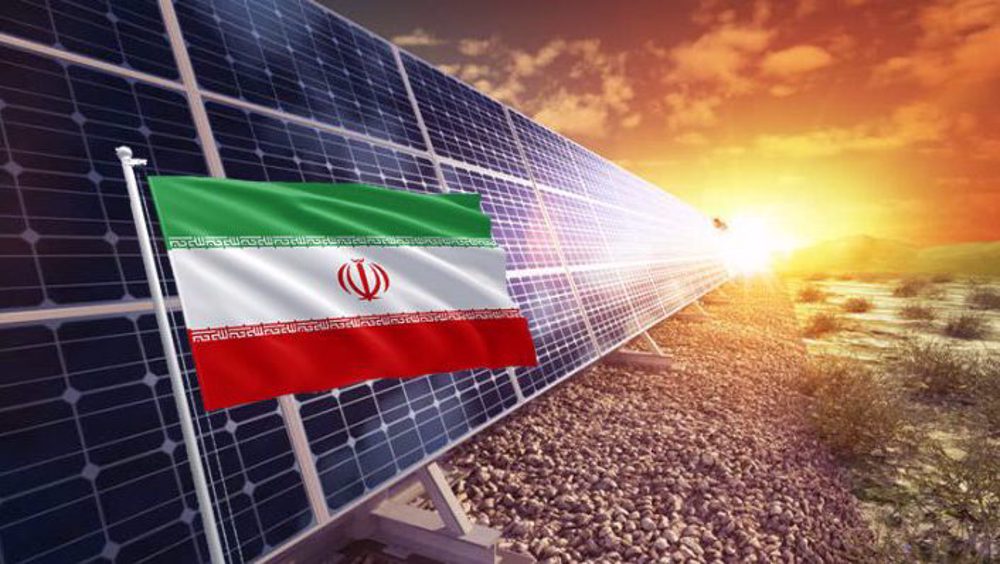
Iran last week began work on a 5,000-megawatt solar power project in Isfahan Province that, if completed at its announced capacity, would place the city among the world’s largest centers of solar electricity generation.
The project would add an extraordinary volume of generation to a country whose electricity system has struggled to keep pace with demand, underscoring the scale of Iran’s push to expand renewable power.
For decades, Iran’s electricity system has been built around an apparent advantage few countries possess in such abundance, with enormous reserves of natural gas supplemented by oil, hydropower and a heavily subsidized domestic energy system.
Iran generated about 399 terawatt-hours of electricity in 2025, with roughly 95 percent coming from fossil fuels. Natural gas remained the dominant source, accounting for about 90 percent of generation.
Yet despite rising gas production, domestic supply has struggled to meet power-sector demand during summer peaks, forcing power plants to turn to diesel and fuel oil when gas becomes insufficient.
The problem is therefore not simply that Iran needs more power plants. The country's electricity system has become increasingly dependent on a fuel whose competing uses are multiplying, while demand for electricity continues to rise.
Iran possesses some of the world's largest natural-gas reserves, but gas is required not only by power plants but also by households, industry, petrochemicals and other parts of the economy.
The result is a competition for the same fuel. When gas supply becomes insufficient, power generators can compensate by burning liquid fuels. But this is an expensive and environmentally damaging solution.
This helps explain why renewable energy is becoming an economic necessity rather than simply an environmental preference and that is what gives the planned 5,000-MW solar plant in Isfahan its broader significance.
Every unit of solar generation therefore has a potential second value beyond the electricity it produces. It can free gas for another use, reduce the need to burn liquid fuels during shortages and diversify the country's electricity supply.
Iran is exceptionally well positioned for solar generation. Research published in 2026 found that central and eastern parts of the country contain some of Iran's most suitable areas for photovoltaic development.
This month, Iran’s renewable power capacity surpassed 5,800 megawatts, according to SATBA, the Renewable Energy and Energy Efficiency Organization, up from roughly 1,250 megawatts two years earlier.
The increase of more than four times marks a sharp acceleration in a sector that for years had struggled to translate the country’s vast renewable potential into operating capacity.
Iran has vast solar potential, extensive open land and a chronic electricity shortage, yet its power system remains overwhelmingly dependent on fossil fuels.
The 5,000-megawatt Isfahan project therefore represents something larger than an individual generating facility. At its announced capacity, it would amount to nearly the entire renewable power capacity Iran has accumulated to date.
According to officials, the project will involve about $2.8 billion in private-sector investment and occupy roughly 6,000 hectares in Kuhpayeh. Construction is planned in three packages in two blocks of 2,000 MW and a third of 1,000 MW.
The Parliamentary Research Center has projected a 13,640-megawatt shortfall between electricity supply and peak summer demand in 2026, with available generating capacity of about 68,420 megawatts.
A completed 5,000-MW solar installation would therefore represent about 37 percent of that nominal capacity gap.
Also, the timing of solar may be unusually valuable. Much of Iran’s most severe shortage occurs during the hot months, precisely when solar irradiation is strongest. This creates an important natural complement between the country's problem and its solar resource.
The choice of Isfahan is particularly revealing. The city has strong solar conditions, with more than 300 sunny days a year. But other parts of Iran, particularly the southeast and parts of the central and eastern regions, possess equal or greater solar potential.
A recent national assessment identifies particularly strong solar resources in areas including Hormozgan and Sistan and Baluchestan.
Isfahan is one of Iran's major industrial centers. Its industrial economy creates substantial electricity demand, while its location in central Iran places it within the country's broader interconnected power system.
In other words, Isfahan is not simply a place where sunlight is available. It is a place where electricity demand is already concentrated. That distinction can make a major difference in the economics of a solar project.
A remote region with exceptional irradiation may produce electricity cheaply but require substantial transmission investment to transport it to major consumers.
A somewhat less optimal solar location can become economically attractive if it is closer to industrial loads and existing transmission infrastructure.
The location becomes even more significant when viewed through Iran's industrial structure.
Industry is one of the country's largest energy-consuming sectors. When factories lose electricity, they lose output. Industrial interruptions can reduce production, disrupt supply chains and impose costs that are not captured by the price of the electricity itself.
The Isfahan project can therefore be understood as part of a broader attempt to protect productive capacity from the country's electricity deficit.
Meanwhile, Iran's hydropower system has traditionally provided an important contribution to electricity generation, but hydropower output is vulnerable to drought and declining water availability.
Thermal power generation, hydropower and water availability are interconnected. At the same time, Iran's major industrial regions face growing water stress.
Solar PV offers a way to add electricity generation without requiring the same dependence on water resources associated with hydropower.
For Iran, renewable electricity is increasingly about energy security under conditions of water scarcity.
The 5,000-MW Isfahan project should therefore be viewed against a national renewable expansion rather than as an isolated provincial undertaking.
Iran has already been pursuing a broader expansion of renewable capacity, with projects being developed in numerous provinces.
The country has moved from a very small renewable base toward multi-gigawatt projects, while the government has set increasingly ambitious targets for solar and other renewables.
Iran's traditional energy advantage was based on abundant hydrocarbons. Its emerging energy strategy is increasingly based on using those hydrocarbons more selectively while exploiting an enormous domestic renewable resource.
Instead of using gas as the overwhelming source of electricity generation, Iran could increasingly reserve it for industries and applications where it is more difficult to replace, while solar and wind supply a growing share of electricity.
 This makes it easy to access the Press TV website