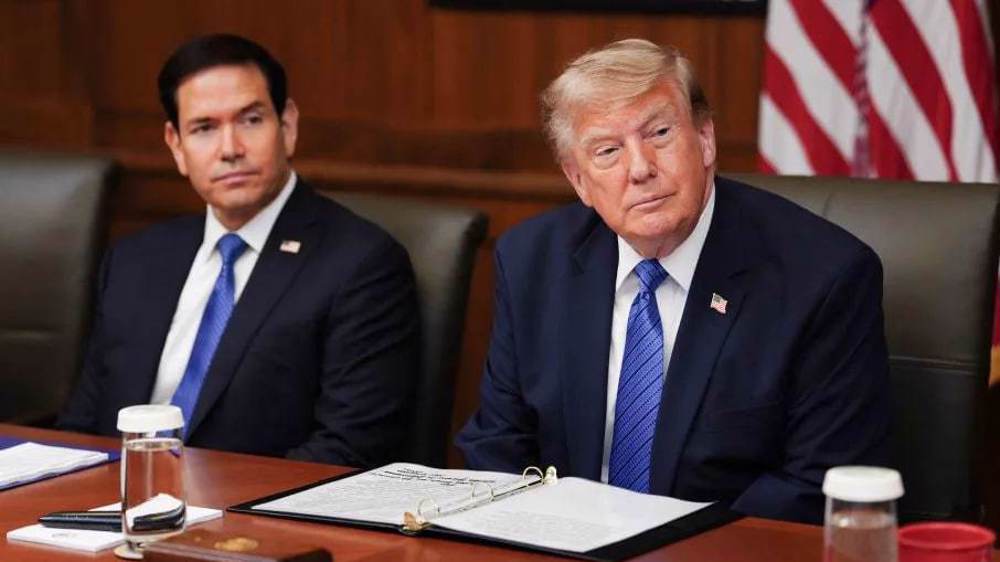
A US judge has struck down a Trump administration policy suspending immigrant visa processing for nationals of 75 countries, ruling that the ban was “contrary to law.”
In a ruling issued Friday in the Southern District of New York, Judge Jeannette Vargas said the policy was “patently unlawful” and that Secretary of State Marco Rubio had exceeded his statutory authority in ordering the suspension.
Vargas said the policy conflicted with federal immigration law, which limits the secretary of state’s authority over consular officers’ decisions on immigrant visa applications.
“The Policy, which categorically prohibits the issuance of immigrant visas based upon the nationality of the applicant, represents a direct abrogation of this statutory scheme,” she wrote.
The policy, which took effect in January, suspended the processing of immigrant visas for nationals of 75 countries, including Afghanistan, Brazil, Egypt, Iran, Iraq, Nigeria, Somalia, Thailand and Yemen.
The suspension halted permanent-residence visas for people joining family members or taking jobs in the US, but did not apply to nonimmigrant visas such as tourist or student visas.
The State Department had defended the measure, arguing that applicants from the designated countries were at high risk of becoming a “public charge” and of relying on US federal, state, or local government resources.
Vargas, however, ruled that consular officers had been improperly ordered to refuse immigrant visas solely based on an applicant’s nationality, even when the applicant otherwise qualified for a visa.
The ruling vacates visa denials issued solely under the policy.
Vargas issued the ruling in a lawsuit brought by immigrant rights groups, including the Catholic Legal Immigration Network and African Communities Together, as well as immigrant visa applicants and US citizens sponsoring family members from the affected countries.
The decision represents another legal setback for President Donald Trump’s broader immigration crackdown, which the administration has defended as necessary to strengthen national security and tighten controls over immigration.
According to the Center for Constitutional Rights, the visa freeze was among a series of immigration restrictions introduced by the administration in rapid succession, following a broader travel ban covering 39 countries and a pause on diversity visa issuance.
Trump campaigned on a pledge to carry out mass deportations and has since returned to the White House with a series of measures aimed at accelerating deportations and reducing immigration into the United States.
The Trump administration’s immigration policies have also affected the families of US military personnel. An Associated Press investigation found earlier this month that more than 50 parents and spouses of active-duty US service members have been detained since Trump returned to office, with at least six deported.
At least eight immediate family members of US service members remain in federal immigration custody, according to the investigation, which noted that the government has not systematically tracked such cases.
For decades, military families had generally benefited from protections shielding the parents and spouses of service members from deportation.
The reversal has raised concerns among experts that the detentions could undermine military readiness by leaving service members without emotional support or childcare and, in some cases, delaying deployments or forcing them to take leave.
The issue has also drawn public backlash, with several cases involving detained spouses prompting intervention by Homeland Security Secretary Markwayne Mullin to secure their release.
Rights groups have meanwhile criticized the administration’s broader immigration measures, raising concerns over due process, discrimination and racial profiling.
 This makes it easy to access the Press TV website