

Israel has confirmed carrying out airstrikes on a Syrian military air base, despite no threat being posed to it by the extremist-led authorities in Damascus, which fought against Tel Aviv’s adversaries for years.
Israeli officials had earlier told Washington that the strikes were intended to block a Turkish military buildup at the base, Axios reported, citing US and Israeli officials.
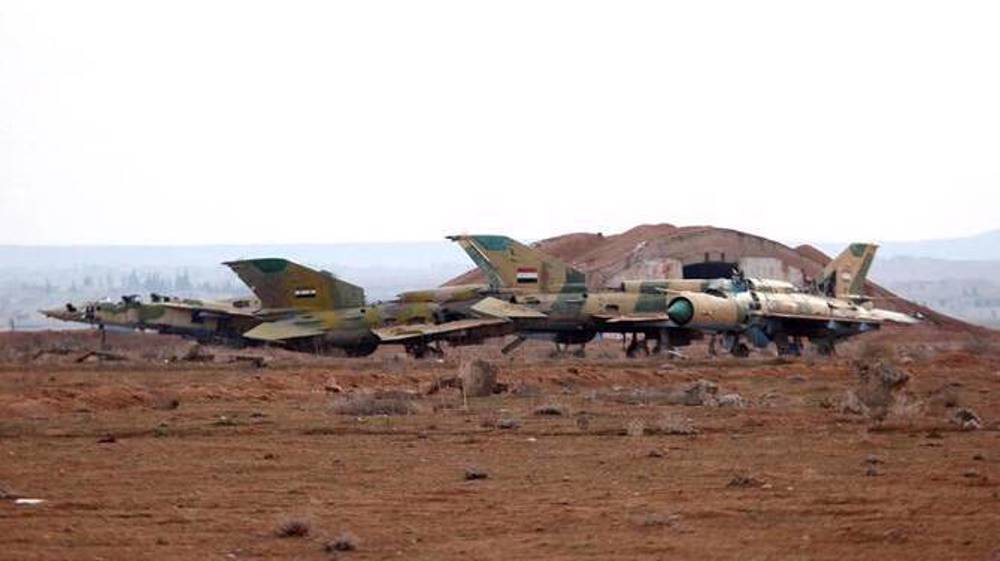
The strikes targeted the Abu al-Duhur military airport in Syria’s northwestern Idlib province on Tuesday, with Syrian media reporting that eight attacks hit the facility.
Israel later acknowledged responsibility, saying it had acted after Syria allegedly moved toward allowing Turkish troops to deploy at the base.
In a statement, Israeli prime minister Benjamin Netanyahu’s office said Israel and Syria had agreed to “a status quo in security matters,” claiming that a Turkish deployment at the facility would have violated that understanding.
Turkey rejected the Israeli justification, describing the “frivolous allegations” as an attempt to legitimize “unlawful” attacks against Syria’s sovereignty and territorial integrity.
An unnamed Turkish official also denied to Axios that the country was preparing to establish a military presence at Abu al-Duhur, saying there had been no Turkish forces at the site.
“There was no Turkish presence at the airbase. Israel is inventing pretexts to bomb neighboring countries and destabilize the region,” the official said.
In reaction to the strikes, US Special Envoy for Syria Tom Barrack praised Damascus and its forces for posing no threat to Israel, as Damascus itself has repeatedly confirmed.
He posted on X that the government of self-appointed Syrian president Abu Muhammad al-Jolani “has neither adopted a predatory posture nor maintained proxy forces. It has, in fact, repeatedly indicated a preference for de-escalation with Israel.”
According to an Israeli security source cited by Israeli broadcaster Kan, Israel had shared intelligence with Washington regarding alleged Turkish plans for the base and launched the strikes only after diplomatic efforts with Syria failed.
Barrack later said Washington was working to establish a deconfliction mechanism involving Israel, Turkey and Syria to prevent similar incidents.
The attack comes not long after Damascus’s forces were said to have been given access to Washington’s “final” base in Syria, after a several-month process of US withdrawal from the country following years of occupation.
It remains unclear to what extent Washington has withdrawn. Iran recently announced operations targeting US forces and assets in Syria.
The US for years trained extremist forces at its al-Tanf Base in Syria. It also armed and financed several other factions in Syria throughout the war, including the Noureddine al-Zinki movement, responsible for the beheading of a 12-year-old boy as well as other war crimes.
Many of these Al-Qaeda- and Daesh-linked groups, including the Noureddine al-Zinki movement, are now brigades in the new Syrian army established after the fall of former president Assad’s government.
The army has killed thousands of Alawites, Druze, and Kurdish civilians since the formation of the new Syrian state – but have not targeted Israeli troops which illegally occupied the country after Assad’s departure.
Damascus has openly declared that it holds no hostility toward Israel and is not looking for confrontation with it. Despite this, Israel continues to attack the country and expand its occupation of Syrian territory.
Since Assad left Syria, Israeli occupation forces have practically encircled Damascus.

Major Syrian military capabilities belonging to the former army were destroyed by Israeli attacks in the first days after Jolanis government took power.
Jolani, the new president, was formerly an al-Qaeda chief who served as deputy to late Daesh leader Abu Bakr al-Baghdadi.
The Syrian president is directly responsible for brutal suicide bombings against civilians and holy sites in Syria, Lebanon, and Iraq.
Turkey has emerged as one of main regional allies of former al‐Qaeda and Daesh deputy Jolani, who now leads the current HTS‐led regime in Damascus, providing military and diplomatic support.
The Abu al-Duhur base, located about 70 kilometers east of the Turkish border, has been largely out of service since 2013 and changed hands several times during Syria’s conflict.
Syrian state media said Tuesday’s strikes hit the runway and storage facilities, with no casualties reported.
 This makes it easy to access the Press TV website