
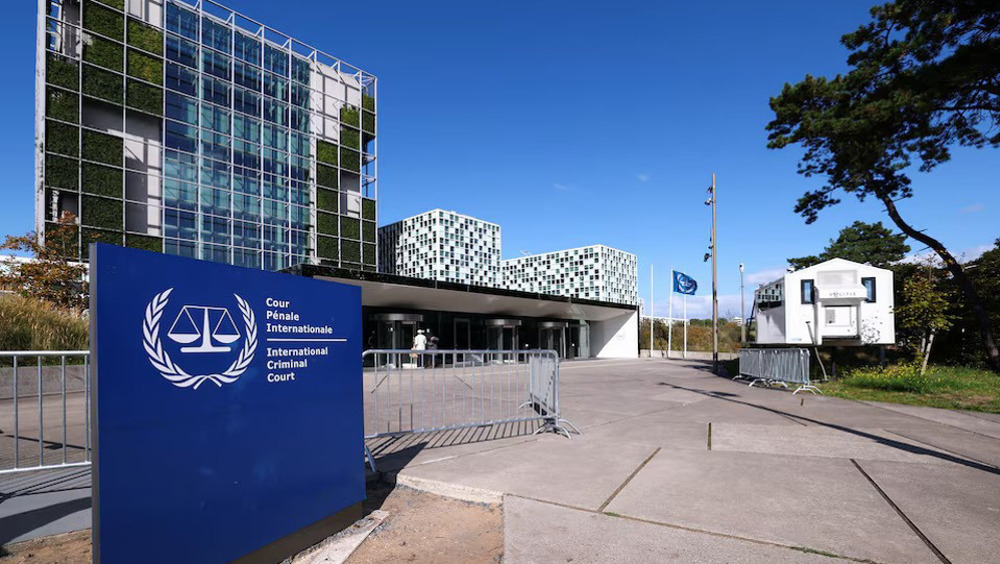
The United States has imposed sanctions on International Criminal Court (ICC) President Tomoko Akane and senior trial lawyer Abdoulaye Seye, Secretary of State Marco Rubio says, in the latest escalation of the Trump administration's campaign against the Hague-based court.
On Tuesday, Rubio said Akane, a Japanese judge, and Seye, a Senegalese national, were sanctioned under a Trump executive order issued last year authorizing measures against ICC officials.
“These individuals have directly engaged in efforts by the ICC to investigate, arrest, detain, or prosecute” officials whose respective regimes have not “consented to ICC jurisdiction,” Rubio said.
The ICC condemned the measures, saying they threatened the rule of law.
“When judicial actors are threatened for applying the law, it is the international legal order itself that is placed at risk,” the court said.
Seye is a senior trial attorney on the prosecution team that sought an arrest warrant for Israeli prime minister Benjamin Netanyahu and has been nominated for election as an ICC judge.
The sanctions freeze any US assets held by the targeted individuals and effectively cut them off from the US financial system. The US Treasury also issued a general license allowing transactions involving Akane and Seye to be wound down through September 17.
Akane warned in December that US sanctions would “rapidly undermine the court's operations in all situations and cases, and jeopardize its very existence.”
Washington imposed targeted sanctions on several ICC prosecutors and judges last year, citing the court's arrest warrants for Netanyahu and former Israeli minister for military affairs Yoav Gallant, as well as its previous investigation into US troops in Afghanistan.
Rubio said last month that Washington would intensify efforts to undermine the ICC, including a diplomatic campaign to persuade other countries to leave the institution. At least five countries have already done so.
Three ICC judges sued Trump and his administration in June, arguing that the sanctions were unlawful. Advocacy groups have separately filed lawsuits challenging the US campaign.
The sanctions follow the July removal of ICC Chief Prosecutor Karim Khan after two-thirds of the court’s members voted to dismiss him amid allegations of “sexual misconduct,” which Khan denied.
✍🏻 Viewpoint - Karim Khan’s ouster tied to Netanyahu arrest warrant lays bare Western manipulation of ICC
— Press TV 🔻 (@PressTV) July 28, 2026
By Iqbal Jassathttps://t.co/pEOzRkjfiQ
ICC members claimed the proceedings against Khan “are not related to the conduct of investigations or proceedings before the court and are without prejudice to the independence of the International Criminal Court.”
Separately, Israeli media have reported that Israeli foreign minister Gideon Saar had led a diplomatic effort to secure Khan's removal. Israeli journalist Guy Azriel, citing an unnamed Israeli official, wrote, “According to the official, Saar oversaw a dedicated task force and employed intensive diplomatic efforts aimed at securing Khan's removal.”
After Khan's removal, Saar called the arrest warrants against Netanyahu and Gallant “politicized and outrageous.”
 This makes it easy to access the Press TV website