By Humaira Ahad
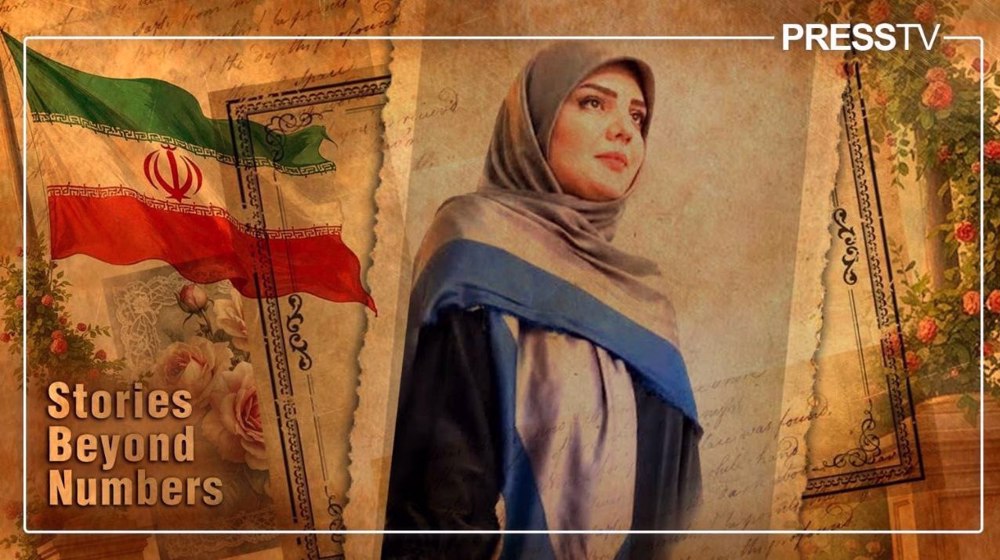
For ten days after Mahsa Taheri was martyred in a US-Israeli attack on Tehran, her family could not be certain that the remains recovered from the seventh floor of the residential building were hers.
The 32-year-old woman was among the Iranian scientists killed during the Ramadan War, the unprovoked and illegal joint US-Israeli aggression against Iran from February 28 to April 8, 2026.
The devastation wrought by the strikes was so immense that her remains were unrecognisable to those who knew her best. It was only through a DNA test, using a sample from her father, that her identity was finally confirmed, ten days after her martyrdom.
Taheri's story was one thread in a far larger tapestry of loss. Abbas Masjedi Arani, head of Iran’s Legal Medicine Organization, said that 3,519 people were killed during the 40-day war, including 3,002 men and 517 women. The toll included 270 schoolchildren and 38 children under the age of five, as well as a three-day-old infant and an unborn baby.
For Taheri’s family, however, the figures were distilled into the irreplaceable loss of their beloved daughter. After the 12-day imposed war last June, Taheri’s mother did not see her daughter again. When the DNA test finally confirmed her identity, her remains were returned to the family.
Among the belongings she left behind was a metal missile component bearing an inscription: “This missile component is for testing the radar-absorbing and heat-resistant layer. It is the first material developed by Mahsa Taheri and is more complete than its American counterpart.”
She also left behind a small, two-sided doll – one side smiling, the other sad. The young missile scientist would turn the smiling face toward her family when she was happy, and the sad face forward when she was upset or missing someone.
The doll belonged to the private world of a woman whose professional life was shaped by chemistry, physics, university teaching and specialized research.
"Iranian scientists are WORKING HARDER than they did before."
— Press TV 🔻 (@PressTV) May 3, 2026
The wife of Iranian nuclear scientist Hossein Zaki — who lost her husband, daughter, and mother in a US–Israeli strike — says the PATH WILL CONTINUE despite the terror attacks.
Follow https://t.co/B3zXG73Jym pic.twitter.com/3qSVbwN89U
Scientist, daughter, sister and academic
Born in Arak in central Iran in 1993, Taheri earned her bachelor's degree there before pursuing a master's in Zanjan. She later moved to Tehran for her PhD at Tarbiat Modares University, where she balanced university teaching with specialised research in missile technology.
Her academic achievements were evident in the certificates and plaques collected over the years. However, at home, Taheri did not fit neatly into the image of the austere scientist absorbed entirely in books and laboratories.
Her room was simple, with pink curtains, an old wooden table and dolls placed around it. She had many of them and, according to her family, would give each one a name.
The wooden table had a practical purpose beyond her studies; it was also where she prayed. Taheri had suffered from a knee problem and had undergone surgery for a mass during childhood.
“Because she could not stand while praying, she would sit on a simple chair by the table, drape herself in a long black-and-white chador, and pray there,” her brother told a Persian-language news website.
Another side of her life also emerges in the recollections of those close to her, such as her family.
“Like many young women of her generation, she listened to music. A few years earlier, she had a different style of dress and was even considering migration,” her family said.
That possibility had been serious. Taheri had received invitations from foreign countries, including Norway, and had planned to migrate partly to "provide a better life for her family."
Her brother says that, during the final two or three years of her life, her priorities began to change. She became increasingly devoted to her scientific work in Iran, while her family noticed a deepening attachment to her country and to the martyrs.
There was no single event that the family identifies as the moment when her plans changed. Instead, they describe a gradual shift from a young woman who had once considered building a life abroad to someone increasingly committed to her work in Iran.
✍️ Viewpoint - ‘My first home is now a ruin': Pasteur scientist’s daughter on bombing of iconic Iranian medical research center
— Press TV 🔻 (@PressTV) April 5, 2026
By Sepideh Noursalehihttps://t.co/qbUx0uK2ab pic.twitter.com/aFvyhDVUCV
“The hijab she adopted during those years was something she had arrived at herself,” her brother added, referring to her personal lifestyle choices.
The family also recalls her growing connection with the martyrs who offered supreme sacrifices for the country. “Some time before her death, Mahsa apparently selected the place where she wanted to be buried at Behesht-e Zahra cemetery in Arak,” he said.
He remembers the earlier version of his sister vividly. His recollections are filled with the ordinary humor of siblings, rather than the formal language often used to describe a scientist.
“As much as Mahsa studied, I didn’t study,” he said. “Sometimes Mahsa would joke and say, ‘I got your diploma for you too!’ And honestly, if it weren’t for her, I would have had a whole lot of failed subjects.”
Week before US-Israeli attack, an accident
About a week before her death, Taheri was going to “Kahf al-Shuhada,” the Cave of the Martyrs in northern Tehran's Velenjek area. On the way, the car she was travelling in was involved in an accident and overturned. However, the young missile scientist miraculously survived.
According to her brother, she later told him that even her chador had not become dusty in the accident.
“I realized that martyrdom really was Mahsa’s destiny,” he said. “Otherwise, there was only a gap of one week between dying in the accident and being martyred.”
About a week later, Taheri was martyred in a targeted attack carried out by the US and Israel on Tehran during the unprovoked and illegal war against the country.
The young scientist’s family has since donated her scientific notes, personal belongings and academic memorabilia to the Sacred Defense Museum in her home province.
12 members of the family of Iranian scientist Sedighi Saber were killed in a terrorist attack carried out early Tuesday morning by the Zionist regime on their home in Astaneh Ashrafieh.
— Press TV 🔻 (@PressTV) June 26, 2025
Follow: https://t.co/B3zXG73Jym pic.twitter.com/JKa6FZNwvZ
Her father said the family could have kept her belongings at home, but chose instead to give them to the museum so that her work would remain accessible to others.
“Mahsa belonged to Iran and to the lofty ideals of the Islamic Revolution,” he said.
“Today, we entrusted her belongings to the museum not simply to keep them on a shelf, but so that everyone would know that our security today is the result of the pure blood that has been shed in the pursuit of the country’s dignity.”
Among the items is the same metal component from her research, still bearing the inscription about the radar-absorbing and heat-resistant material she developed.
There are certificates from the years she spent studying in Arak, Zanjan and Tehran. And also the small doll with two faces, one smiling and one sad, which Mahsa used to tell her family how she was feeling, all of which are now part of the collection being assembled in her memory.
 This makes it easy to access the Press TV website