IRGC says air defense deliveries uninterrupted as downed US-Israeli drones, fighter jet unveiled
A senior officer of Iran’s Islamic Revolution Guards Corps (IRGC) Aerospace Force says production and delivery of the country’s air defense systems have continued without interruption following the 40-day US-Israeli war of aggression.
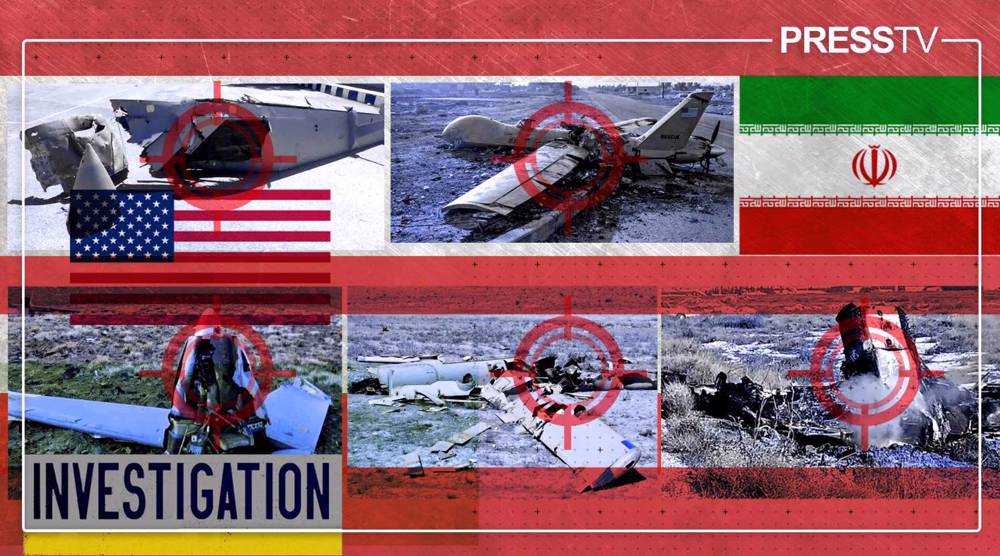
The senior Aerospace Force officer made the remarks in an interview with the Islamic Republic of Iran Broadcasting (IRIB), recorded at one of the IRGC’s underground bases and aired Friday. For the first time, parts of the equipment recovered from US and Israeli drones and a fighter jet intercepted by Iran's indigenous defense systems during the war were displayed during the interview.
Large sections of several US and Israeli drones, including the MQ-9 Reaper, Hermes 900 and Hermes 450, and technical equipment from an MQ-9 and the US F-15 fighter jet, were shown in the report.
The officer also confirmed the delivery of new air defense equipment following the US-Israeli war, particularly developments after the ceasefire between Tehran and Washington in June.
Images of US-Israeli drones and fighter jets brought down by the IRGC Aerospace Force’s new air defense system.
— Press TV 🔻 (@PressTV) August 14, 2026
Follow: https://t.co/oa9JV4ikYQ pic.twitter.com/enOPTDgq0K
“Thanks to the measures taken before the war, more than 85 percent of the production infrastructure for air defense systems manufactured by the Aerospace Force’s Self-Sufficiency Jihad Organization was preserved,” he said.
“Fortunately, there was no disruption in the production or delivery of air defense systems,” he added.
“The production rate of some of the equipment and missiles that were effective during the war has increased compared with before the start of the third imposed war,” he said, referring to the US-Israeli war of aggression on Iran since February 28.
He added that deliveries to operational units had also increased compared with the period before the war.
"The pilot had only enough time to eject"
— Press TV 🔻 (@PressTV) August 14, 2026
Iran showcases wreckage of US F-15 fighter jet, details how it was intercepted
Follow Press TV on Telegram: https://t.co/GHI09iA8ru pic.twitter.com/X9Gv0RzEQn
'Outside classic routine': Iranian missile strikes US F-15
The officer pointed to an American F-15 fighter jet which was hit by an Iranian missile on April 3 during an operation carried out by the IRGC Aerospace Force’s air defense units.
“Yes, this fighter was hit by a new air defense system and missile, using a purely Iranian tactic — a combination of equipment and tactics that managed to overcome the enemy’s technological edge,” he said.
He said the pilot realized moments before the missile reached the aircraft that he had only enough time to eject and had no opportunity to use any of the aircraft’s countermeasures against air defenses.
“This means a new air defense system that is outside the classic routine,” the officer said.
He also referred to the interception of a US MQ-9 Reaper drone bearing serial number 261, saying this type of drone weighed 5 tons and was 20 meters long.
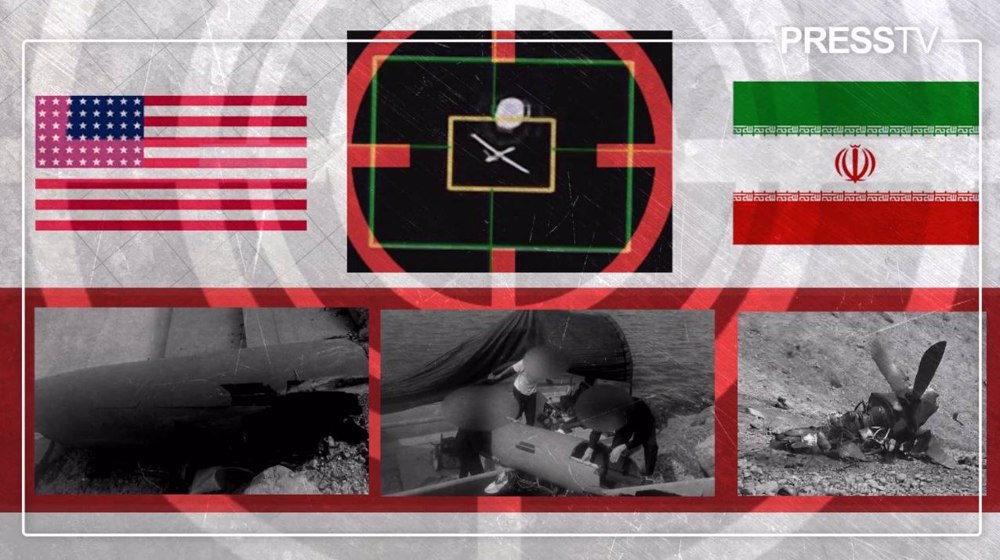
The drone was a large, multipurpose aircraft capable of carrying out both reconnaissance and combat missions, he said.
“One of the main issues through which we were able to inflict defeat on the enemy was bringing down these types of drones,” the officer said.
Starlink modems
The officer also provided details about the use of Starlink modems during the war.
“These modems increased the speed of data transmission for the enemy,” he said, adding that they came in several models and were used to provide connectivity and communications capabilities to drones.
However, he stressed that none of the drones targeted by Iran during the 12-day US-Israeli war were equipped with Starlink systems. He was referring to the war that the US and Israeli launched against Iran in June 2025.
He said that once the drones were hit, their missions — including operations targeting Iran’s tactical and military facilities — were effectively disrupted.
According to the officer, 171 airborne targets were hit during the 40-day war, including 10 manned aircraft. A large number of drones and cruise missiles were also hit, he said.
The unjustified US-Israeli aggression on Iran began on February 28. In response, the Iranian Armed Forces targeted sensitive and strategic American and Israeli targets throughout the region and restricted transit through the Strait of Hormuz.
However, forty days later, on April 8, the enemies were forced to accept a ceasefire amid Iran’s brave resistance and successful retaliatory operations.
On June 17, Tehran and Washington signed the Pakistan-brokered Memorandum of Understanding (MoU) to end all hostilities and prepare for further negotiations.
However, Washington violated all provisions of the understanding, prompting Iran to deliver a firm response.

New front will open if Iran is attacked again, Leader’s advisor warns

Iran, resistance forces to deliver ‘devastating’ response to any threat: Top cmdr.

From ‘How Will This End For Iran’ to ‘When America Walks Away’: A tale of two Economist covers



Israeli attacks kill six Palestinians in Gaza as ceasefire violations mount
Iran warns regional states of Israel’s malicious intents following reports of Netanyahu UAE visit
VIDEO | IRGC letter to American people
Army spox: Saudi Arabia launches over 30 airstrikes across Yemen in 24 hours
VIDEO | News Review: Israel settlement expansion
Israel violates Gaza ceasefire over 5,100 times, kills 1,421 Palestinians: Gaza Media Office
VIDEO | Russia holds events under title of Iran’s Culture Week
Republicans distancing themselves from Trump ahead of US midterms


 PressTV NEWSLETTER
now
PressTV NEWSLETTER
now
 This makes it easy to access the Press TV website
