Iran’s new military command and strategic shift toward offensive deterrence, mobilization and integrated warfare
By Press TV Strategic Analysis Desk
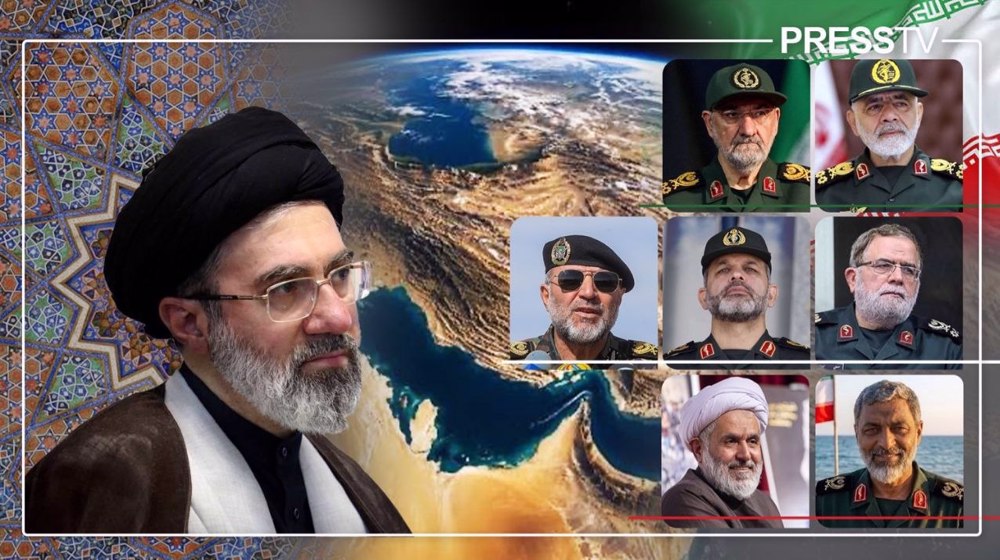
In a series of decrees issued on Sunday and Monday, the Leader of the Islamic Revolution, Ayatollah Seyyed Mojtaba Khamenei, restructured the command hierarchy of Iran's armed forces with new top-level appointments amid continued enemy aggression.
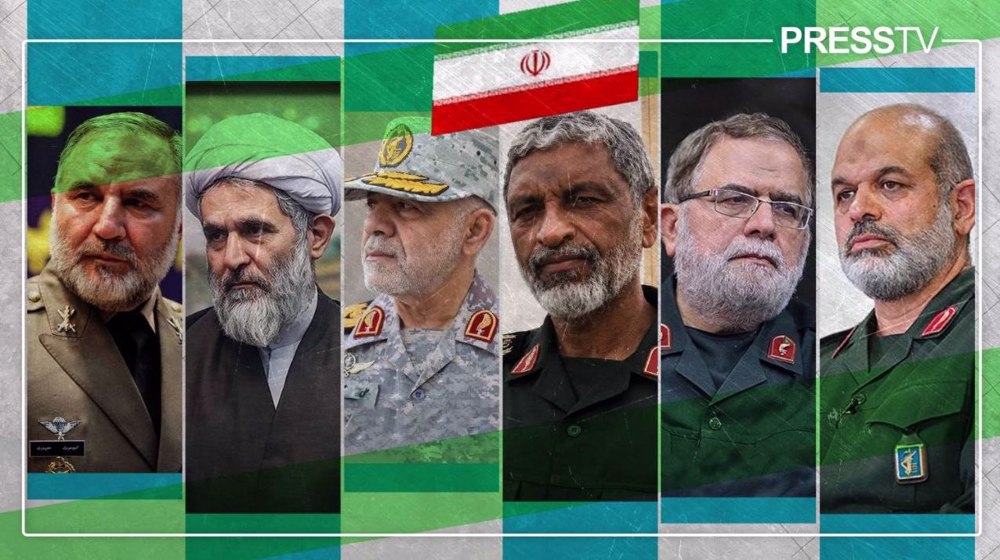
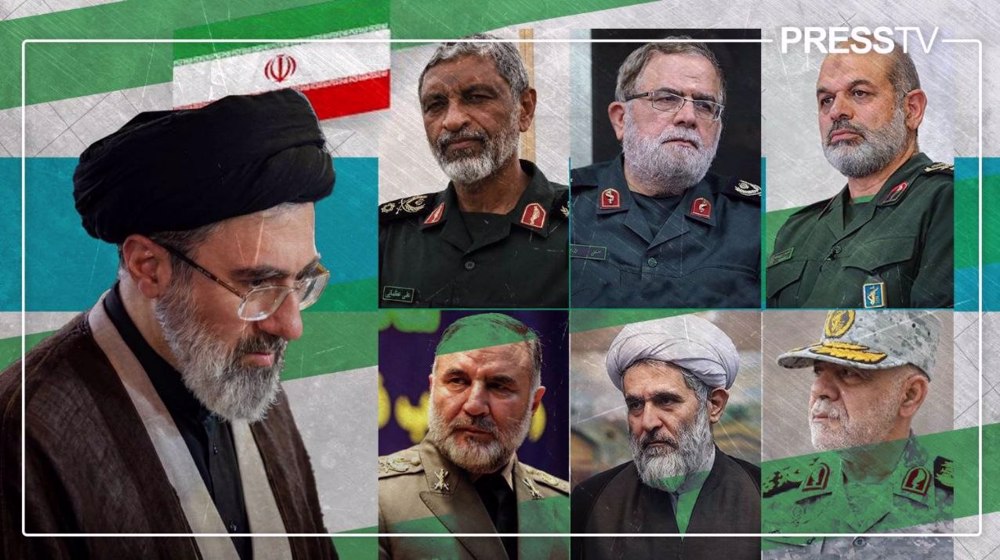
These appointments, including that of the Secretary of the Supreme National Security Council, Chief of the General Staff, the Commander-in-Chief of the Islamic Revolution Guards Corps (IRGC), their respective deputies, the IRGC Navy commander, and the head of the Basij Organization, come months after the 40-day US-Israeli war against the Islamic Republic.
The appointments, when examined collectively, reveal five interlocking priorities that define the Leader's vision for Iran's security establishment: defensive and offensive deterrence, unity of the military command, popular mobilization, spiritual-moral fortification, institutional synergy, and the material well-being of service members.
Each appointment carries specific mandates tailored to the unique responsibilities of the position, yet all converge toward a singular objective: transforming Iran's armed forces into a more robust, technologically sophisticated and ideologically strong force that is capable of confronting both conventional and hybrid threats posed by enemies.
Supreme National Security Council: A critical institution
The SNSC, established under Article 176 of the Iranian Constitution, serves as the highest decision-making body on national security matters. Its responsibilities include formulating defense and foreign policy, coordinating security institutions, and mobilizing resources to confront internal and external threats.
The Leader's representative on this council ensures that all deliberations and decisions remain aligned with the Leader's strategic vision, serving as the direct conduit between the Commander-in-Chief and the council's diverse membership, which includes the President, military commanders, and intelligence officials.
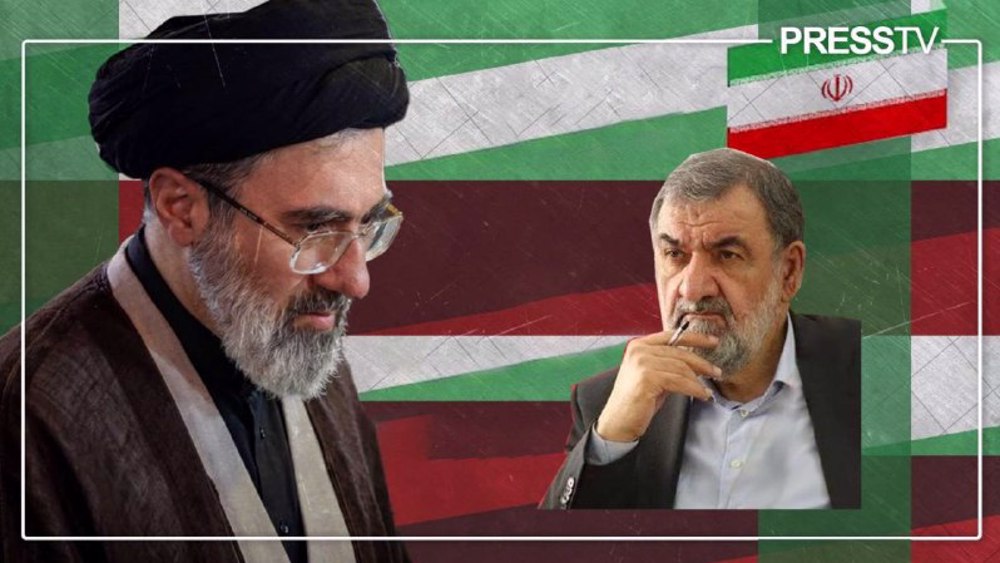
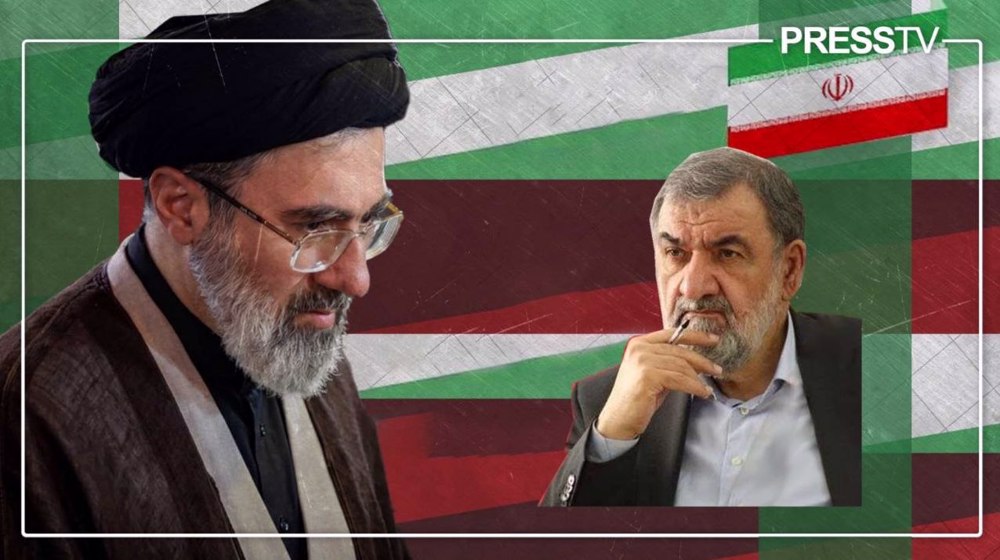
The decree issued by the Leader on Sunday described Rezaei as "among the pioneers of the glorious eight-year period of the Sacred Defense," signaling the emphasis on battlefield experience, strategic vision and revolutionary credentials.
Rezaei's career spans virtually every major institution of the Islamic Republic. He served as IRGC Commander-in-Chief throughout much of the first imposed war and postwar period, later becoming the Secretary of the Expediency Council for two decades.
Beyond his institutional roles, Rezaei holds a PhD in economics, bringing analytical rigor to strategic deliberations. His combination of military command, political experience, and academic achievement positions him uniquely to address the multidimensional challenges facing Iran, from military threats to economic warfare.
Rezaei's appointment ensures that the SNSC's deliberations benefit from deep institutional memory and strategic continuity at a critical juncture in the country’s history.
His economics background suggests the Leader intends to elevate economic dimensions of national security, recognizing that sanctions and financial warfare now constitute primary battlefields alongside military resistance against external aggression.
As Iran faces mounting external pressures and complex regional dynamics, Rezaei's experience will be essential to crafting coherent national security policy.
✍️ Feature - Who’s who: Meet Iran’s new top military officials appointed by Leader
— Press TV 🔻 (@PressTV) August 10, 2026
By Mina Mosallanejadhttps://t.co/GnFgxKNjeC
Chief of Staff: Architect of unified defense
Major General Ali Abdollahi's appointment as Chief of the General Staff of the Armed Forces comes at a critical juncture – after the 40-day imposed war and amid continued threats.
Leader’s decree emphasizes three fundamental expectations that reveal the evolving nature of this position. First and foremost, Abdollahi is tasked with enhancing the comprehensive capabilities and readiness of both the armed forces and the popular Basij mobilization. This dual emphasis on professional military and citizen-soldiers underscores the Leader's conviction that national defense cannot be the exclusive domain of uniformed personnel.
The inclusion of "popular Basij" in his mandate elevates the paramilitary force from a supporting element to a core component of Iran's defensive architecture.
Secondly, the decree calls for the establishment of mechanisms for timely, revolutionary, and effective responses to all levels and types of threats – conventional, cognitive, and hybrid. The reference to "cognitive" warfare reflects the recognition that the battlefield has expanded beyond physical frontiers to encompass information warfare, psychological operations, and the manipulation of perceptions.
The new Chief of Staff must therefore not only build military preparedness but also the broader narrative and informational defenses of the Islamic Republic amid continued threats.
Most significantly, the Leader mandates the completion of the integration process between the General Staff and the Khatam al-Anbiya Central Headquarters, based on the strategic vision of the martyred Leader. This institutional merger represents a historic consolidation of Iran's military command structure, eliminating redundancies and creating a unified chain of command that can respond with greater speed and coherence to emerging threats.
Deputy Chief of Staff: Bridging strategy and morale
Brigadier General Kioumars Heydari's appointment as Deputy Chief of Staff complements Major General Abdollahi's mandate while carrying its own distinct emphasis. Heydari, a veteran of the Army Ground Forces, brings a conventional military perspective to a position that now must bridge the gap between the regular army and the IRGC.
The Leader's decree to Heydari highlights three areas of responsibility: contributing to the enhancement of defense and security capabilities, strengthening the spiritual and jihadi spirit of the armed forces, and attending to the livelihood needs of service members.
Notably, these duties are to be executed "with consideration of the Chief of Staff's views," establishing a clear hierarchical relationship while empowering Heydari to address the human dimensions of military service.
The emphasis on "spiritual and jihadi spirit" is particularly revealing. In the Leader's framework, military effectiveness cannot be separated from ideological conviction. The "jihadi spirit" represents a state of perpetual readiness, self-sacrifice, and dedication to the revolutionary cause that transcends mere professional competence.
Heydari's role thus includes nurturing this ethos across different branches of the armed forces, ensuring that the material and technological advancements of Iran's military are matched by the moral and spiritual fortitude of its personnel.
Leader acknowledges that the dignity and morale of service members depend not only on ideological commitment but also on tangible improvements in their quality of life. It reflects a pragmatic understanding that sustainable defense capabilities require addressing the material concerns of those who bear the heaviest burdens of national security.
Profile: Who are Iran’s new top military officials appointed by Leader
— Press TV 🔻 (@PressTV) August 11, 2026
Follow: https://t.co/mLGcUTS2ei pic.twitter.com/Olspw8hKc7
IRGC commander: Deterrence and cultural transformation
The appointment of Brigadier General Ahmad Vahidi as Commander-in-Chief of the IRGC, with promotion to Major General, represents perhaps the most significant of all the new appointments considering the key role the IRGC played in the recent two imposed wars.
Vahidi's extensive and decorated background, including command of the IRGC Quds Force, service as defense minister, and most recently as interior minister, positions him as one of Iran's most seasoned and versatile military leaders.
Leader's decree to Vahidi is framed within the context of Iran's "strategic and fateful confrontation with global arrogance." This characterization elevates the current struggle beyond routine geopolitical competition to an existential battle that demands the highest levels of military preparedness and ideological firmness to confront the arrogant powers.
The decree outlines three primary expectations for the new IRGC commander. The first is the continuous and comprehensive enhancement of capabilities to achieve "maximum deterrence" while maintaining "intelligent readiness for the execution of powerful offensive operations against the enemy."
The IRGC is not merely to defend Iran's borders but to demonstrate power and authority and, when necessary, to punish adversaries. This doctrinal evolution reflects the lessons drawn from recent wars imposed on the Iranian people, where deterrence was established due to a credible threat of offensive retaliation.
Secondly, Vahidi is tasked with cultural elevation within the IRGC, strengthening piety, insight, and revolutionary spirit as the "inner essence" of all Guardsmen and commanders. The Leader's emphasis on the "inner essence" suggests that ideological commitment cannot be superficial or performative, but must penetrate the core of every individual's identity. This cultural transformation is understood as the foundation upon which all other capabilities are built.
Thirdly, the decree demands the expansion of management and command structures characterized by spiritual, scientific, and modern skills throughout the organizational hierarchy. This requirement means the IRGC must continue to develop professional expertise across the spectrum of modern warfare, from cyber operations to space-based capabilities, while maintaining its distinctive ideological character.
IRGC Deputy Commander: Operational execution
Major General Mostafa Izadi's appointment as Deputy Commander of the IRGC complements Vahidi's strategic vision with operational execution.
The Leader's decree tasks Izadi with playing a "jihadi role" in enhancing organizational readiness, with division of roles and missions aligned with the IRGC commander's directives.
The phrase "hijadi role" is significant, implying not merely administrative support but active, committed participation in the transformation of the IRGC.
Izadi's extensive background in the IRGC Ground Forces and his current responsibilities for strategic affairs and oversight at the General Staff equip him to bridge the gap between strategic planning and tactical execution at the IRGC.
IRGC Navy Commander Ali Ozmaei: No foreign vessel passes through the Strait of Hormuz without being identified, tracked, and monitored by Iranian forces. pic.twitter.com/S9PjlwbOjG
— Press TV Documentary (@presstvdoc) July 12, 2026
IRGC Navy commander: Maritime sovereignty and force projection
Rear Admiral Ali Azmaei's appointment as Commander of the IRGC Navy follows the martyrdom of Rear Admiral Alireza Tangsiri, a charismatic commander who transformed the IRGC Navy into a formidable asymmetric force during the recent imposed wars.
Azmaei's 13-year tenure as commander of the Fifth Naval District, responsible for the strategic waters around the three Iranian islands in the Persian Gulf, provides him with intimate knowledge of Iran's most sensitive maritime theater.
Leader's decree to Azmaei outlines enhancement of training and skills, development of naval equipment and capabilities, comprehensive intelligence dominance combined with combat readiness, spiritual and insight-based elevation, attention to livelihood needs, and effective synergistic interaction with other components of the IRGC, Basij, the Army Navy, and other relevant military and civilian sectors.
This mandate transforms the IRGC Navy from a primarily defensive coastal force into a comprehensive maritime power capable of projecting influence across the Persian Gulf, the Strait of Hormuz, and beyond.
The emphasis on intelligence dominance reflects the recognition that naval warfare increasingly depends on information superiority, while the requirement for synergistic interaction with the regular Army Navy acknowledges the need for unified maritime strategy.
The mention of livelihood needs for naval personnel is significant given the harsh conditions of maritime service and the strategic importance of retaining skilled sailors and officers.
Basij commander: Popular mobilization and social resistance
The appointment of Hossein Taeb as head of the Basij Resistance Force represents a strategic elevation of Iran's most important popular mobilization institution. Following the martyrdom of Major General Gholamreza Soleimani, the Leader has entrusted the former IRGC intelligence chief with revitalizing and expanding the Basij's role in Iranian society.
The decree to Taeb outlines four key objectives. First, the deepening and expansion of Basij and resistance culture to realize the slogan "Every Iranian, a Basiji," utilizing the capacity of mobilized citizens and millions of self-sacrificing individuals from all walks of life toward a strong and united Iran and the protection of the Islamic Revolution.
This goal transforms the Basij from an organization to a societal ethos, embedding resistance culture into the very fabric of Iranian national identity.
Second, Taeb is tasked with strengthening the popular intelligence network, increasing necessary skills and training combined with insight-building and the utilization of modern technologies for people-based confrontation with enemy threats. This mandate explicitly embraces the concept of intelligence-gathering as a mass participation activity, leveraging the Basij's grassroots presence to monitor and counter hostile activities.
Third, the decree demands constructive and effective interaction with other governmental, state, and public institutions, as well as expanding social groups and community-based Basij units to develop effective social services centered on the mosque. This requirement positions the Basij as not merely a military auxiliary but a comprehensive social service organization capable of addressing community needs while maintaining its security functions.
Fourth, Taeb is tasked with promoting Basij culture as a model of popular resistance and steadfastness worldwide against American-Israeli arrogance. This international dimension reflects the Leader's conviction that Iran's experience of resistance offers lessons for oppressed peoples everywhere, transforming the Basij from a national institution into a global symbol of anti-imperialist struggle.
Qalibaf congratulates senior commanders on appointments in Iran’s Armed Forceshttps://t.co/BUbOgf5aOX
— Press TV 🔻 (@PressTV) August 11, 2026
Key pillars of Iran's military transformation
When read collectively, the Leader's decrees reveal a coherent strategic vision for Iran's armed forces centered on five interconnected priorities:
Offensive deterrence: The appointments explicitly mandate not merely defensive readiness but the capability and willingness to execute powerful offensive operations. This doctrinal shift reflects the lessons of recent wars, where pro-activeness gave Iran an upper hand.
Popular mobilization: Every decree emphasizes the integration of popular forces, particularly the Basij, into Iran's defense architecture. The ideal of "Every Iranian, a Basiji" represents a vision of total national defense that transcends professional military institutions.
Spiritual-moral fortification: The emphasis on piety, insight, revolutionary spirit, and jihadi ethos reflects the Leader's conviction that military effectiveness depends on ideological conviction. Technology and tactics are insufficient without the moral and spiritual foundation that sustains resistance.
Institutional synergy: The mandated integration of the General Staff and Khatam al-Anbiya, combined with the emphasis on interaction among all components of the armed forces, points toward a more unified, efficient, and responsive military establishment.
Material well-being: The explicit attention to livelihood needs represents a pragmatic recognition that sustainable military effectiveness requires addressing the material concerns of service members.
‘Not just a catch, an intelligence prize’: IRGC spokesman hails seizure of second US underwater dron
Iran Army vows stronger response to any renewed US aggression
IRGC captures second US underwater drone in Strait of Hormuz



'Contrary to UN charter and Islamic teachings': Iran slams Saudi massacre at Yemen market
‘Not just a catch, an intelligence prize’: IRGC spokesman hails seizure of second US underwater dron
Arab League slams dangerous Israeli escalation at al-Aqsa Mosque and across West Bank
VIDEO | Martyr Nasrallah made people believe in possibility of victory, liberation: Political activist
VIDEO | Nasrallah's leadership was based on resistance, liberation, national unity: Analyst
UK police evacuate homes near airbase used by US over bomb threat
US just 'gaslighting' over Hormuz: Iran's Parliament speaker
VIDEO | Press TV's news headlines


 PressTV NEWSLETTER
now
PressTV NEWSLETTER
now
 This makes it easy to access the Press TV website
