US immigration arrests hit record monthly high as Trump administration expands enforcement campaign

US Immigration and Customs Enforcement (ICE) made approximately 51,000 arrests in July, the highest monthly figure in the agency’s history, as the Trump administration intensified its immigration enforcement campaign.
Figures released by ICE and reports from US media outlets showed on Friday that the agency carried out an average of about 1,645 arrests per day during the month.
The total exceeded the previous monthly record of roughly 43,000 arrests recorded in June, making July the second consecutive month in which ICE reported record-breaking enforcement activity.
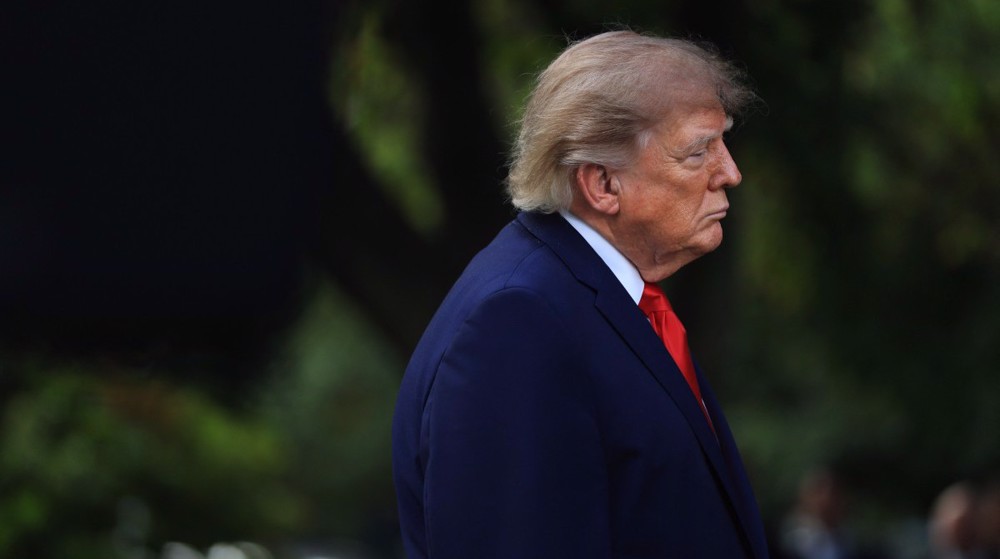
The rise in arrests follows President Donald Trump’s renewed push to expand immigration enforcement after returning to office. The administration has instructed federal agencies to increase operations targeting people living in the United States without legal status.
The intensified campaign has resulted in increased enforcement activity across the country, with ICE and the Department of Homeland Security (DHS) reporting a broader push to identify and remove individuals accused of violating immigration laws.
In Georgia, an expanded immigration enforcement operation resulted in the arrest of 1,226 people accused of immigration law violations.
ICE data also showed that more than 30 people were arrested at airports last month as part of expanded enforcement actions.
The increase in arrests comes as DHS reports a rise in deportations. The department announced in June that 356,389 people had been deported during the fiscal year to date.
DHS calls crackdown ‘public safety measure’
The Department of Homeland Security has tried to defend the expanded enforcement campaign, saying it is aimed at enforcing immigration laws and removing individuals it considers “threats to public safety.”
Homeland Security Secretary Markwayne Mullin said, “By removing these criminals, we are making America safe again.”
The increased enforcement activity has drawn criticism from immigrant advocates, who have raised concerns that some people detained during recent operations did not have criminal records and held valid work authorization or parole documents.
Advocates have questioned whether the expanded operations are affecting individuals beyond those with criminal histories.

White House ordered by judge to restore access for CNN, MS NOW and Politico

Trump meets Rodríguez near Maduro's prison as Venezuela's oil flows to US
Republican support for Trump’s war on Iran erodes amid deepening party divisions: Poll



Hamas: Board of Peace’s 'hostile stance' on UNRWA aligns with Israel
VIDEO | Islamic Jihad: Nasrallah helped build a united regional front against Israel
Pezeshkian: Iran ‘no longer’ trusts US after being attacked twice during talks
Iran rejects speculation it may target airports in region over compliance with US sanctions
Restrictions on Iranian flights impede Iraq’s economic recovery: Senior MP
Tayebi wins shot put gold as Iran takes three more silvers at Aichi-Nagoya Asian Games
VIDEO | Israel’s UN isolation: Netanyahu faces criticism
Blood on their hands: NATO chief’s confession proves Europe enabled US-Israeli war against Iran




 PressTV NEWSLETTER
now
PressTV NEWSLETTER
now
 This makes it easy to access the Press TV website
