Local Kurd martyred by terrorist group laid to rest in Iranian Kordestan
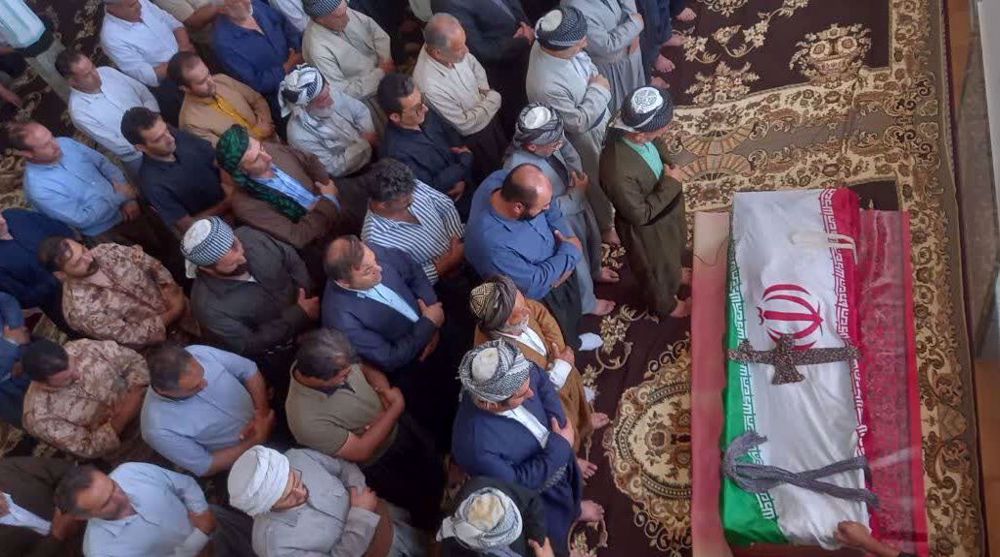
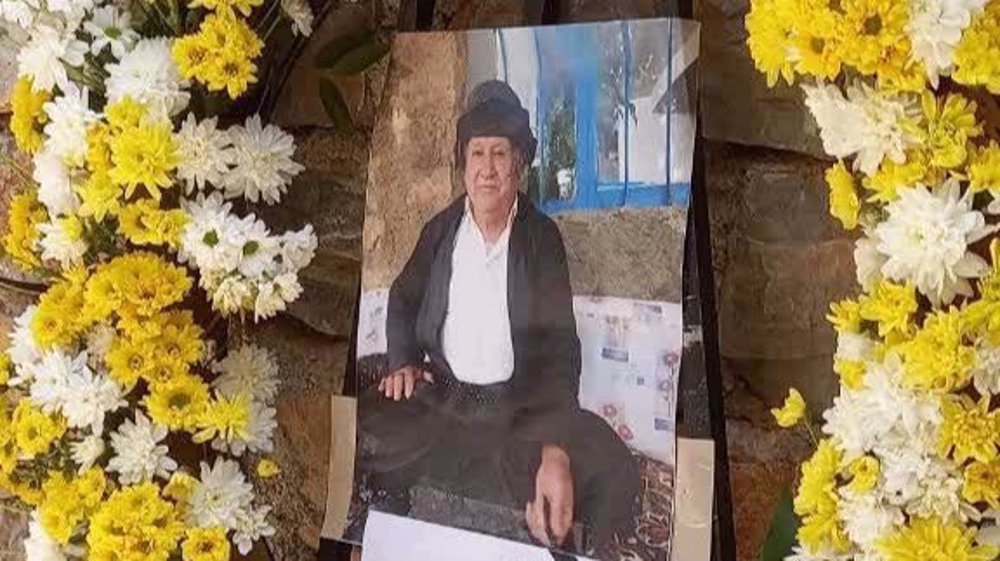
The body of Mohammad Ali Rahimzadeh, a local Kurd who was martyred in a terrorist act by anti-revolutionary elements for his loyalty to Iran's sovereignty, has been laid to rest following a funeral procession in the western Kurdish region of Uraman.
The attack was carried out by forces affiliated with the so-called Kurdistan Free Life Party (PJAK), a Kurdish terrorist group operating along Iran's western borders.
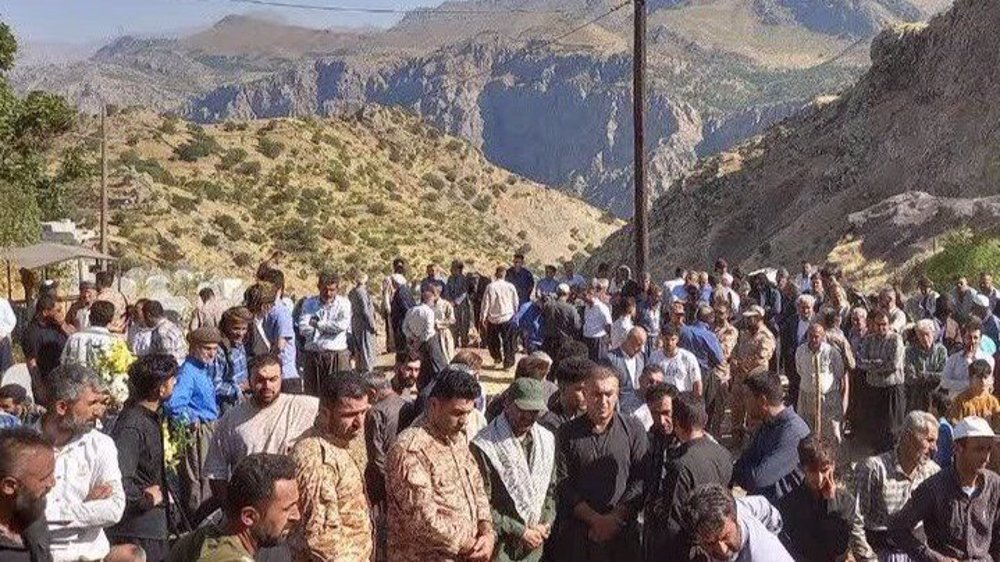
The funeral in the mountainous Iranian Kurdistan on Friday was attended by large crowds of residents, officials, and military and police commanders, according to the IRNA news agency.
Rahimzadeh was martyred in his home in the early hours of Thursday, authorities said.
The funeral ceremony in Uraman and the village of Sarpir was attended by the local governor, the Friday prayer leader of Uraman, the local Islamic Revolution Guards Corps (IRGC) commander, military and police commanders, and other local officials.
Mourners condemned the attack and called for maintaining security and upholding the values of Iran's 1979 Islamic Revolution.
They also renewed their pledge of allegiance to martyred Leader of the Islamic Revolution Ayatollah Seyyed Ali Khamenei, who was assassinated on the first day of the US-Israeli aggression against Iran on February 28.
Rahimzadeh's body was buried in his hometown of Sarpir following funeral prayers.
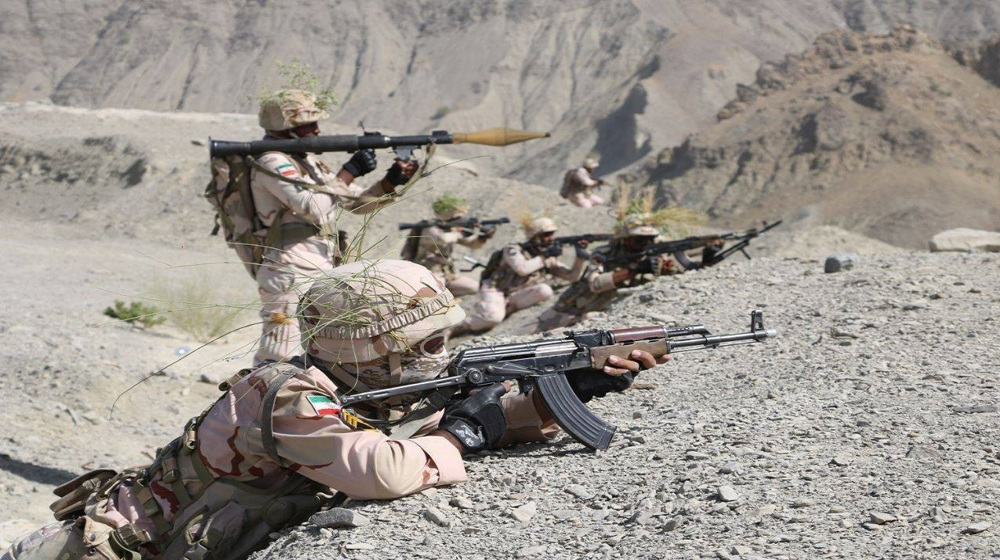
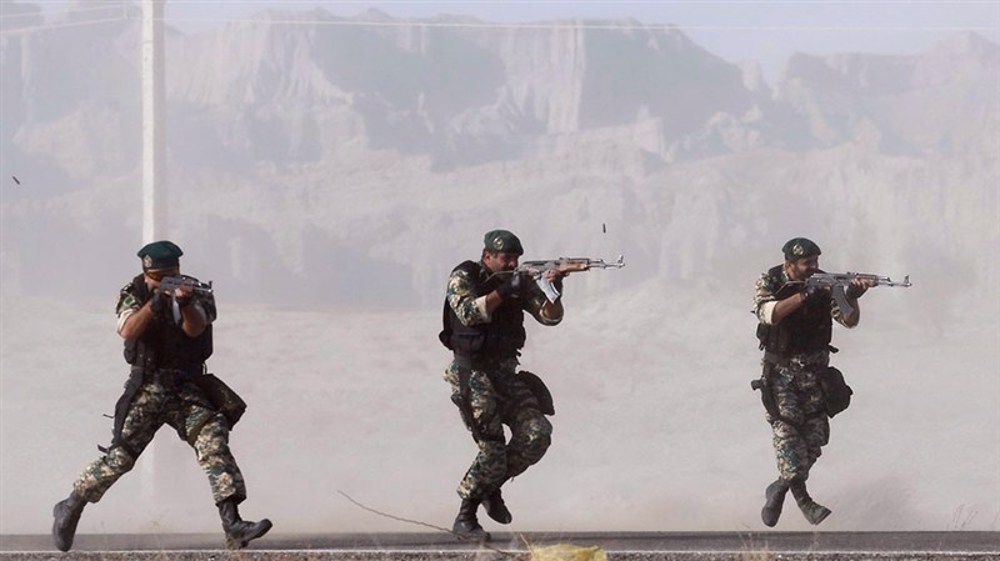
Iran's border provinces have seen a wave of attacks targeting security forces and civilians by foreign-backed terrorist groups. In response, Iran has deployed rapid reaction units and special forces to its western borders.
US and Israeli officials have publicly acknowledged providing arms and equipment to terrorist groups in Iran.
US President Donald Trump said on April 6 that during the latest US-Israeli aggression against Iran, weapons were sent through Kurdish intermediaries to terrorist groups operating along the Iran-Iraq border.
"We sent guns, a lot of guns, they were supposed to go to the people," Trump told Fox News.
"You know what happened? The people that they sent them to kept them," he said, adding that he was "very upset" with the Kurdish intermediaries who he claimed kept the weapons for themselves.
Former Israeli prime minister Naftali Bennett disclosed on June 23 that Israel had smuggled tens of thousands of Starlink satellite internet receivers into Iran before the January riots, marked by violent armed attacks, arson and destruction by rioting elements.
Speaking at the JNS International Policy Summit in al-Quds, Bennett said the devices were intended to enable rioters "to coordinate with each other and ultimately bring down the Iranian government" with the ultimate goal of dividing the country into small statelets.
The Jerusalem Post and other Israeli media outlets separately reported that Mossad had armed Kurdish terrorists with weapons seized from Hamas in Gaza and Hezbollah in Lebanon as part of a broader plan to invade, with the CIA also involved in the effort.
The plan reportedly included providing the terrorists not only with a no-fly zone but continuous aerial firepower to help them advance against Iranian forces, though it was ultimately halted.
US and Israeli planners initially assumed Iran's military would be neutralized within 24 hours—a scenario that did not materialize, the report said.
The report said Iran had prepared for multiple scenarios and forced the US to acknowledge military limitations.
IRGC: Iran’s strikes force US toward dispersal, concealment, minimal presence
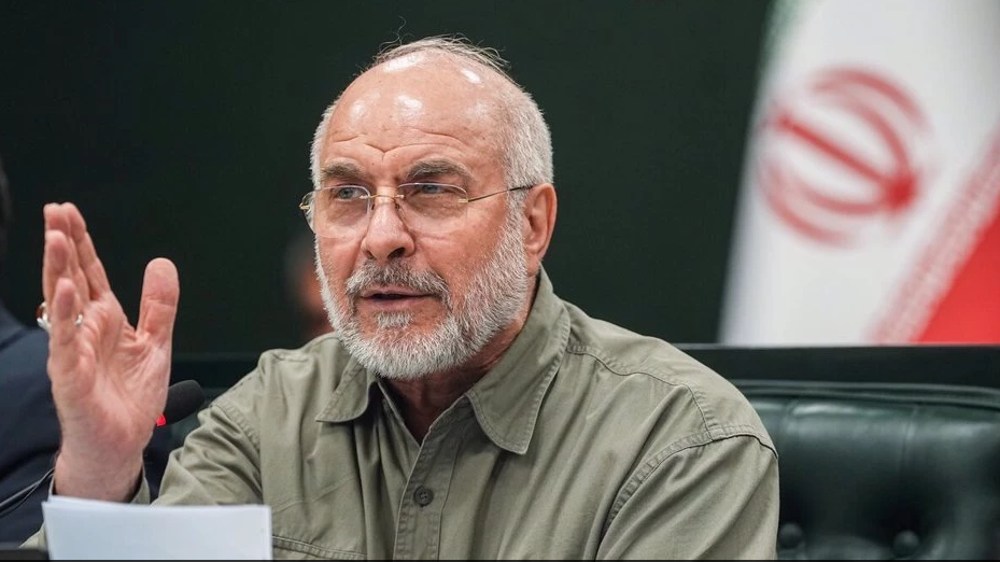
Qalibaf takes swipe at US economy as Treasury yields hit 10-year highs
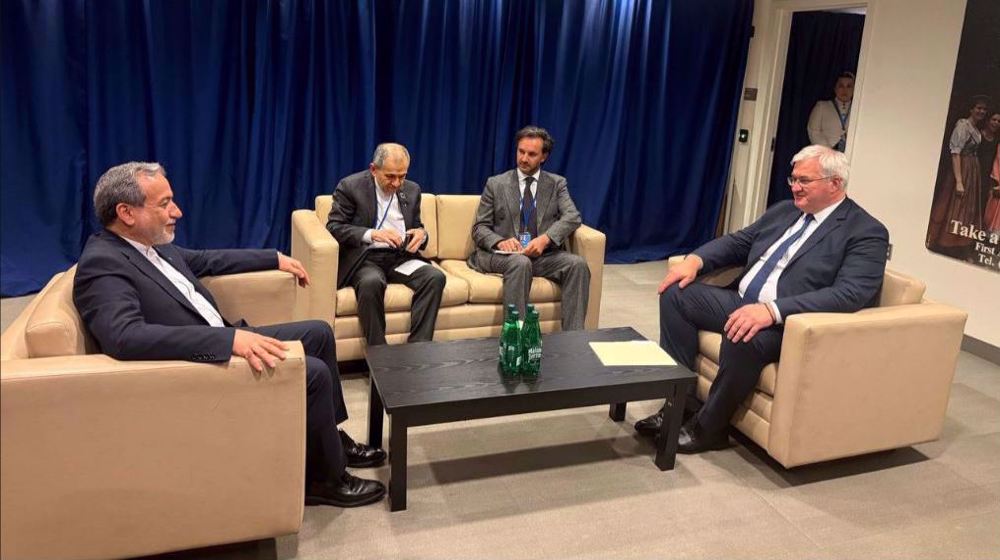
Araghchi, Ukrainian counterpart discuss dialogue aimed at de-escalating tensions



IRGC: Iran’s strikes force US toward dispersal, concealment, minimal presence
Netanyahu flies over France, Italy, Greece, Canada despite ICC arrest warrant
VIDEO | News Review: Iran’s president at UNGA says Islamic Republic is victim of US, Israeli terrorism
VIDEO | Press TV's news headlines
VIDEO | Between diplomacy and obstruction: Battle over Gaza's reconstruction plan
VIDEO | Afghanistan-Pakistan tensions escalate as Islamabad launches fresh airstrikes on border areas
'Dirty weapon’: Kata’ib Hezbollah urges Iraqis to break US siege on Iran
Qalibaf takes swipe at US economy as Treasury yields hit 10-year highs


 PressTV NEWSLETTER
now
PressTV NEWSLETTER
now
 This makes it easy to access the Press TV website
