Israel strikes Syria as Turkish FM visits Damascus, exposing rivalry for control
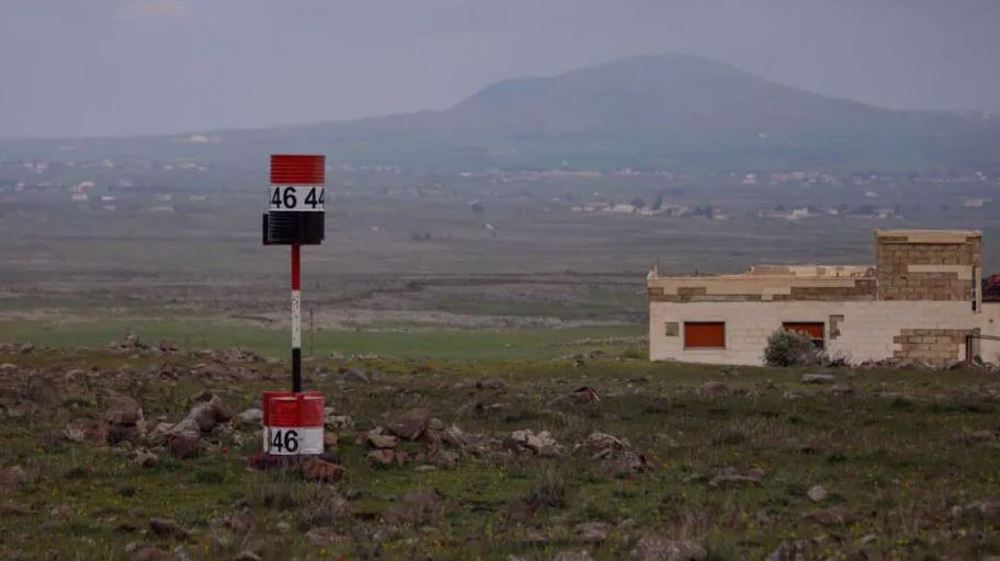
Israeli forces have launched an artillery attack on Syria’s Quneitra Province while Turkey’s Foreign Minister Hakan Fidan was visiting the Arab country.
The attack, reported by Syria's state news agency SANA, targeted agricultural land surrounding the village of al-Samadaniyah al-Gharbiyah.
Israeli military incursions and aggressions in southern Syria, along with harassment of local citizens, have become recurrent amid inaction from Syria's Hay’at Tahrir al-Sham (HTS) regime led by former Daesh and al-Qaeda deputy Abu Muhammad al-Jolani.
No injuries were reported on Thursday, but the timing was no coincidence. Israel appeared to be sending a clear message that while Turkey's proxy regime sits in the capital, Israel's military boots are on the ground, and its artillery is within range.
In his remarks in Damascus on Thursday, Foreign Minister Fidan warned that Israeli attacks on Syria are among the greatest threats to the country’s stability.
“Israel’s attacks targeting Syria’s sovereignty and territorial integrity are among the greatest threats to the country’s stability,” he said.
Fidan urged the international community to respond more strongly to Israel’s occupation policy and press the regime to ensure compliance with the 1974 Disengagement Agreement and respect for Syria’s sovereignty.
The agreement's Demilitarized Buffer Zone—a UN-monitored strip of land separating Israeli and Syrian forces—was unilaterally renounced by Israel following the fall of Bashar al-Assad in December 2024.
Israeli prime minister Benjamin Netanyahu declared the agreement "collapsed" and ordered his military to invade and occupy the buffer zone, along with additional Syrian territory beyond it.
Since the Turkish-backed coup that installed Jolani's al-Qaeda-affiliated militants in Damascus, Israeli occupation forces have waged a systematic campaign of agricultural terror across southern Syria—poisoning croplands with chemical sprays deployed from aircraft, bulldozing orchards and olive groves, and abducting local farmers.
In a deliberate strategy of ecocide and economic strangulation, Israeli troops have sealed off entire communities from their ancestral lands, blocking hundreds of families from accessing their fields and grazing grounds while destroying agricultural infrastructure that once sustained the region's rural population.
“Around 100 families are completely barred from accessing their land. Most of the agricultural roads have been destroyed by Israeli tanks. Furthermore, the occupation forces have take control of large areas of grazing land,” Hassan al-Din Ahmed, a farmer, told Al Jazeera.
Ahmed, whose son was kidnapped by Israeli forces, stressed that “farmlands aren’t the only things Israelis have taken.”
He was grazing cattle when "occupation forces came and arrested my child Saddam from the land", he told the broadcaster.
"It has been two years, four months without any charge being brought against him,” the farmer added.
According to director of agriculture in Quneitra Mohammad Rahal, Israeli occupation forces used glider aircraft to spray herbicides on agricultural land in the area, causing very significant damage.
The Israeli violations have affected the entire Arab country and triggered a hunger crisis there.
In May, the World Food Programme halved emergency assistance from 1.3 million people to just 650,000, amid critical funding shortfall.
It also halted a nationwide bread subsidy that helped about four million Syrians afford bread every day.

Thursday's shelling was just the latest chapter in Israel's systematic dismantling of Syria.
Since Assad's fall, the Zionist regime has conducted hundreds of airstrikes against military installations, arsenals, and civilian infrastructure—reducing Syria's defenses to rubble while its military advances beyond the occupied Golan Heights, seized since 1967.
Netanyahu has instructed his military to advance further into Syrian territory, surpassing the Golan Heights occupied since 1967, and to capture multiple strategic sites.
Despite the HTS’s commitments to collaborate with Tel Aviv, Israel has shown no inclination to retreat from Syria.
The two parties have engaged in intermittent discussions aimed at reaching a "security agreement", but no agreement or significant progress has been reported.
Tel Aviv's real grievance lies not with Jolani's al-Qaeda pedigree, which Israel has historically tolerated or even exploited, but with his absolute dependence on Turkey—a patron that armed his militants, bankrolled his coup, and now dictates the political direction of Damascus.
Fidan's visit laid bare the cynical rivalry between two occupying powers. Israel views Turkey's growing influence in Damascus with deep suspicion—fearing that Ankara's ambitions may eventually challenge Zionist expansionist plans.
Turkey, meanwhile, is consolidating its grip on Jolani's regime, signing military cooperation agreements and training Syrian security forces to ensure Damascus remains a compliant satellite.
UN chief warns Israeli violence in West Bank raises ‘specter of ethnic cleansing’

US visa ban on Palestinian UN delegation violates international agreements: Hamas

Child among two Palestinians abducted in Israeli West Bank raids



Yemeni woman killed, girl injured as Saudi warplanes launch 50+ airstrikes in 24 hours
Iran’s Khodaei wins historic pommel horse silver at 2026 Asian Games
OpenAI models 'infiltrated' Australian govt. websites during internal testing: PM
Pezeshkian’s strong UN speech exposed US-Israeli crimes: Judiciary chief
Austria's hijab ban tells Muslim girls their religious visibility is political problem: Activist
Israel’s election body bars both main Arab parties from Knesset race
Army chief: Pezeshkian's UN speech manifested steadfastness of Iran
White House ordered by judge to restore access for CNN, MS NOW and Politico




 PressTV NEWSLETTER now
  This makes it easy to access the Press TV website