Arbaeen: The eternal journey of remembrance, resistance and revival of the message of Karbala
By Prof. Abdullahi Danladi
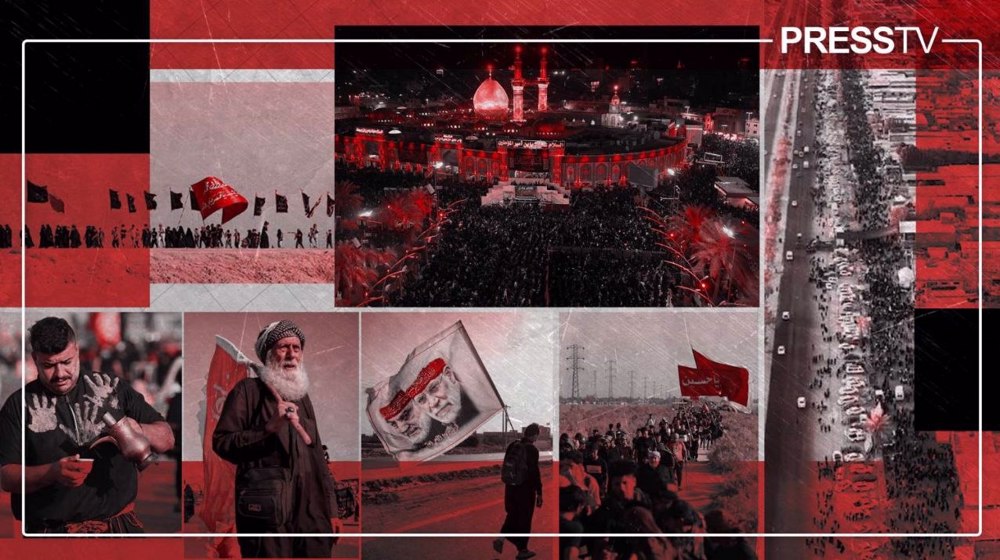
As the fortieth day (Arbaeen) after the martyrdom of Imam Hussain ibn Ali (AS), the grandson of Prophet Muhammad (peace be upon him and his family), arrives, millions of people from across the globe are converging in Karbala after a spiritual journey from Najaf.
Roads leading to Karbala are once again filled with an ocean of humanity – men, women, the elderly and children walking with one common purpose: to renew their commitment to the values represented by Imam Hussain (AS) and other martyrs of Karbala and to keep alive the memory of one of the greatest tragedies in human history.
The Arbaeen walk from Najaf to Karbala has emerged as one of the largest peaceful gatherings in the world in recent years, since the fall of the Saddam regime. Yet its significance cannot be measured merely by the number of participants or the physical distance covered by pilgrims en route to Najaf.
The true essence of Arbaeen lies in its profound spiritual, historical and moral meaning. It is a journey of remembrance, a movement of consciousness and a declaration that truth, justice and human dignity cannot be erased by the passage of time.
For those who cannot make it to Iraq, symbolic Arbaeen walks are organised in different parts of the world. From Africa to Asia, Europe to the Americas, millions participate in these commemorative marches, transforming their own communities into extensions of the road to Karbala.
These symbolic journeys demonstrate that the message of Imam Hussain (AS) is not confined to a particular land or people; rather, it has become a universal call for humanity to stand against injustice and defend moral principles.
The tragedy of Karbala in 61 AH (680 CE) was a defining moment in Islamic history. Imam Hussain (AS), the beloved grandson of Prophet Muhammad (PBUH) and a member of the purified Household (Ahl al-Bayt), faced a political order that was incompatible with the sacred principles of Islam. His refusal to legitimise debauchery and injustice was not motivated by personal ambition or desire for worldly power.
Rather, it was a stand rooted in the preservation of truth, dignity and the ethical foundations of Islam as introduced by his grandfather, the Messenger of Allah (PBUH).
The sacrifices at Karbala were immense. Imam Hussain (AS), along with his family members and loyal companions, faced overwhelming forces and chose to embrace martyrdom rather than surrender to humiliation. He refused to pledge allegiance to a despot and drunkard like Yazid.
The survivors of the tragedy, particularly Imam Zayn al-Abidin (AS) and Lady Zaynab bint Ali (SA), carried the immortal message beyond the battlefield, ensuring that the world would understand the reality of what had happened on the desert plains of Karbala.
✍️ Viewpoint - Arbaeen 2026 becomes statement of unity and resilience amid US-Israeli war on Iran, resistance axis
— Press TV 🔻 (@PressTV) August 2, 2026
By Maryam Bashirpour https://t.co/XJe0AbRPte
Their exemplary courage and conviction transformed a moment of apparent defeat into an eternal victory of truth over falsehood, dignity over ignominy, right over might.
Arbaeen is therefore not simply a commemoration of a historical event; it is the continuation of the mission of those who survived Karbala and carried its message forward. It represents the refusal of humanity to allow oppression and despotism to rewrite history or silence the voice of truth and justice.
The physical act of walking from Najaf to Karbala carries a deep symbolic meaning. Every step taken by the pilgrims from across the world represents a conscious movement towards awareness, sacrifice and moral responsibility.
These millions of pilgrims are not merely travelling to a geographical destination but they are embarking on an inner journey, away from indifference and towards commitment, away from silence and complicity and towards responsibility.
The road to Karbala becomes a living school where lessons of courage, patience, compassion, sacrifice and resistance are learned. Along the routes leading to the shrine of Imam Hussain (AS), ordinary people welcome complete strangers into their homes, provide them with food, water and shelter, and serve them with extraordinary humility and compassion.
This extraordinary culture of generosity and hospitality reflects the spirit of brotherhood and selflessness that Imam Hussain (AS) and his companions represented.
In a world increasingly marked by division, hostility and materialism, Arbaeen presents a different model of human interaction. Millions of people from different nations, cultures and social backgrounds unite around a shared moral vision. The language of nationality, ethnicity and social status disappears, replaced by a common identity built around commitment to justice and respect for human dignity.
One of the greatest contributions of Arbaeen is its role in preserving the awareness about the suffering endured by the Household of Prophet Muhammad (PBUH). History has often witnessed attempts by powerful despots to control narratives, suppress inconvenient truths and allow certain events to disappear from public memory. However, the message of Karbala survived because generations refused to forget.
Arbaeen serves as a reminder that the family of the Holy Prophet (PBUH) was not only honoured through expressions of love and respect but also endured immense hardship in defending and preserving the principles of Islam.
It invites humanity to reflect on fundamental questions that remain relevant in every age: What should people do when injustice becomes normalised? What responsibility do individuals have when truth is threatened by power? Is silence in the face of oppression a form of failure?
Press TV's Nawar Faeq reports from the holy city of Karbala, where extensive preparations are in progress as growing numbers of pilgrims arrive ahead of the Arbaeen commemoration.
— Press TV 🔻 (@PressTV) August 3, 2026
Follow: https://t.co/mLGcUTS2ei pic.twitter.com/TVIxBHndrS
Through these pressing questions, Karbala moves beyond history and becomes a living message for the present and a a roadmap for the future.
The universal appeal of the uprising of Imam Hussain (AS) lies in the fact that his struggle represents a timeless human principle: the refusal to submit to injustice. Although rooted in Islamic history, the lessons of Karbala resonate with all people who value freedom, truth, dignity and justice. Across different cultures and societies, those who struggle against oppression find inspiration in the courage of Imam Hussain (AS).
Arbaeen, therefore, is not merely an expression of grief and mourning. It is a movement of awareness. It transforms mourning into responsibility and remembrance into action. It teaches that true loyalty to Imam Hussain (AS) is not limited to tears and emotional attachment; rather, it requires commitment to the values for which he sacrificed his life – truth, justice, dignity and resistance against all forms of tyranny.
In today's world, where tyranny and injustice have been normalised, where misinformation and distorted narratives often shape public understanding, Arbaeen provides an opportunity to reconnect humanity with a profound moral lesson. It reminds people that power without justice cannot create lasting legitimacy, and that truth, even when suppressed, possesses a strength that eventually emerges.
The road to Karbala on Arbaeen, therefore, is not merely a road travelled on foot but it is a road travelled by hearts and minds. Every year, millions walk towards the final resting place of Imam Hussain (AS), but the real destination is the awakening of conscience.
They walk to remember a tragedy, but they also walk to renew a pledge of allegiance and commitment that injustice must never be accepted and that the human spirit must always strive for truth and dignity.
Arbaeen is the voice of Karbala echoing across centuries and generations. It is a declaration that the uprising of Imam Hussain (AS) and his ultimate martyrdom and the ordeal suffered by his family will never be forgotten. It is a reminder that although falsehood may achieve temporary victories, the ultimate triumph belongs to those who stand with truth.
The eternal question of Karbala continues to confront every generation: When truth and falsehood stand face to face, where do we stand?
And through their footsteps en route to Karbala, these millions of pilgrims of Arbaeen continue to provide the answer.
Professor Abdullahi Danladi is a member of the Islamic Movement in Nigeria.
(The views expressed in this article do not necessarily reflect those of Press TV)
200 nights, one resilient nation: Iranian people’s epic in defense of homeland and Revolution
Iran’s nuclear industry will survive war and strikes as knowledge cannot be obliterated by force
New resolution and UNSC referral show IAEA continues to be weaponized by US, Europe against Iran



15 nations reject attacks, threats against safeguarded nuclear facilities
VIDEO | Tabriz hosts 26th Iranian annual nuclear medicine congress
Two years after Israel’s pager terrorism in Lebanon: Scars, loss, and the will to carry on
Three students killed, eight wounded in Philippines school shooting
Two women injured as Saudi forces shell residential area in Yemen’s Sa’ada
Baghaei: ‘Crude’ US propaganda reveals ‘naivety’ behind ‘unlawful war of choice’ against Iran
Yemenis hold rally in Sa'ada in support of armed forces after lightning advances
Dozens killed in mosque blast, militant clashes in Pakistan’s Khyber Pakhtunkhwa


 PressTV NEWSLETTER
now
PressTV NEWSLETTER
now
 This makes it easy to access the Press TV website
