Arbaeen 2026 becomes statement of unity and resilience amid US-Israeli war on Iran, resistance axis
By Maryam Bashirpour
Every year, around this time, millions of pilgrims from across the world make their way to the holy cities of Najaf and Karbala in Iraq to commemorate the fortieth day after the martyrdom of Imam Hussein (AS), the grandson of the Prophet Muhammad (PBUH).
In 680 CE, Imam Hussein (AS) and 72 of his companions were martyred on the desert plain of Karbala by the forces of tyrant Umayyad ruler Yazid because they refused to pledge allegiance to his regime.
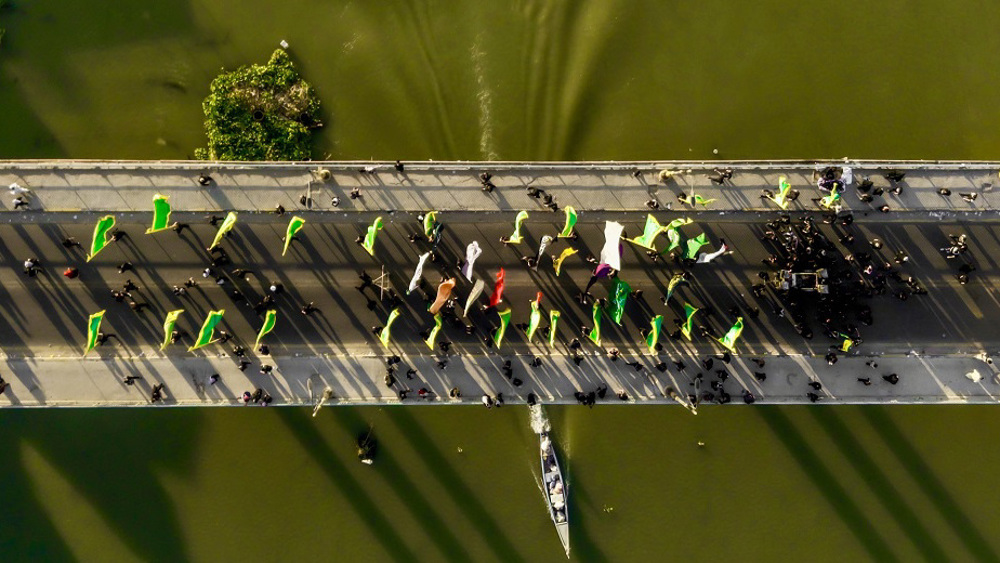
Every year, millions of pilgrims converge on Iraq to commemorate Arbaeen, walking on foot from Najaf to Karbala to renew their sacrosanct pledge to the principles embodied by the martyrs of Karbala more than fourteen centuries ago.
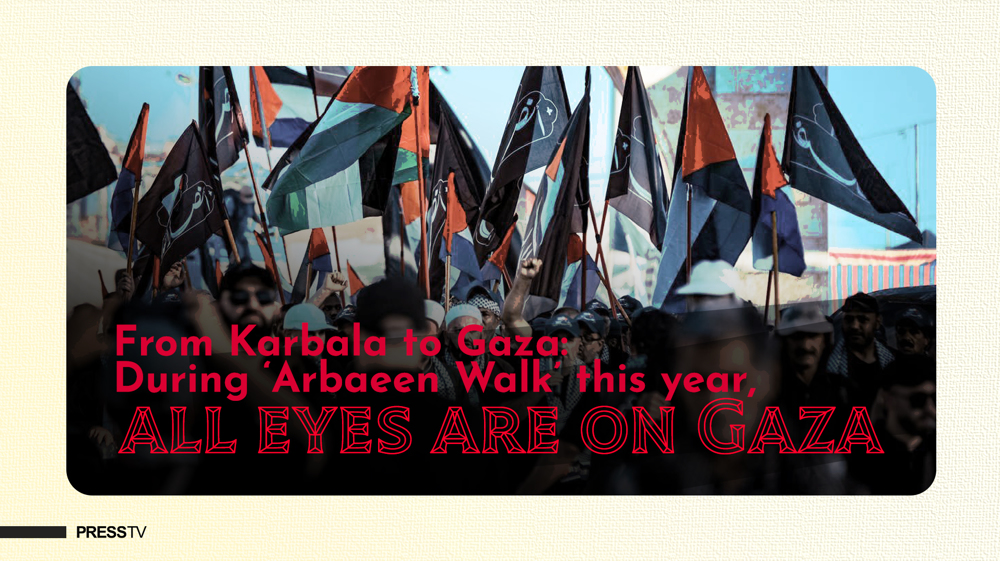
This year, however, Arbaeen has become more than a religious pilgrimage. It has emerged as a powerful political statement, a demonstration of resilience, and a manifestation of unity in the face of present-day Yazids.
A pilgrimage under the shadow of martyrdom
Arbaeen 2026 is being observed under the weight of a profound loss. On February 28, 2026, Ayatollah Sayyed Ali Khamenei, Leader of the Islamic Revolution, was martyred in a joint American-Israeli aggression in Tehran.
Many senior military commanders and officials were also martyred on the same day and in the weeks that followed. In southern Iran’s Minab, more than 160 schoolchildren were also massacred by the US-Israeli war machine on the first day of the third imposed war.
So, this year's Arbaeen has taken on an even deeper significance, particularly in the memory of the martyred Leader, who incidentally became the first pilgrim of Arbaeen this year.
In early July, a massive crowd of mourners gathered in the holy cities of Najaf and Karbala to bid him farewell in a historic funeral. The body was then carried from Najaf toward Karbala along the historic Arbaeen route, where millions lined the road to receive it.
Iraqi officials and leaders of the Resistance Axis described this massive turnout as "a message of unity and steadfastness in the face of American and Israeli aggression."
This year's Arbaeen slogan – "Mithli la yubayi'u mithlah" ("One like me does not pledge allegiance to one like Yazid") – resonated among millions, who saw in the life, character, and struggle of the martyred Leader a perfect reflection of Imam Hussein's (AS) steadfastness and resistance against the forces of global arrogance.
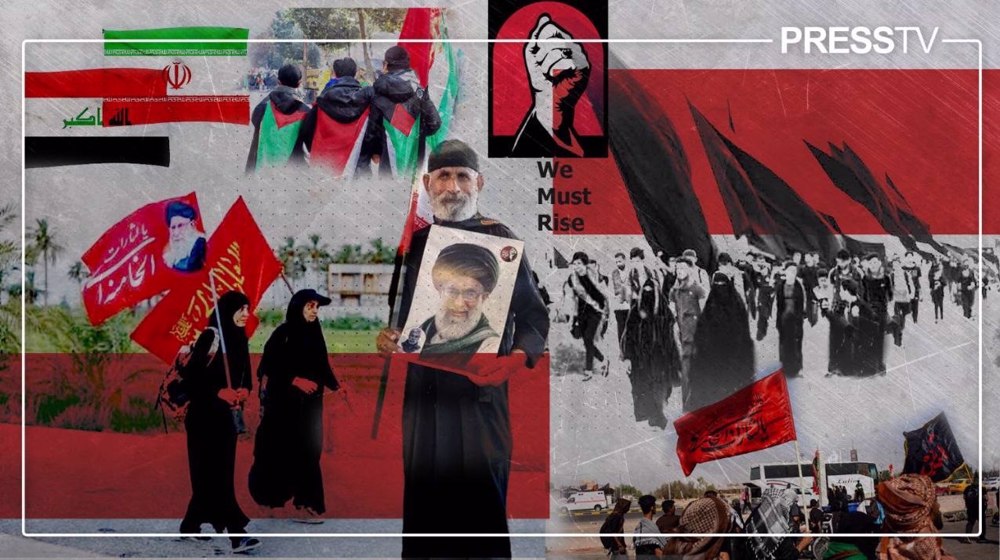
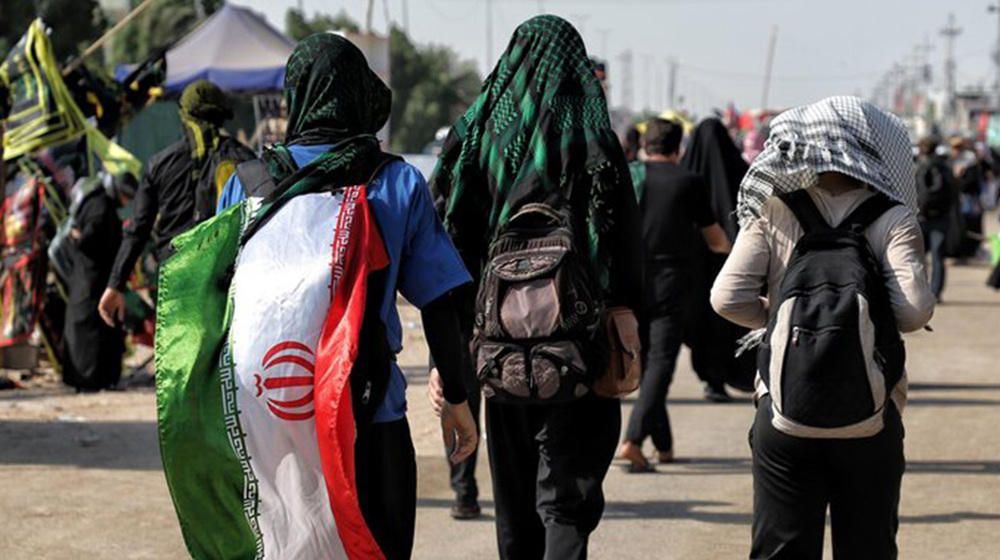
In the Arabeen Walk this year, pilgrims have been seen carrying the portraits of the martyred Leader and his worthy successor Ayatollah Seyyed Mojtaba Khamenei, reaffirming their loyalty and allegiance to the Islamic Revolution amidst the US-Israeli war against the country.
Hundreds of Arba'een pilgrims carry banner pledging to avenge the martyred leader of the Islamic Revolution, Ayatollah Seyyed Ali Khamenei.
— PressTV Extra (@PresstvExtra) August 1, 2026
Follow Press TV on Telegram: https://t.co/h0eMpifVIe pic.twitter.com/gAUQkqO4Fl
Under fire: American and Saudi aggression
Only days before the peak of the Arbaeen ceremonies, geopolitical tensions surrounding the pilgrimage reached their highest point last week.
In a joint act of aggression, the US and Saudi Arabia targeted positions of Iraq's Popular Mobilization Forces (Hashd al-Shaabi) with missile and artillery strikes across several Iraqi provinces, including Baghdad, Wasit, Nineveh, Basra, Kirkuk, Karbala, and Diyala.
The aggression left at least 20 people martyred and 32 others wounded. The attackers, however, did not limit themselves to military targets. They also damaged pilgrimage infrastructure. According to reports, Saudi-American strikes hit mawakib (pilgrims' service stations) and support facilities along the Arbaeen route in Karbala, including a Husseini congregation in the village of Abu Usayd.
The Islamic Resistance in Iraq warned the Baghdad government and set a deadline of August 7 for responding to the brazen violation of Iraq's sovereignty. At the same time, it announced that the Resistance Front would postpone any retaliatory action until after the conclusion of the Arbaeen ceremonies so as not to disrupt the pilgrimage or the operation of the mawakib.
The message of this decision was that even in the face of enemy aggression, preserving the sanctity of Arbaeen and ensuring the safety of the pilgrims remained the highest priority.
Logistics of faith: Hosting millions of pilgrims in scorching heat
Despite bellicose threats from the American and Israeli sides, this year's Arbaeen pilgrimage has continued on an unprecedented scale. Arbaeen is one of the world's largest annual gatherings, which sees tens of millions taking part in a walk from Najaf to Karbala.
The logistical challenge posed by this enormous event is truly extraordinary. The World Health Organization had warned that this year's Arbaeen coincides with the highest temperatures ever recorded during this period.
Daytime temperatures were forecast to reach around 45°C (113°F), while nighttime temperatures were expected to remain above 30°C (86°F). The organization designated 10 of Iraq's 18 provinces, including Karbala and Najaf, as being at high risk for heat-related illness.
Nevertheless, crisis-management headquarters along the pilgrimage route established safe drinking water stations, shaded rest areas, heatstroke screening and treatment centers, and real-time warning systems based on meteorological data to protect pilgrims.
Every effort has been made to ensure a smooth journey for pilgrims as the weeks-long commemorations draw to a close with Arbaeen on Tuesday.
Spotted en route to Karbala:
— Press TV 🔻 (@PressTV) August 2, 2026
"If the martyrdom of leaders could destroy a cause, the story of Karbala would have ended long ago."
Follow: https://t.co/mLGcUTS2ei pic.twitter.com/kFtbgI3GwY
The economy of resistance and the spirit of the Mawakib
At the heart of this massive logistical operation lies a remarkable expression of the economy of resistance and popular solidarity: the mawakib.
These volunteer service stations, stretching along the 80-kilometer route from Najaf to Karbala, provide free water, food, accommodation, and medical services to all pilgrims regardless of nationality, gender, color, creed, or religious affiliation.
At a time when Iran remains under international sanctions and economic pressure, the mawakib represent what is described as the "economy of resistance" – an economy based on self-reliance and voluntary public cooperation that operates independently of government structures and corporate interests.
In Iran's Dehloran County alone, dozens of mawakib were prepared to serve pilgrims.
Kurdish women from the border region cook traditional dishes such as ash and kelaneh for pilgrims, serving as an example of solidarity between Sunni and Shia Muslims.
The governors of Najaf and Karbala also pledged fuel allocations and other logistical assistance to Iranian mawakib. This close cooperation between Iran and Iraq, two neighboring Muslim countries that have become close strategic allies in recent years after the fall of Saddam’s regime, demonstrates that religious faith can forge bonds stronger than political borders.
The Palestinian flag: A symbol of unity
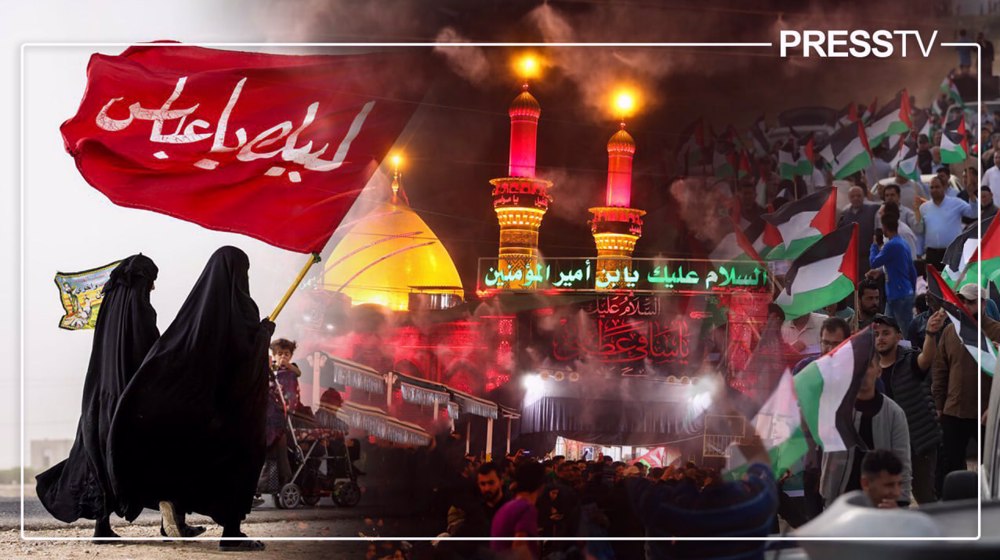
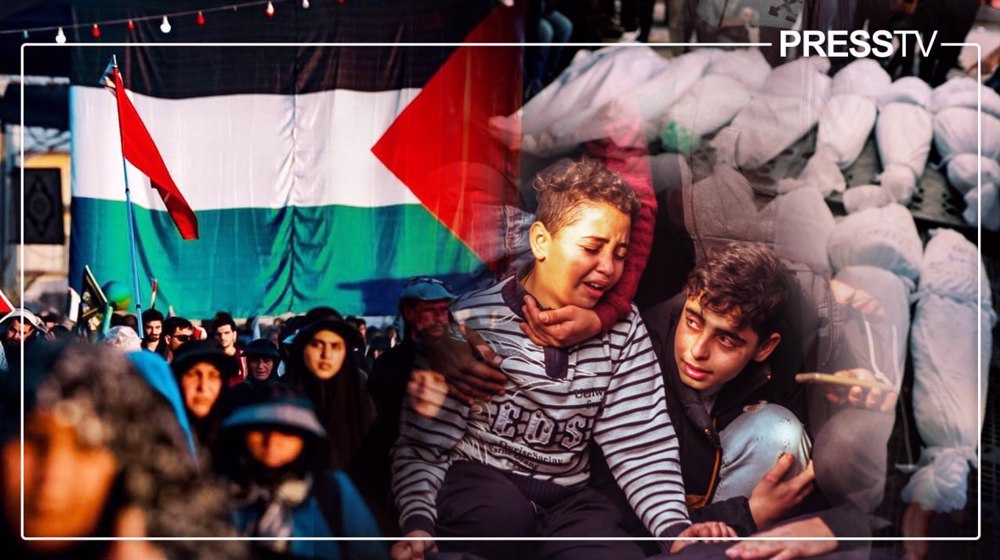
Undoubtedly, the most striking visual image of this year's Arbaeen has been the widespread display of Palestinian flags along the roads leading to Karbala.
The Palestinian flag has become a symbol of solidarity with Gaza amid the ongoing genocidal war and with the broader cause of Palestinian resistance against the Israeli occupation. Along Imam Hussein's (AS) path, these flags evoke a connection between the events of Karbala in 680 CE and the contemporary struggles of oppressed peoples.
Many Palestinians participated in this year's Arbaeen pilgrimage, and mawakib bearing the name "Nida al-Aqsa" (The Call of Al-Aqsa Mosque) were established to further emphasize the link between the Husseini legacy and the defense of occupied Al-Quds.
This presence is portrayed not merely as an expression of political sympathy, but as a demonstration of unity between Shia and Sunni Muslims around a shared cause. Arbaeen has long been regarded as a symbol of Islamic unity, bringing together not only Shia and Sunni Muslims but also followers of other faiths.
This year, the participation of people from other religions has also been particularly notable. Christians – and even non-believers who come simply to witness what they regard as the miracle of human solidarity – have joined the gathering.
They come from different countries and speak different languages, wear different clothing, and eat different foods. Yet they share one common belief: that standing against oppression is the highest form of worship.
Grandmother of Atena, a martyred student from Minab:
— Press TV 🔻 (@PressTV) August 2, 2026
“Atena once said, ‘I know. I will definitely become a martyr.’”
Follow: https://t.co/mLGcUTS2ei pic.twitter.com/SljWyqjKv4
A world that looks away
Like every year, Western news media have displayed striking contradictions and clear bias in their coverage of the Arbaeen gathering and the recent attacks against its pilgrims.
Although the Arbaeen pilgrimage, with tens of millions of participants, is widely regarded as the world's largest annual gathering and the biggest march against terrorism, major Western media outlets are said to maintain a meaningful silence regarding it. The same outlets devote extensive coverage to much smaller and less significant events.
When Arbaeen is covered, the reports often focus on certain mourning rituals rather than the pilgrimage's message of unity and self-sacrifice, thereby portraying it as violent or sectarian.
An even greater contradiction emerges in the response to recent criminal attacks by Saudi Arabia and the United States against mawakib and Arbaeen pilgrims in Karbala Province.
These attacks, which coincided with the height of the Arbaeen ceremonies, not only constituted a clear violation of Iraq's sovereignty but also amounted to crimes against defenseless pilgrims.
While Iraqi sources reported attacks on mawakib and pilgrims, Western media largely framed the aggression as strikes against resistance bases and as responses to "Iranian activities," paying little attention to unwarranted crimes committed against innocent pilgrims.
Now, a question arises: if a foreign power were to launch missile strikes against St. Peter’s Basilica in Rome on Christmas Eve, or against synagogues in occupied Jerusalem al-Quds during Passover, could the world simply ignore such an attack?
Certainly not. It would immediately be denounced as a “crime against humanity” and an “affront to the Abrahamic faiths,” prompting a wave of political condemnation and perhaps even military intervention from Western states.
This blatant double standard reflects an arrogant and glaringly unethical policy. On the one hand, the world’s largest gathering of resistance against terrorism is ignored in order to neutralize its message. On the other hand, horrendous crimes committed against those taking part in these commemorations are presented through selective coverage in a way that makes them appear justifiable.
This year’s Arbaeen walk has conveyed a message that extends far beyond the borders of Iraq and Iran. This massive gathering is a civil and cultural response to the imperial wars that have set the region ablaze. Pilgrims, walking on foot carrying the pictures of their martyred Leader and making the journey on his behalf toward Karbala, proclaim: “We seek peace and justice, and we seek to avenge the blood of martyrs.”
The airstrikes on the pilgrims’ convoys demonstrated how certain powers use Iraqi territory as a launching pad to settle regional scores. But Arbaeen neutralized this scheme.
Through their presence, millions declared that Iraq and the region belong to their people, not to foreign military powers and their illegal military bases.
Arba'een pilgrims in Najaf mourn the school children martyred in the US-Israeli airstrike on an elementary school in Minab.
— PressTV Extra (@PresstvExtra) August 1, 2026
Follow Press TV on Telegram: https://t.co/h0eMpifVIe pic.twitter.com/tGwDrPrnTF
An Arbaeen that endured
Arbaeen 2026 will be recorded in history as an enduring Arbaeen that was held under the shadow of bombs and threats, yet was not defeated. The attacks by the United States and Saudi Arabia not only failed to weaken the resolve of the pilgrims but strengthened their commitment to the eternal message of Imam Hussein (AS).
More than ever before, this year’s Arbaeen has demonstrated that the “Husseini civilization” stands with full authority against the “axis of violence and arrogance,” and that no arsenal is capable of extinguishing the light of Karbala.
Amid all this, the name and memory of the martyred Leader who for years carried the banner of the resistance against oppressors and the defense of the sanctity of the Ahl al-Bayt (peace be upon them) shines at the pinnacle of this epic.
It is he who, through his insight and courage, charted the path of resistance and taught the Islamic Ummah that “Hayhat minna al-dhillah” (“Far from us is humiliation”) is not merely a slogan, but the eternal path of all the free people of the world.
And the pilgrims, with steps firmer than ever, continue along the path of love, chanting: “Hayhat minna al-dhillah” – we will never submit to humiliation.
The world is witnessing how a religious gathering has become a symbol of resistance, unity, and the pursuit of justice in the face of all arrogant powers. This year, more than ever, Arbaeen is alive, and its message will continue to resonate throughout history forever.
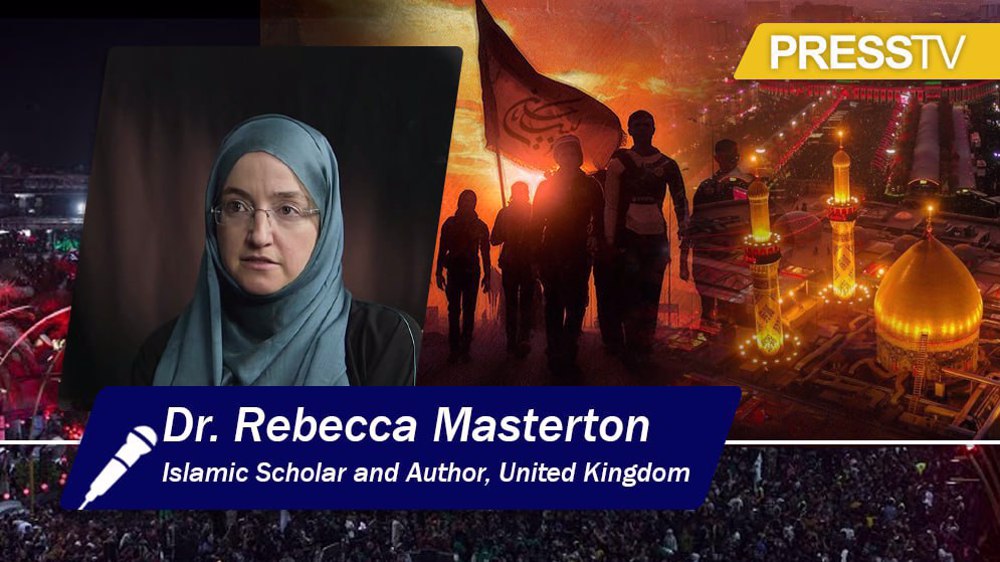
Maryam Bashirpour is a university researcher and writer based in Tehran.
(The views expressed in this article do not necessarily reflect those of Press TV)
200 nights, one resilient nation: Iranian people’s epic in defense of homeland and Revolution
Discover Iran: Tabriz Grand Bazaar, where centuries of trade, culture and craftsmanship still thrive
Rashti embroidery showcases Iranian heritage at BRICS summit



Iran finds new platform in SCO to develop its rare-earth potential
US senator slams ‘bogus’ spy claims, demands immediate release of Press TV journalist
IRGC Navy strikes Togo-flagged tanker after illegal attempt to transit Strait of Hormuz
VIDEO | We salute the Palestinian woman
US lawmaker slams Trump’s $5 billion weapons sale to Saudi Arabia
VIDEO | Iran changing US war equations
Russia, China veto US backed anti-Iran resolution at UN Security Council
Araghchi welcomes Xi’s initiatives, hails China-Iran strategic partnership


 PressTV NEWSLETTER
now
PressTV NEWSLETTER
now
 This makes it easy to access the Press TV website
