How Iran’s low-cost, highly destructive Shahed drone is forcing a global reckoning in modern warfare
By Ali Zeraatpisheh
Although drones had existed for decades, their strategic significance expanded dramatically after the September 11 attacks, as the United States increasingly deployed remotely piloted aircraft for both persistent surveillance and precision strikes.
The MQ-1 Predator, introduced in the 1990s, became one of the most iconic military drones, while its successor, the MQ-9 Reaper, offered superior range, endurance, and lethal firepower.
These platforms enabled deeply destabilizing American operations across Afghanistan, Pakistan, Iraq, Yemen, and Somalia – all without placing pilots directly in harm's way.
Yet, while Washington invested heavily in sophisticated, high-cost systems tailored for targeted lethality, Tehran charted a markedly different course.
Constrained by decades of crippling and illegal economic sanctions, relentless military pressure, and restricted access to advanced foreign arms, Iran prioritized affordability, simplicity, and mass producibility over technological sophistication.
This pragmatic approach gave rise to the Shahed family of drones – unmanned systems that have fundamentally challenged the prevailing assumption that the most expensive and technologically superior weapons inevitably dictate the outcomes of modern warfare.
The Shahed revolution
Iran developed the Shahed family of drones under the weight of decades of Western sanctions, arms embargoes, and stringent restrictions on access to advanced military technology.
Rather than attempting to rival the United States and its allies through costly, high-end systems, Tehran embraced an asymmetric strategy rooted in simplicity, low production costs, and mass-manufacturing capacity, an approach that has since become a cornerstone of its diverse defense industry, particularly within its drone and missile programs.
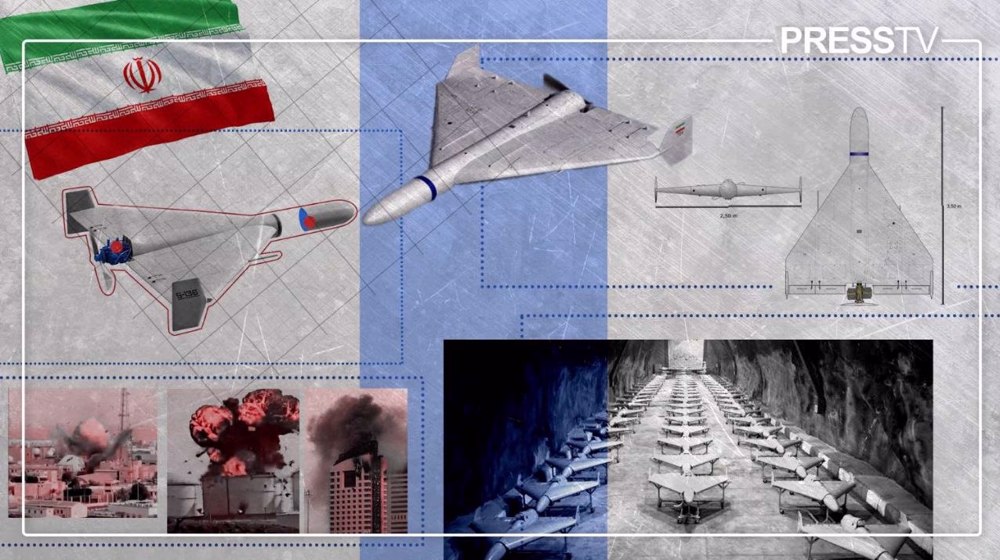
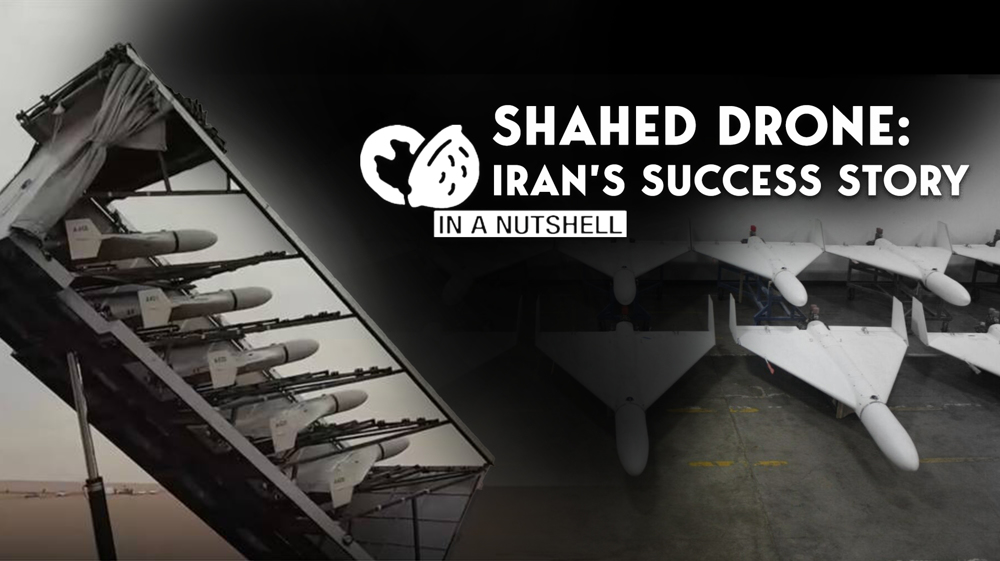
Designed by the Shahed Aviation Industries Research Center, the Shahed family encompasses a versatile range of unmanned platforms for reconnaissance, attack, and loitering missions.
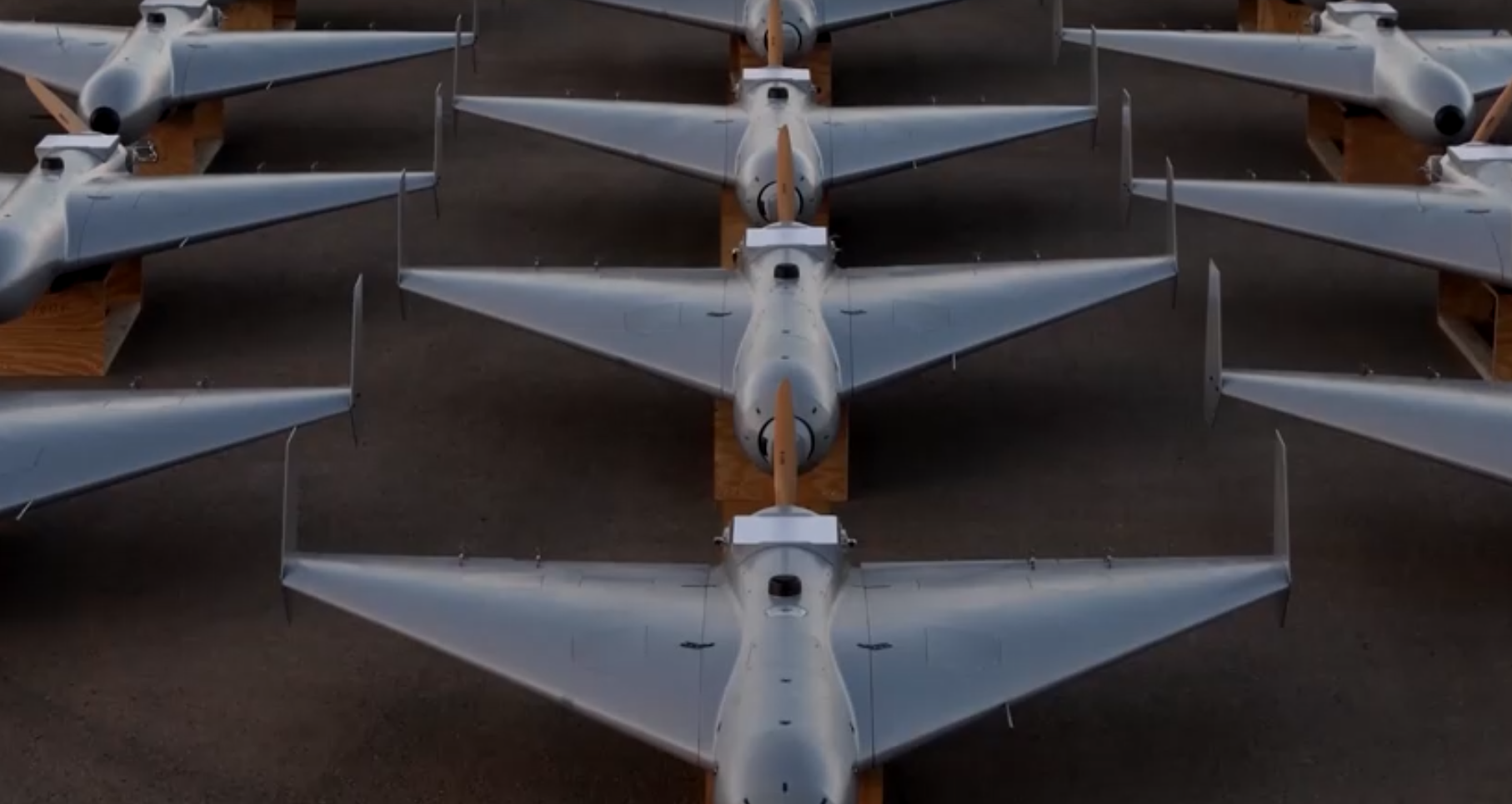
Among them, the Shahed-136 garnered global attention for its extended range, minimalist design, and capacity to deliver explosive payloads across considerable distances. Unlike sophisticated military aircraft that demand expensive components, specialized infrastructure, and intricate maintenance regimens, the Shahed was engineered with a fundamentally different philosophy: affordability, ease of production, and deployability in large swarms.
This model directly challenges the longstanding presumption that military superiority hinges primarily on possessing the most advanced technology. The Shahed drone has demonstrated that a relatively simple and inexpensive drone can pose a credible threat even to adversaries equipped with some of the world's most sophisticated defense systems.
Its significance, however, extends beyond the aircraft itself as it reflects a broader paradigm shift toward what military analysts term "attritable warfare," where large numbers of low-cost systems can complement, or even offset, smaller fleets of expensive, high-end platforms.
By prioritizing cost, quantity, and practical effectiveness over technological prestige, Iran has introduced a defense model that has drawn keen international scrutiny.
As more countries invest in similar low-cost unmanned systems, the underlying principles of the Shahed are becoming increasingly integral to modern military planning. Its influence is now measured not only by its combat employment but also by how it has compelled major military powers to reassess the production, deployment, and countermeasures surrounding affordable unmanned technologies.
✍️ Explainer: Why Shahed-161 drone symbolizes Iran’s leap in indigenous defense tech
— Press TV 🔻 (@PressTV) November 16, 2025
By @kesic_ivan
Read More: https://t.co/wpu8w6itNR pic.twitter.com/JHTFG6374z
The economics of Shahed
For decades, modern air defense rested on a foundational assumption: that expensive interceptor missiles would be reserved primarily for high-value targets – fighter jets, cruise missiles, and ballistic missiles – whose strategic importance justified the exorbitant cost of interception as an accepted price of contemporary warfare.
The widespread deployment of the Shahed drone has fundamentally unsettled this calculus. With an estimated production cost of just a few thousand dollars, the Shahed presents a stark cost asymmetry when contrasted with interceptor missiles that can command millions of dollars per unit.
The disparity is particularly pronounced in systems like the Patriot PAC-3 MSE, whose interceptors are reportedly priced at around $4 million each, while THAAD interceptors can exceed $10 million, depending on configuration and procurement terms.
This economic imbalance becomes especially acute during large-scale drone swarms. A barrage of inexpensive Shahed drones can compel defenders to expend interceptor missiles worth hundreds of millions of dollars to neutralize an attack that costs only a fraction of that amount.
Consequently, the Shahed's impact extends far beyond the physical destruction it inflicts on the battlefield. Each interception carries a crippling financial toll while rapidly depleting missile stockpiles, arsenals that demand immense funding, industrial capacity, and time to replenish after prolonged engagements.
These pressures have already begun reshaping military planning. Lockheed Martin has introduced a lower-cost Patriot interceptor, and the US Army is actively seeking more affordable air defense solutions as the appetite for expensive missiles continues to outstrip budgets.
Increasingly, military planners are pivoting toward considerations of cost-per-intercept, inventory sustainability, and the long-term viability of air defense architectures, recognizing that the wars of the future may be defined as much by economic endurance as by technological supremacy.
✍️ Feature - Dark nights for US radars: Iran's precision strikes cripple US air defense network across West Asia
— Press TV 🔻 (@PressTV) July 23, 2026
By Yousef Ramazanihttps://t.co/qb0b6pYibg
Shahed swarms and the new battlefield
Iran's most significant innovation was not merely the development of the Shahed drone, but the strategic employment of these low-cost weapons in large numbers to challenge some of the world's most advanced and multi-layered air-defense systems.
Rather than relying on individual platforms, Tehran adopted a doctrine rooted in mass deployment, persistent pressure, and affordability, eschewing the conventional model of small numbers of costly aircraft or cruise missiles in favor of launching waves of Shahed drones, often in coordination with ballistic and cruise missiles.
It was in full display during the 12-day war as well as the Ramadan war imposed by the US-Israeli war machine against the Islamic Republic. In both imposed wars, Iranian armed forces managed to inflict significant costs on the technologically superior enemy and force it to seek a ceasefire and accept a truce deal on Iranian terms.
The synergy between weapons and drones creates a complex, multi-layered threat environment, with projectiles traversing different speeds, altitudes, and flight paths, complicating defensive responses and straining command decision-making.
Such saturation attacks place immense pressure on air-defense networks. Commanders must rapidly discriminate between the most lethal threats while carefully managing finite interceptor inventories. Even when defenses succeed, they may expend millions of dollars in interceptors against drones that cost only a fraction of that sum, a financial attrition that can prove as debilitating as physical damage.
The Shahed's significance, therefore, extends well beyond its battlefield payload. It has exposed the inherent limitations of the enemy’s air-defense architectures optimized to defeat a small number of high-value targets, revealing their vulnerability to sustained, high-volume attacks involving dozens or even hundreds of inexpensive unmanned systems.
This lesson has reverberated through military planning worldwide. The Pentagon's Replicator Initiative, NATO's intensified focus on counter-drone capabilities, and projects such as MBDA's Counter Mass Interceptor all reflect a growing recognition that future air defenses must be capable of neutralizing mass drone assaults without rapidly depleting costly missile stockpiles.
Moreover, Iran's experience has demonstrated that drone swarms achieve maximum effectiveness when integrated into broader campaigns. Coordinated with ballistic missiles, cruise missiles, and electronic warfare, they can overwhelm defensive networks, compound situational complexity, and significantly improve the probability that at least some portion of the attacking force will penetrate and strike its intended targets.
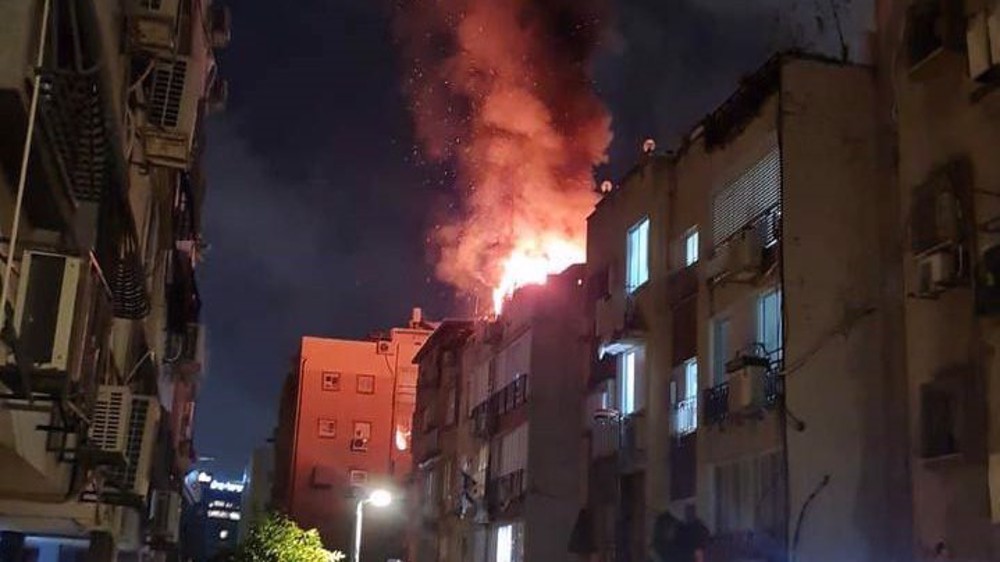
Smoke rises at the Al-Abdali border crossing in Kuwait following a retaliatory drone strike.
— PressTV Extra (@PresstvExtra) July 23, 2026
Follow Press TV on Telegram: https://t.co/h0eMpifVIe pic.twitter.com/UVtGrTFtWv
Shahed in combat
Iran operationalized its drone doctrine during the 12-Day imposed war in June last year and the recent 40-day war of aggression against the country, launching Shahed drones in coordinated waves alongside ballistic and cruise missiles against military and strategic targets.
Rather than deploying unmanned systems in isolation, Tehran integrated them into layered strike packages, forcing US-led coalition forces to contend with multiple threats converging at varied speeds, altitudes, and trajectories, all while managing finite interceptor inventories.
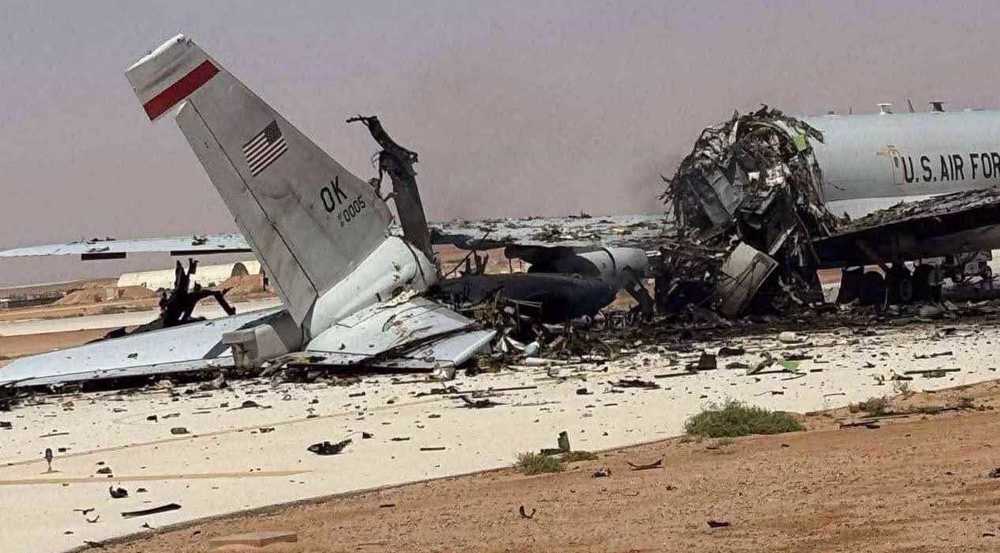
Iranian officials reported that the attacks successfully struck US and Israeli military bases, intelligence facilities, and other strategic sites, destroying or damaging advanced military assets and inflicting American casualties in different countries across the region.
They have characterized it as one of the largest demonstrations of Iran's domestically developed missile and drone capabilities. Yet beyond the reported battlefield damage, Iranian retaliatory operations have underscored a deeper economic vulnerability inherent in the enemy’s contemporary air-defense architectures.
Each wave of low-cost Shahed drones compelled defenders to expend interceptors worth many times the value of the incoming munitions, reaffirming concerns about the long-term sustainability of relying on expensive defensive systems.
The recent imposed wars have also illuminated the strategic synergy of combining affordable drones with precision-guided missiles. This hybrid approach stretched defensive resources to their limits, complicated command decision-making, and exerted sustained pressure on layered air-defense networks throughout the campaign.
By forcing adversaries to make costly trade-offs between interception and attrition, Iran demonstrated that mass, coordination, and economic asymmetry could prove as decisive as technological sophistication in modern warfare.
In recent weeks, amid the fresh American escalation and unprovoked attacks on southern Iran, Iranian armed forces have used swarms of missiles and drones to great effect against the American military bases and assets across West Asia, decimating them.
Every country is scrambling to replicate Iran’s Shahed-136 drone.
— Press TV 🔻 (@PressTV) September 29, 2025
It’s a striking admission signaling a dramatic shift in global military assessments.
Follow: https://t.co/mLGcUTSA3Q pic.twitter.com/10oQsCXJIp
The world's response
The proliferation of low-cost loitering munitions has catalyzed one of the most significant shifts in military planning in recent decades, prompting countries worldwide to accelerate investments in both offensive unmanned systems and next-generation air-defense technologies designed to counter threats like Iran's Shahed family of drones.
In August 2023, the US Department of Defense (now Department of War) launched the Replicator Initiative, an ambitious program aimed at rapidly deploying thousands of low-cost autonomous systems across multiple military domains. The initiative signaled a decisive pivot toward fielding large numbers of affordable, expendable platforms rather than relying exclusively on small fleets of exquisite, high-end weapon systems.
Simultaneously, the United States and its allies are intensifying efforts to reduce the cost of air defense. In 2026, Lockheed Martin introduced a more affordable Patriot interceptor, while European defense firm MBDA unveiled its Counter Mass Interceptor, both developed specifically to address the challenge of neutralizing mass drone attacks without depleting expensive missile inventories.
NATO has likewise elevated counter-drone capabilities to a strategic priority, expanding investments in layered air defense architectures, electronic warfare, artificial intelligence, and enhanced command-and-control systems. It reflects a growing consensus that traditional missile-centric defenses alone are insufficient against the unique pressures of saturation drone warfare.
The response, however, has not been confined to defensive measures. In 2024, the United States introduced the Low-Cost Uncrewed Combat Attack System (LUCAS), whose design and operational concept drew immediate comparisons to Iran's Shahed-136, highlighting the surging military interest in affordable loitering munitions.
Other countries have reached similar conclusions. Russia has expanded licensed production of Shahed-type drones, while China, India, and several European states are actively developing their own loitering-munition programs.
Collectively, these developments suggest that large fleets of low-cost autonomous weapons are rapidly becoming a central feature of future warfare. While the long-term consequences remain uncertain, the fact is that Iran's Shahed program has left an indelible mark on military planning far beyond West Asia, reshaping strategic calculations and compelling war planners across the globe to fundamentally rethink the economics, architecture, and sustainability of modern war.
Replication of Shahed-136 by US shows Iran’s drone superiority: Officialhttps://t.co/qWUoQiu65s
— Press TV 🔻 (@PressTV) December 9, 2025
A new era of warfare
History ultimately judges military innovations not by their technical specifications, but by their capacity to compel adversaries to rethink doctrine, redesign weapon systems, and redirect national resources toward confronting an entirely new strategic challenge.
The tank, military aircraft, and nuclear weapons each reshaped warfare precisely because they fundamentally altered how every major power prepared for future conflicts.
The Shahed has achieved a comparable strategic impact by demonstrating that inexpensive, mass-produced loitering munitions can challenge sophisticated air-defense networks while imposing operational and financial costs that far exceed their modest production price.
In doing so, Iran has proven that military effectiveness is determined not solely by technological superiority, but also by affordability, scalability, and the ability to sustain prolonged operations.
Perhaps the clearest measure of the Shahed's enduring influence is that many of the countries striving to defeat it are simultaneously pursuing weapons grounded in the very same philosophy, systems that emphasize low cost, simple design, and mass production.
These are increasingly viewed not as substitutes for advanced aircraft and missiles, but as indispensable components of future warfare.
Whether newer drones eventually surpass the Shahed in range, speed, or payload is unlikely to diminish its significance. By fundamentally altering the economics of air warfare and compelling military planners across the globe to reassess both offensive and defensive paradigms, Iran's Shahed has secured its place among the defining military innovations of this century.
Iran Army downs US Orbiter reconnaissance drone over Strait of Hormuz
Iran dismantles terrorist cells in three provinces
How Iran turned US military and economic aggression into strategic leverage to dictate terms



US visa ban on Iranian president’s media team is bid to hide the truth: FM spokesman
US aggression, economic warfare amount to crimes against humanity: Iran's UN envoy
Protests erupt in US as ICE agent shoots Venezuelan driver
US pressure fuels cooperation among Muslim states: Pezeshkian
Major TV networks suspend White House pool coverage after Trump ban
US visa ban on Palestinian UN delegation violates international agreements: Hamas
VIDEO | Press TV's news headlines
Iran calls on France to respect law after suspending French cultural institute in Tehran


 PressTV NEWSLETTER
now
PressTV NEWSLETTER
now
 This makes it easy to access the Press TV website
