
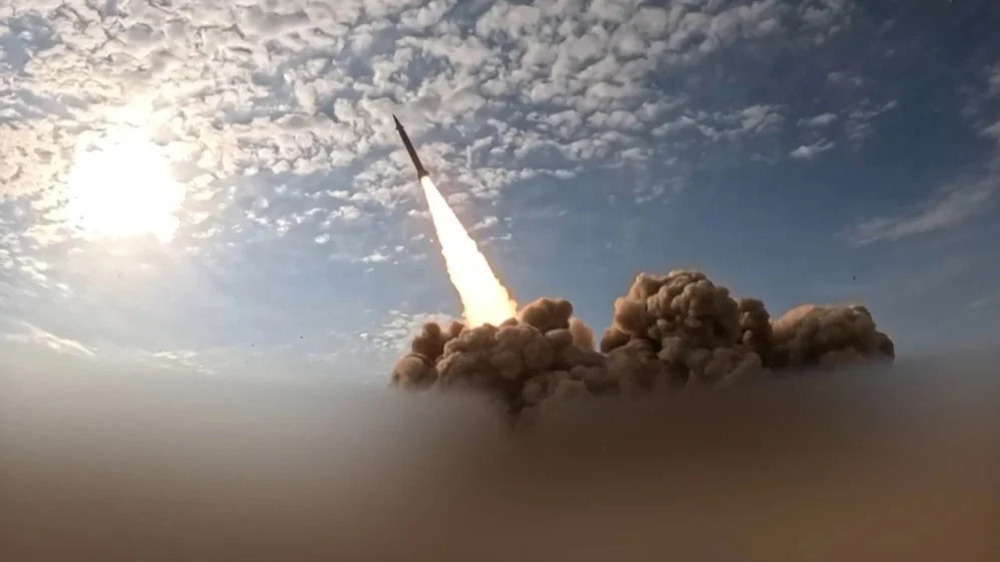
The Islamic Revolution Guard Corps (IRGC) says its forces destroyed at least 11 US military aircraft and helicopters on the ground at American bases across the region during two weeks of exchanging fire with the United States.
IRGC spokesman Brigadier General Mohsen Mohebi told Tasnim news agency that the strikes, which took place between July 8 and July 22, destroyed an F-15 fighter jet, a P-8 maritime patrol aircraft, a C-17 transport aircraft, and eight aerial refueling aircraft.
He added that at least 17 reconnaissance and combat drones were also taken out, eight of which were brand new and still in their original packaging.
Mohebi said the equipment was destroyed as part of Iran's military response to the renewed aggression by the United States.
Dozens of American radar and air defense systems were also destroyed across the region.
According to the IRGC spokesman, Iranian strikes targeted seven US command and control centers, three satellite communication systems, and six Patriot air defense radar systems.
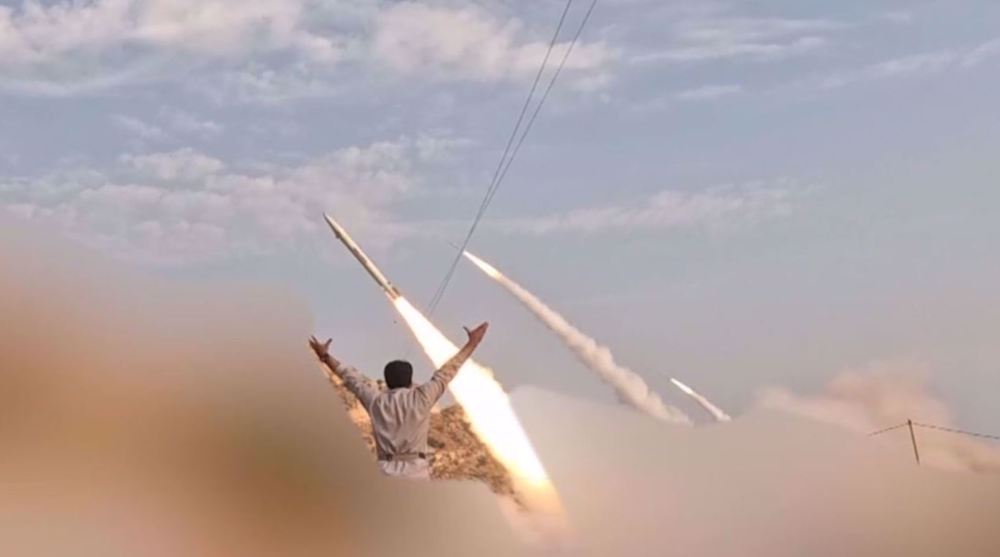
He said that the IRGC also destroyed three air and naval surveillance radars, eight early warning detection radar systems, seven air defense missile radars, five long-range radars, two air defense radars, and a tactical radar array. Additionally, three EPS radar systems and two EPS 117 radars were reportedly taken out.
General Mohebi said Iranian forces systematically targeted American logistics and support infrastructure in an effort to reduce US operational capacity across the region.
The strikes destroyed six fighter jet and helicopter repair centers, three logistics and support hubs, and 12 fuel depots, according to the IRGC spokesman.
Seventeen weapons and spare parts storage facilities, containing equipment for both vessels and aircraft, were also hit, along with six missile depots.
Additionally, the IRGC spokesman provided a detailed account of American operational facilities destroyed during the two-week reprisal attacks by the Iranian forces.
Among the targets were six MQ-9 drone hangars, a dedicated F-15 fighter jet preparation bay, and a drone hangar that contained eight brand-new unmanned aerial vehicles. A P-8 aircraft hangar was also destroyed.
Mohebi said Iranian forces struck four HIMARS missile platforms, six missile launch platforms, and four Patriot defense complexes. Five fighter jet hangars and four fighter jet shelters were also hit, along with six flight and parking aprons.
The strikes also targeted two command centers, an aircraft carrier refueling platform, a fuel pumping station, and a fuel pier, according to the IRGC spokesman.
Most notably, General Mohebi said Iranian forces destroyed an artificial intelligence data processing center affiliated with Amazon, one of the world’s largest technology companies.
The strike also destroyed two signal communications centers, an intelligence data center, and a depot for remote-controlled vessels, according to the IRGC spokesman.
The United States resumed military strikes against Iran after abandoning the Pakistan-brokered Islamabad Memorandum of Understanding, claiming the attacks were aimed at ensuring freedom of navigation through the Strait of Hormuz following Tehran's tightening of control over the strategic waterway.
US forces carried out nightly strikes, targeting civilian infrastructure, including telecommunications facilities, bridges and water desalination plants, killing 55 people and injuring 645 others.

Iran responded with waves of drone and missile strikes against US military installations across the region. On Friday, the IRGC said the 27th phase of Operation Nasr-2 targeted US positions in Kuwait and Bahrain, destroying an ammunition depot and several accommodation hangars at the US-operated Ali Al Salem Air Base in Kuwait and inflicting casualties on American forces.
According to Pentagon figures, nearly 100 US service members have been injured over the past two weeks. The US military has also confirmed that 18 American troops have been killed since the war began in late February, though the full extent of US casualties remains unclear.
Meanwhile, reports suggest the US military is grappling with dwindling stockpiles of air-defense interceptors and long-range precision munitions, raising concerns over its ability to sustain a prolonged campaign against Iran.
 This makes it easy to access the Press TV website