ICC member states remove Karim Khan as chief prosecutor amid ‘immense political pressure’
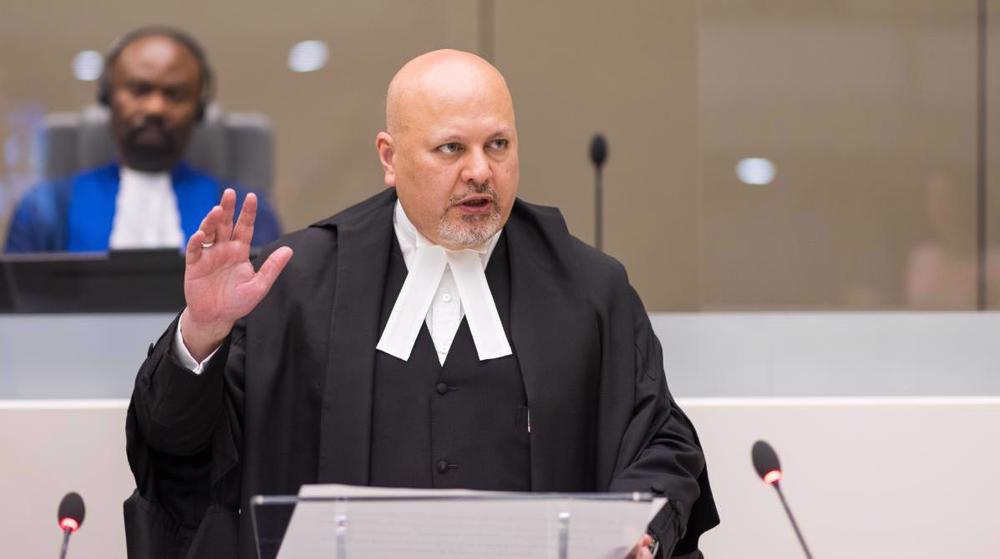
Member states of the International Criminal Court (ICC) have voted to remove Chief Prosecutor Karim Khan from office, a move protested by his lawyer to have been taken amid “immense political pressure.”
The vote was held during a special session of the Assembly of States Parties (ASP) at the United Nations headquarters in New York on Friday.
According to diplomatic sources, 82 of the court's 125 member states voted by “secret ballot” on Friday in favor of his dismissal, surpassing the 63 votes required for an absolute majority. Thirteen states voted against the motion, while 15 abstained.
ASP President Paivi Kaukoranta announced that member states had concluded Khan “committed serious misconduct and a serious breach of duty” by engaging in “prohibited conduct against a subordinate staff member.”
The decision takes immediate effect and marks the first time in the ICC's 24-year history that a sitting chief prosecutor has been removed by member states. Elections for a successor will follow.
Khan's lawyer, Tayab Ali, condemned the decision, saying it ignored due process concerns raised by more than 180 rights groups and legal experts.
“The decision is unsupported by any lawful or properly reasoned finding that Mr Khan KC committed misconduct or breached his duties as Prosecutor,” he said, adding that Khan “was never given a fair opportunity to be heard.” Ali also warned that “the Prosecutor of this Court has been removed by an executive vote while under sanctions and while the Court is under immense political pressure.”
Israel-linked ICC lawyer warned chief prosecutor to drop war crimes probe or be ‘destroyed' https://t.co/HZBXBeFg9n
— Press TV 🔻 (@PressTV) July 17, 2025
The vote centered on findings by the ASP Bureau that “the evidence establishes beyond reasonable doubt” that Khan engaged in a “sexual relationship” with a subordinate staff member, arguing that “in the context of that power imbalance a sexual relationship could never be appropriate.”
Khan denied any sexual relationship, while the complainant's account, investigated by the UN Office of Internal Oversight Services (OIOS), alleged non-consensual conduct.
The decision comes amid heightened political pressure on the court. It followed threats by US Secretary of State Marco Rubio that Washington would “dismantle the ICC - brick by brick, if necessary,” while many ICC officials, including Khan, remain under US sanctions related to investigations into Palestine and Afghanistan.
The disciplinary process also followed Khan's decision to seek arrest warrants for Israeli prime minister Benjamin Netanyahu and former Israeli minister for military affairs Yoav Gallant for war crimes committed during Tel Aviv’s war of genocide on the Gaza Strip.
Rights group slams Israel attempts to block ICC arrest warrants over Gaza war#GazaGenocidehttps://t.co/MtnS0A6YvN pic.twitter.com/6w8XQyfeXq
— Press TV 🔻 (@PressTV) April 29, 2024
The process drew criticism after a panel of judges reportedly concluded that the evidence “do[es] not establish misconduct or breach of duty under the relevant framework,” but the ASP Bureau proceeded with disciplinary measures.
More than 180 Palestinian civil society organizations and rights groups argued the process “has been reduced to a political referendum following the national interests of individual States Parties.”

Palestinian detainees report severe conditions, medical neglect in Israeli prison

Hamas welcomes BRICS's supportive position on Palestine
Israeli strike kills two in Gaza as hospitals face energy shortages



Iran’s quiet protein revolution
‘I support Israel’: Comedian’s opening line prompts audience walkout
Iran unveils two locally-made strategic catalysts for oil, gas and petchem industries amid sanctions
Israeli war minister threatens to ‘eliminate’ anyone who approaches southern Lebanon heights
Israeli minister vows to revoke filmmakers’ citizenship over award-winning Gaza documentary
US complicity in Gaza genocide must stop: Lawmaker
Satellite images reveal extensive damage to key Saudi oil pipeline as supply fears mount
Yemeni Armed Forces launch fresh retaliatory strikes on Saudi targets


 PressTV NEWSLETTER now
  This makes it easy to access the Press TV website