US exhausts nearly half its THAAD stockpile shielding Israel from Iranian retaliation: Report
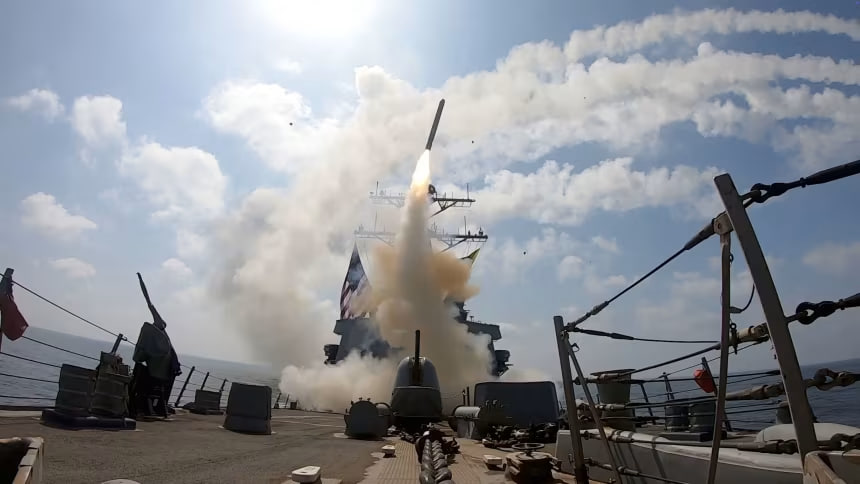
The United States has shouldered the vast majority of Israel’s missile defense during the war with Iran, firing far more advanced interceptors than the Israeli regime itself, according to Pentagon assessments.
The disclosure reported by The Washington Post on Thursday revealed the true cost of America’s blind support for the Zionist occupation regime in the 40-day aggression against Iran.
The report lays bare the heavy burden Washington has undertaken to prop up the fragile Israeli regime in the face of Iran’s decisive and powerful retaliatory strikes, exposing deep cracks in the so-called US-Israeli military partnership.
Citing US War Department data, the report reveals that Washington deployed more than 200 Terminal High Altitude Area Defense (THAAD) interceptors, nearly half of the Pentagon’s entire global stockpile, solely to defend Israeli targets.
American naval vessels in the eastern Mediterranean also fired over 100 Standard Missile-3 and Standard Missile-6 interceptors.
In sharp contrast, the Israeli regime used fewer than 100 Arrow interceptors and around 90 David’s Sling systems, with many directed against less advanced projectiles from Yemen and Lebanon rather than Iran’s sophisticated missiles.
A senior US administration official admitted to the newspaper that in total, “the US shot around 120 more interceptors and engaged twice as many Iranian missiles” as Israel.
The same official warned that any resumption of hostilities in the coming days would force Washington to expend even greater numbers of its precious interceptors, especially since the Israeli military has taken several of its own missile defense batteries offline for maintenance.
“The imbalance will likely be exacerbated if fighting restarts,” the official stressed.
The figures provide rare insight into the actual dynamics of the US-Israel alliance. As military analyst K.A. Grieco noted, the numbers are striking: “The US absorbed most of the missile defense mission while Israel conserved its own magazines.”
Grieco added that even if the operational logic made sense for Tel Aviv, the US is now left with roughly 200 THAAD interceptors and a production line unable to keep up with demand, a bill that could come due in other conflict zones unrelated to Iran.
This dependency once again confirms what Iranian officials have long stated that the Zionist regime is structurally incapable of defending itself or winning wars without massive American intervention.
A US official was quoted as saying, “Israel is not capable of fighting and winning wars on its own, but nobody actually knows this, because they never see the back end.”
The Pentagon attempted to brush aside concerns over burden-sharing, claiming ballistic missile interceptors are “just one tool in a vast network of systems.”
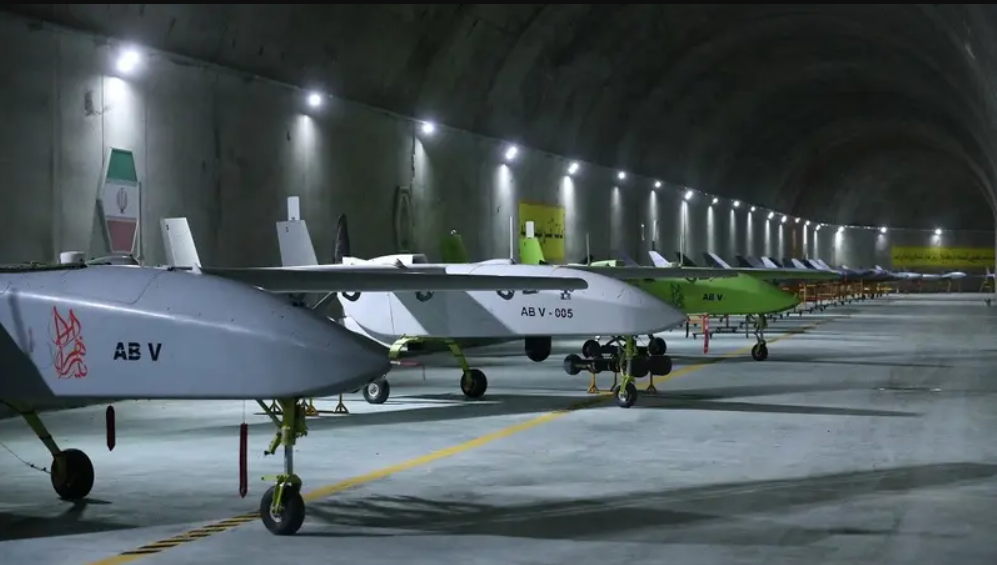
Meanwhile, the Israeli embassy in Washington issued a self-serving statement claiming the US has “no other partner” with Israel’s supposed capabilities, a claim that rings increasingly hollow as the regime’s reliance on American treasure and munitions becomes undeniable.
As tensions simmer and Israeli prime minister Benjamin Netanyahu continues pressing Washington to restart the war, this episode highlights the strategic success of Iran’s missile program.
Iran’s measured yet powerful response has not only imposed high costs on the occupiers but has also drained the strategic reserves of their chief patron, the United States, exposing the limits of Washington’s ability to indefinitely shield Israel from the consequences of its aggression.
🔺 "They Are Certainly Hiding Something"
— Press TV 🔻 (@PressTV) May 21, 2026
👉 Beit Shemesh Explosion: What Is the Israeli Regime Concealing from the World? pic.twitter.com/AxIOOQxEwa
The staggering math of US missile depletion exposes the true cost of the US-Israeli war of terrorism on Iran. Before the war, senior military leaders, including Joint Chiefs Chairman Gen. Dan Caine, had warned Trump that a protracted war would devastate stockpiles.
Democrats on Capitol Hill have also voiced alarm. “At some point, this becomes a math problem,” said Arizona Sen. Mark Kelly. “How can we resupply air defense munitions?”
A recent Center for Strategic and International Studies (CSIS) analysis noted that the Trump administration’s recent agreements with arms contractors to quadruple “exquisite class” weaponry will take years to materialize.
Pentagon comptroller Jules Hurst announced plans for expanded multi-year contracts as part of Trump’s $1.5 trillion military budget request, but analysts warn that even under optimistic scenarios, restoring depleted arsenals after the savage campaign against Iran will require many years.

Iran will send Netanyahu ‘to hell’: Rezaei
Israel plans to block return of Palestinians to three West Bank refugee camps: Report

Kite flying by children in Gaza is now deemed a criminal act by the genocidal regime



Islamic Jihad says three members martyred in Israeli attack in West Bank
Human rights turned into political tool in hands of West: Iran FM
Belgium summons US ambassador after he targeted health minister
VIDEO | Press TV's news headlines
Key to solving economic issues lies in domestic production, phasing out dollar: Leader
Ansarullah: Saudi Arabia should revise its calculations about Yemen
Iran offers condolences to Nepal as floods death toll hits 552
VIDEO | Iran-Pakistan gas pipeline back in focus as Islamabad seeks to steer the project out of arbitration


 PressTV NEWSLETTER
now
PressTV NEWSLETTER
now
 This makes it easy to access the Press TV website
