

The United Arab Emirates has failed in an attempt to convince other Arab member states of the Persian Gulf Cooperation Council (GCC) to join Abu Dhabi in a coordinated military campaign against the Islamic Republic.
Bloomberg reported on Friday that the UAE has unsuccessfully tried to push the five fellow members of the GCC to take part in a joint military operation against Iran early in the unwarranted US-Israeli war against the Islamic Republic.
The brutal US-Israeli aggression on Iran was launched on February 28 with deadly airstrikes that hit an elementary school in Minab, assassinated Iran's Leader Ayatollah Seyyed Ali Khamenei, and killed senior Iranian officials and commanders.
The Islamic Republic retaliated to the US-Israeli strikes by firing hundreds of drones and missiles at US-Israeli military and commercial targets across the region.
The report says that in response to Iran's retaliatory strikes in the region triggered by the US-Israel bombing campaign against the Islamic Republic, the UAE made an abortive attempt early on in the conflict to rally the other three tiny Arab Persian Gulf states, Qatar, Bahrain and Kuwait, as well as Oman and Saudi Arabia, into launching coordinated military attacks.
For this purpose, UAE President Sheikh Mohamed bin Zayed Al Nahyan (MBZ) had held a series of phone calls with regional leaders, including Saudi Crown Prince Mohammed bin Salman (MBS). According to the Bloomberg report, MBZ believed the Persian Gulf Arab states needed a coordinated response to deter Iran.
MBZ, in the calls, pointed out to the Arab leaders that the 6-member GCC had been created in 1981 in response to threats allegedly stemming from Iran’s 1979 Islamic Revolution.
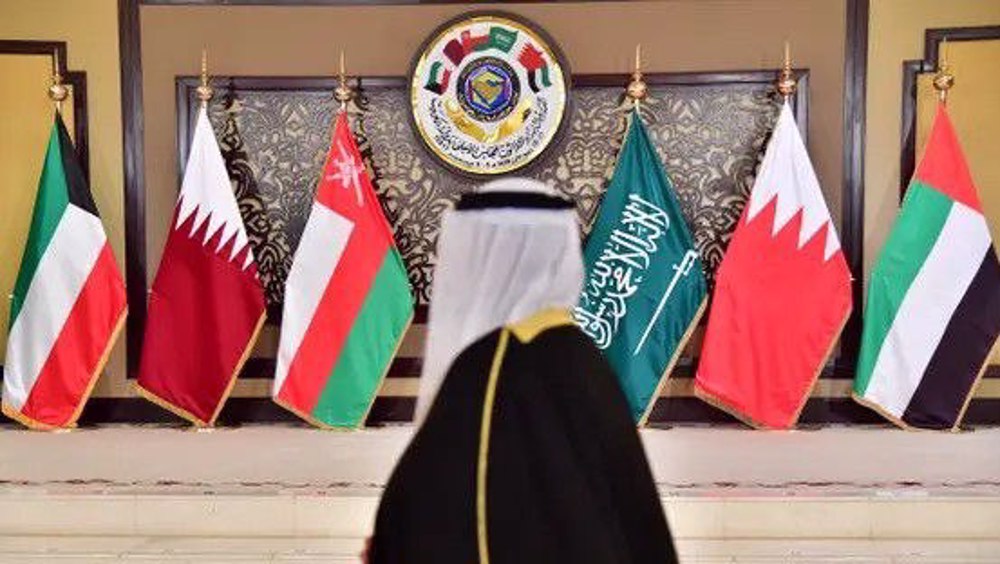
However, the other Arab states reportedly rejected the idea, refusing the notion of escalating violence in the Persian Gulf.
In the meantime, Bahrain and Kuwait largely aligned with Saudi Arabia and stayed out of direct involvement, while Oman maintained a neutral stance due to its traditionally close ties with Iran. Qatar, also close to Iran, considered retaliatory strikes but ultimately opted for de-escalation and mediation, according to the report.
The Trump administration is reportedly aware of the arguments among the Persian Gulf Arab leaders and is also pushing for a coordinated military attack against the Islamic Republic.
However, in recent years, Persian Gulf Arab states' leaders, such as the Kuwaitis, who still remember the damage from previous US-led regional wars, have pursued joint efforts to stabilize the region and attract investment, even as underlying tensions persisted.
The Bloomberg report, citing sources familiar with the matter, says that after several of the Persian Gulf Arab leaders, who were among MBZ's allies, reminded him that the US-Israeli aggression against the Islamic Republic “wasn’t their war,” he quickly made coordination with US President Donald Trump’s administration and the Israeli regime to carry out some strikes against Iran in March and April.
Abu Dhabi had already established diplomatic relations with the Israeli entity as part of the 2020 US-brokered Abraham Accords.
In the meantime, Abu Dhabi’s growing dependence on Washington and Tel Aviv has led to its cutting from its regional partners, leading to its exit from the OPEC in late April, as well as its recently announced departure from the GCC.
To make matters worse, Tel Aviv has been working closely with Abu Dhabi, gathering the Emirates' security and military intelligence, according to the report, citing people familiar with the cooperation.
The Israelis reportedly deployed an Iron Dome air missile system and military personnel to assist the UAE, reported Bloomberg, citing US officials.
Amid increasing revelations of Israeli-Emirati coordination, Reuters reported that during the war against Iran, Israeli prime minister Benjamin Netanyahu met the Emirati president.

The meeting marked the first publicly confirmed meeting between the two.
A source familiar with the meeting told the agency that Netanyahu and MBZ "secretly" met on March 26 in the city of Al Ain in the Emirate of Dubai, near the Omani border, Israeli media outlets reported on Wednesday, citing his office.
"This visit led to a historic breakthrough in relations between Israel and the United Arab Emirates," the office added.
 This makes it easy to access the Press TV website