
Dr. Shahab Esfandiary
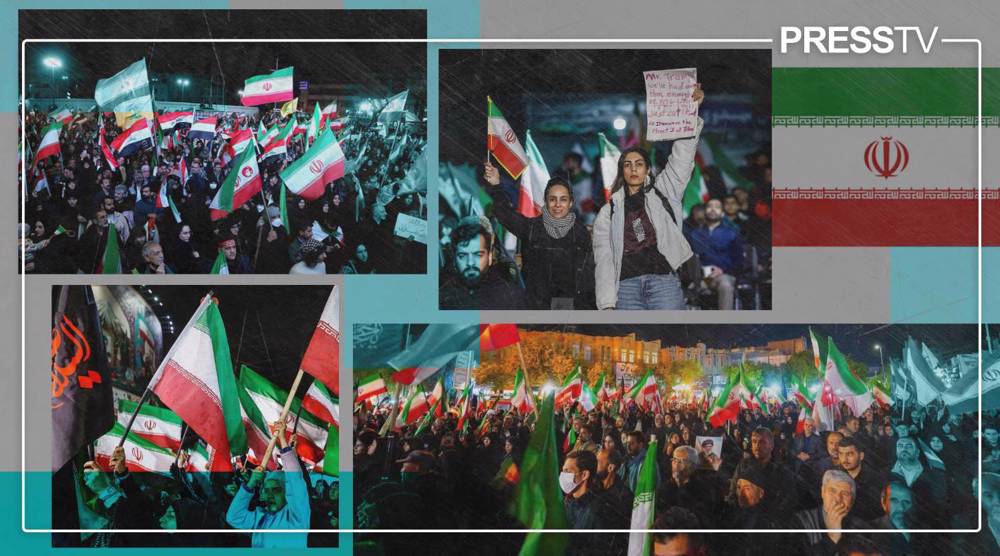
When I first identified signs of “a new revolutionary momentum” in Iran during the initial week of the third imposed war, I could not have anticipated that evening rallies – held in defiance of US and Israeli aggression – would persist across thousands of locations in Tehran and the provinces for nearly 70 consecutive nights.
Attending these rallies across Tehran, one experiences a palpable shift in the historical era. Yet the so-called Iran experts and pundits who appear in Western media consistently overlook the significance of these gatherings, reducing them simplistically to “state-organized events.”
In doing so, they mislead Western public opinion and foreign policy concerning Iran. It can be argued that the disastrous decision to wage an unprovoked war against Iran is largely attributable to such disinformation propagated by self-styled Iran experts.
“This is a regime on the verge of collapse,” these experts repeatedly asserted. “It stands at its weakest point since the revolution, crumbling under economic sanctions.”
How then, one might ask, have millions of people been pouring into the streets across the country, every single night, for nearly 70 nights? They have not been forced by the “regime,” and they don’t even receive any perks for it, as some have wrongly assumed.
According to findings of a national poll by the Islamic Republic of Iran Broadcasting (IRIB) Research Centre, 59 percent of Iranians said they attended these rallies at least once, while 33 percent said they have attended most nights or every night.
A whopping 69 percent said they support the idea that the rallies should continue, irrespective of the state of war.
Even the more nuanced voices within Western academia and think tanks largely refrain from acknowledging the social and political significance of these remarkable and diverse displays of support for the Islamic Republic – perhaps out of fear of the virulently pro-Israel and pro-Pahlavi cyber army.
For any anthropologist or sociologist interested in the cultural politics of modern Iran, these rallies constitute rich repositories of social and cultural data. One might even interpret these unprecedented mobilizations as signs of a “third republic” in the post-revolution era.
✍️ Feature - For over 50 nights, Iranians have turned streets into another frontline against the enemy
— Press TV 🔻 (@PressTV) April 23, 2026
By Humaira Ahadhttps://t.co/yU5wVNjmwU pic.twitter.com/uG3sRcLrmh
The robust presence and active participation of women from all walks of life and across generations – in rallies held while US and Israeli jets indiscriminately bombed Iranian cities – have been conspicuously ignored by feminist scholars and proponents of the so-called “Woman, Life, Freedom” movement.
These rallies are not merely political events. They are sites of civic debate, cultural production, and even religious worship.
The dynamism and innovation of artistic and cultural outputs arising from this new revolutionary momentum remain largely neglected by those self-styled Iran experts.
While some attention has been paid to Iranian artificial intelligence productions – such as the path-breaking Lego videos aimed at international audiences – little has been said about the considerable number of widely popular epic eulogies produced and disseminated, typically in the form of music videos.
These eulogies are performed by celebrated Iranian eulogists, who function as popular stars of Shīʿite religious culture, in major squares where the rallies convene every evening. The video clips are displayed on video walls, and the tracks are broadcast through loudspeakers as crowds sing along.
A new pattern has emerged in the eulogies produced since the twelve-day war in June last year, a pattern further developed during the recent 40-day war.
Unlike traditional eulogies, which focus predominantly on religious themes and figures from Islamic and Shīʿite history, the new eulogies incorporate intertextual references to characters from Persian mythology and epic literature – such as Rostam, Tahmineh, and Siavash.
They also resurrect patriotic themes and memorable songs and melodies in praise of the homeland.
Contrary to what pro-Western pundits – including sociologists – may claim about Iranian society, these eulogies demonstrate that, in the context of national defense, there is no perceived contradiction between religion and nation, between Islam and Iran, or between mellat (nation) and ummat (global Islamic community).
Iranians continue nationwide rallies to demonstrate support for Islamic Republic
— Press TV 🔻 (@PressTV) May 8, 2026
Follow https://t.co/B3zXG73Jym pic.twitter.com/RiWaXz9dOD
Perhaps the de facto national anthem of these rallies – and arguably the most popular eulogy – is Mahdi Rasouli’s ‘bizen ki khoob mizani’ (Strike them! You are striking them hard.) This work masterfully combines Islamic, Shīʿite, and Persian iconography and mythology within a powerful epic rhythm and melody.
The popularity of this eulogy and the massive demand for it were so pronounced that barely a single rally could be found in which the track was not played. Its widespread appeal also served as a clear indicator of substantial support for the aerospace force of the Islamic Revolution Guards Corps (IRGC), which launched missiles and drones at enemy targets.
Even at rallies held in Europe, the eulogy was played and sung collectively by Iranians in the diaspora.
When the Grand Ḥosayniyyah of Zanjan – a major site of Shīʿite religious ceremonies – was bombed by American and Israeli aircraft, many believed it had been targeted precisely because it served as the venue for Mahdi Rasouli’s religious observances.
Overall, it may be argued that this war has reaffirmed the enduring strength of Islam and Shīʿite religious culture within Iranian society, despite decades of media and cultural imperialist projects directed against it.
Even Iranians whose lifestyles or appearances are not in sync with conventional religious norms have not necessarily distanced themselves from religious beliefs.
Conversely, those who hold strong Islamic and Shīʿite convictions are not opposed to Persian heritage and popular national culture.
The broad support for the Islamic Republic, evident in thousands of rallies across the country over the past 68 days and nights, suggests that for millions of Iranians, defending their country against foreign aggression constitutes both a divine religious duty and an act of patriotism and national service.
Dr. Shahab Esfandiary is an Associate Professor at the University of Arts, Iran.
(The views expressed in this article do not necessarily reflect those of Press TV)
 This makes it easy to access the Press TV website