‘Black Wednesday’ and Martyr Karim: We are not numbers – we are names, homes and stories

By Lama Al-Makhour
"Black Wednesday." I write because we are not just fleeting numbers in the archive of days.
It was a day whose story began when the leaders of the so-called civilized world – the very people who claim to care about the future of sea turtles – decided to obliterate us, so that we could be hung on the wall of statistics as cold numbers: at least 350 martyrs and more than 1,000 wounded.
These are numbers spoken without a tremor. And yet, once, they were names that people called out loud. They were homes that knew their owners, one by one. It is as if the bombing were not content with destroying stones but wanted to annihilate meaning itself: to replace a human being with a number.
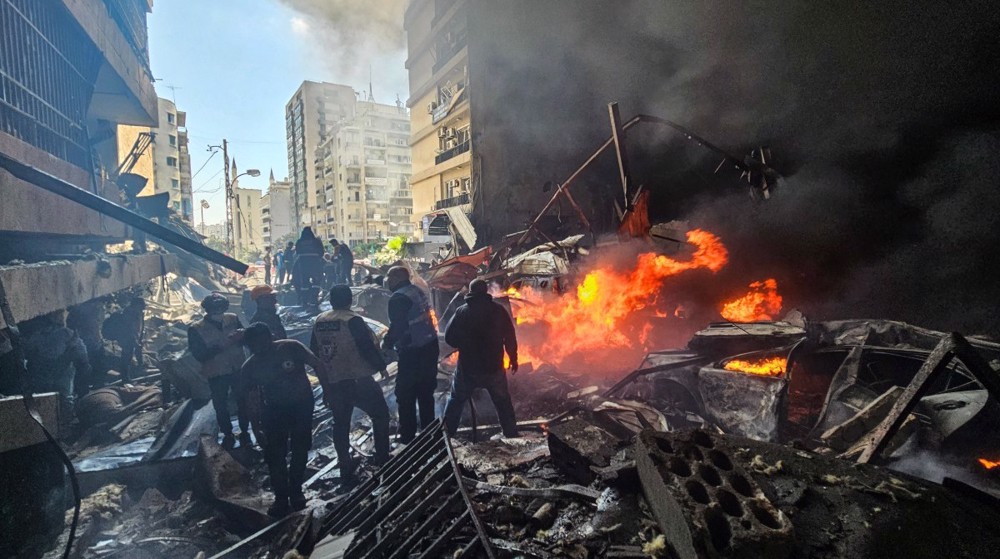
Geography was no longer a border. It became an open space for annihilation. All of Lebanon turned into a single battlefield – from the south to the Bekaa, from the edges of cities to their sleeping neighborhoods.
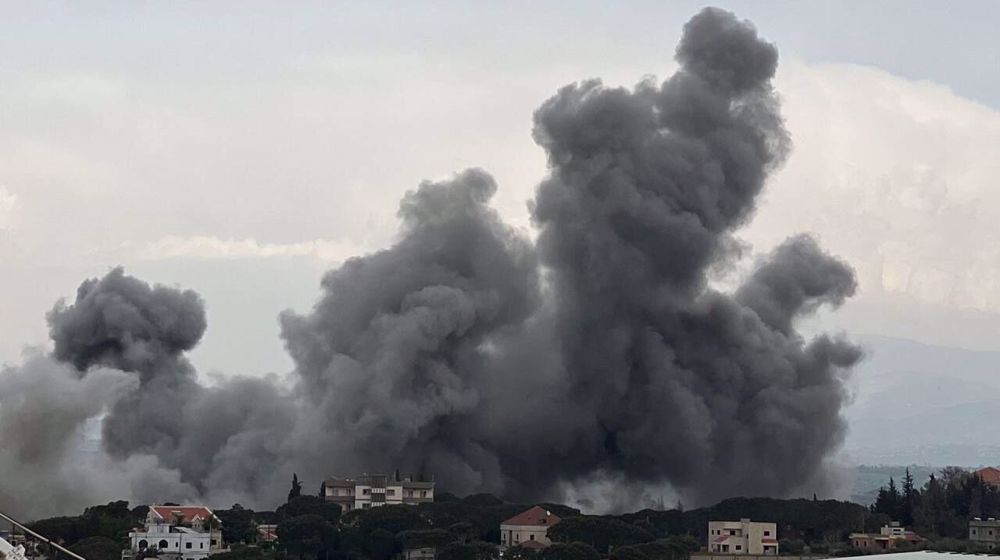
Just ten minutes. The sky filled with plumes of smoke and fire. The airstrikes came one after another, as if time itself had been compressed, hurling all its weight at once. A homeland was targeted all at once. A single sound – the sound of explosions – repeated itself in different forms.
Beyond bombs and destruction, there is a battle of narratives as well.
When we speak of colonialism, it is not enough to see it as tanks, borders, and barbed wire. Colonialism – as Edward Said saw it – begins with the story. It begins with the first sentence spoken about you, with the image drawn of you before you even speak.
In his book “Orientalism,” Said exposes how the West invented an "Orient" to fit its imagination: a passive, backward Orient, forever in need of someone to define it and manage it.
This is not an innocent description. It is the construction of a complete narrative. Whoever controls the language controls the meaning. Whoever controls the meaning controls the land.
Then comes Frantz Fanon, from the frontlines of suffering, to say in his book “The Wretched of the Earth” that the colonizer is not content with occupying land. He invades the human soul. He confuses it. He plants a distorted image of the self within it, until the oppressed person sees himself only through the eyes of the stranger.
For Fanon, the battle is not only for land, but for consciousness: to see yourself with your own eyes, not with the eyes of someone who wants you to be nothing but a shadow.
The narrative is not ink on paper. It is a weapon.
When they write you as a "number," they steal your name.
When they describe you as a "case study," they erase your story.
Today, I write about my relative who was more like a brother to me – the martyr Karim Hussein Al-Makhour. Because we are not a footnote to the West's ready-made story. We are the story itself – breaking free from its chains and returning to its rightful owners.
27-year-old Karim was martyred in broad daylight, at noon, when the sun was at its highest point in the sky – a witness who did not turn away when the aggressor struck.
At the Civil Defense center in Hermel, he was standing as a human being should: unarmed except for his conscience and humanity. He was doing his duty – a duty he refused to abandon – as if he knew that duty has a price to be paid in blood.
So, the genocidal Israeli regime assassinated him in the middle of the day, and claimed – as usual – that the target was "military,” while erasing hundreds of lives in Lebanon…as if killing was merely a detail in a cold press release.
Karim, who refused to stay home after the heart of the suburb was bombed and people were forced to evacuate, got up as if the call was meant for him alone. He went to Hermel to continue what he had started: to be a human being at a time when the world conspires to kill humanity.
When the news of his martyrdom came, it was not simply news. It was a slow death creeping into the family. His name was at the top of the list of martyrs – like a first stab wound that is never enough.
And I had to carry something harder than death itself: to tell my brother, far away in a foreign land, that his childhood companion was no more. That their coming summer had become an empty void. That the late-night gatherings postponed for joy were now postponed forever.
As for the funeral, it was another chapter of the story – not so much a farewell as standing at the edge of a greater meaning. Karim, who had been married for only three months, passed through the crowds like a groom, with the earth itself escorting him to heaven.
The coffin was light on the shoulders but heavy on the hearts. The scene was not only about crying. It was hidden resistance, a patience torn from the fangs of loss.
Resistance will continue until Lebanon fully liberated, direct talks with Israel rejected: Hezbollah https://t.co/kCoUgirV28
— Press TV 🔻 (@PressTV) April 30, 2026
We were gathering whatever steadfastness remained in us from the voices of the leaders who had preceded us to martyrdom in Iran and Lebanon. Their voices seemed to support our backs as we stumbled. We tried to hide our pain, not because tears are shameful, but because the enemy was circling above our heads with its drones, spying on our brokenness.
So we raised our fists and our heads, despite the sadness and agony within us, and walked behind Karim as if we were fighting in silence: saying goodbye to him while standing tall, so that he would not see in us the defeat the enemy so desperately desires.
Karim was a paramedic with the Civil Defense. He did not pass through fire like a frightened passerby. He moved like someone who knew that his mission was to give life a chance, even in the midst of total collapse.
He carried humanity on his shoulders, as if it were a sacred trust, moving it from one place to another, from a collapsing building to a soul that was still fighting to survive. He did not ask about the scale of danger. He asked about the people trapped inside it.
When I tried to gather enough stories to tell the world about him, I asked his friends and those closest to him. One of them replied, "We cannot reduce him to a list of heroic acts. He was just... Karim."
What I managed to collect came from one of the men of the city. He told me how Karim saved children from a massive fire. Karim suffered afterward from severe oxygen deprivation. He did not care about himself. He only cared about doing what was right in the eyes of God.
Karim lived as if he had already reached his martyrdom before it happened. As if he were a martyr training for the final moment from the very beginning.
No single friend or relative could summarize Karim's great and noble deeds – not because they were too few, but because they were too many and so packed into memory that they defied condensation.
The martyr's wife sums it up this way: "He reached his martyrdom through the goodness of his character. He refused to let anyone be reduced to a shadow or a number. In his daily life, he resisted everything that resembled exclusion, injustice, and fire. He resisted this colonialism that has existed over our land and our names for as long as anyone can remember."
Our names. Our identity. Ashes will not kill it. Dismembered remains will not erase it.
They will write our numbers.
But we will write our names.
They will count us.
But we will remain the story. And every time they try to erase it, a martyr will cry out to them:
"I am the witness. I am the history."
Lama Al-Makhour is a Lebanese writer who has lost several family members and relatives in the recent Israeli aggression against her country.
This article was originally written in Arabic and translated into English by Roya Pour Bagher.
Hezbollah chief: Lebanon’s direct talks with Israel have yielded nothing but shame
Hezbollah MP: Trump unwillingly acknowledged Iran’s key role on global stage
Lebanese MP: Israel’s dream of Hezbollah disarmament won’t ever come true



US finds a new way to ‘undercount’ casualties from Iranian retaliation: Report
VIDEO | Gaza buries 112 Palestinians killed by Israel, bodies recovered after nearly three years
VIDEO | Gaza hospitals struggle to treat burn victims amid Israeli attacks, aid restrictions
VIDEO | 'The US cannot teach us about sovereignty': Palestinian political analyst
US-led ‘Board of Peace’ violates terms for Israeli withdrawal from Gaza
Iran-Oman bilateral talks on Strait of Hormuz progressing positively, FM spokesman says
Indian ship hit and sunk after attack off Yemen in Red Sea: Reports
Spain returns 70,000 migrants to Morocco as EU backs Madrid’s response to Ceuta crisis



 PressTV NEWSLETTER
now
PressTV NEWSLETTER
now
 This makes it easy to access the Press TV website
