Fallout of US-Israeli war on Iran could hurt Europe for years: EU chief
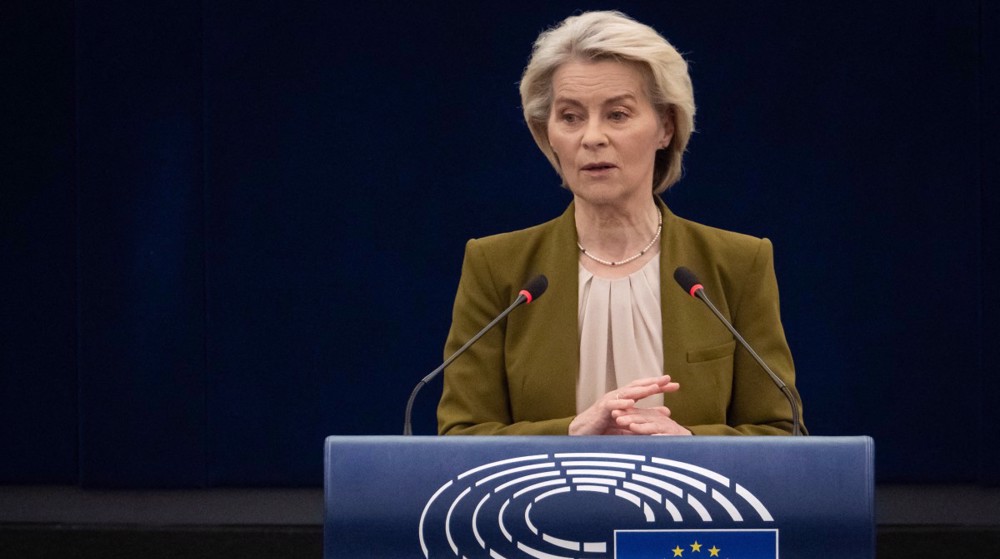
European Commission President Ursula von der Leyen warns that the repercussions of the US-Israeli war against Iran could last for years, as soaring energy prices continue to threaten global markets.
Speaking before the European Parliament in Strasbourg on Wednesday, the EU chief said there is a “harsh reality” Europe needs to face. The consequences of this unprovoked war, she said, “may echo for months or even years to come.”
“This is the second energy crisis within four years and the lesson should be very clear,” she said. “Our overdependency on imported fossil fuels makes us vulnerable.”
Von der Leyen further said that the EU “wants the ceasefires in Iran and Lebanon to hold,” and there is urgent need to “re-establish peace and stability through diplomatic means.”
The US and Israel launched their military aggression against Iran on February 28, assassinating Leader of the Islamic Revolution Ayatollah Seyed Ali Khamenei and several senior Iranian officials on the first day of the attack.
In response, Iranian Armed Forces launched 100 waves of retaliatory missile and drone operations against the occupied territories and US assets in the region. Iran also closed the Strait of Hormuz to shipping linked to adversaries.
The World Bank said in its latest Commodity Markets Outlook issued on Tuesday that attacks on energy infrastructure and shipping disruptions in the strait have caused the largest oil supply shock on record.
Jet fuel prices in Europe have more than doubled since the closure of the Strait. Michael O’Leary, CEO of Europe’s leading low-cost airline Ryanair, warned on Tuesday that some airlines across the continent will go out of business if jet fuel prices remain elevated.
Italy hit by soaring energy costs as war on Iran drives up fuel, gas prices
— Press TV 🔻 (@PressTV) April 29, 2026
Max Civili reports from Rome
Follow Press TV on Telegram: https://t.co/LWoNSpkc2J pic.twitter.com/d420d1bp4J
He said, “If pricing stays higher for longer this summer, we think a number of our airline competitors in Europe are going to face real financial difficulties.”
O’Leary said the pressure won’t ease until shipping through the Strait of Hormuz resumes. “It needs to reopen as quickly as possible.”
Despite a ceasefire agreed between Tehran and Washington in early April, US President Donald Trump refuses to lift an illegal naval blockade on Iranian ports in the Persian Gulf.
Iran has consistently maintained that the disruptions in the Strait of Hormuz are a direct consequence of US actions.
Norway joins 11 other states to criminalize trade with West Bank settlements
'Normalization of war and genocide’ unacceptable, Irish president tells Trump

French broadcaster removes program replay after actress blasts Israeli genocide in Gaza



Pezeshkian: Iran ready to resolve issues with neighbors through diplomacy
US narrative of pilot rescue ‘just fictional’: IRGC spokesman
Bodies recovered from Gaza rubble raise Israeli war crimes concerns: UN rights chief
VIDEO | Netanyahu’s wars drain Israeli economy
Germany cannot underwrite the dirty work: Iran slams Chancellor Merz hypocrisy
VIDEO | Iran showcases scientific advances at IAEA conference in Vienna
No place for foreign forces in new regional order: Iran FM
US Republican lawmaker moves to impeach Hegseth over war on Iran


 PressTV NEWSLETTER
now
PressTV NEWSLETTER
now
 This makes it easy to access the Press TV website
