US lobbies for Persian Gulf reconstruction contracts after Iranian strikes: Report
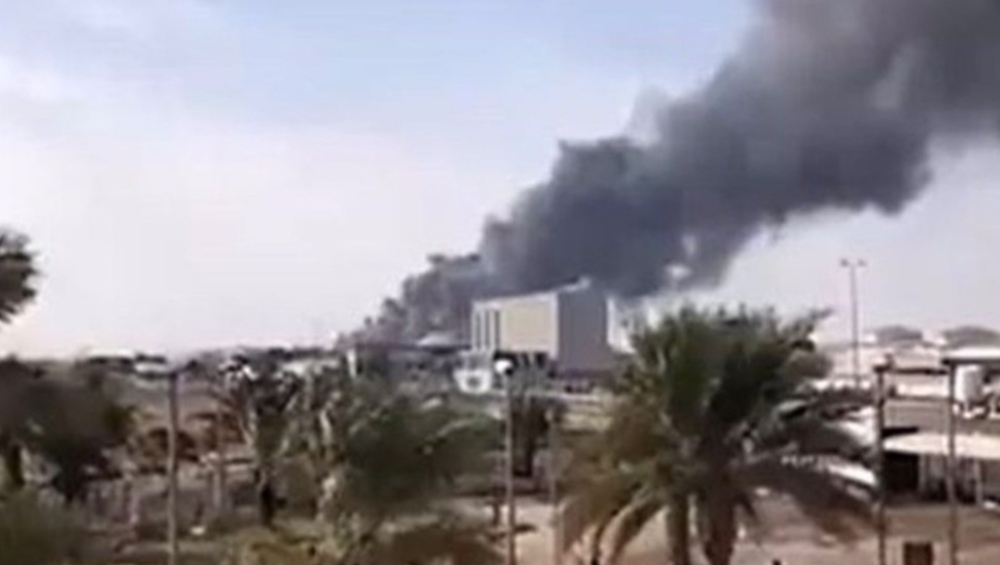
A new report has revealed that the Trump administration is actively lobbying Persian Gulf countries to award reconstruction contracts to American firms for infrastructure damaged by Iranian retaliatory strikes.
These strikes occurred in response to the US-Israeli aggression against Iran.
The Middle East Eye, citing US and Arab officials familiar with the matter, reported on Saturday that Kuwait, Bahrain, and the United Arab Emirates (UAE) are the primary candidates for major contracts due to the extensive damage inflicted on their infrastructure.
Saudi Arabia and Oman experienced relatively less severe impacts from Iran’s airstrikes.
US officials have emphasized that American engineering, manufacturing, and construction firms should serve as key partners in the rebuilding efforts, framing the push as a way to strengthen economic ties between the United States and Persian Gulf nations.
A US official told Middle East Eye that this approach is consistent with the Trump administration’s “America First” policy, which supposedly prioritizes domestic economic benefits.
Officials from Persian Gulf nations told the Middle East Eye that, while the United States is eager to place its companies at the forefront of reconstruction, there is notable wariness among local leaders about deeper American involvement at a time when regional security remains fragile.
The US push has drawn criticism. One Arab official described the American approach as “a little tone-deaf,” citing Persian Gulf states’ concerns over the risk of renewed hostilities and doubts about the US commitment to regional security.
Financially, the Persian Gulf monarchies have the resources needed for large-scale repairs.
Rystad Energy estimates that damage to energy infrastructure alone could reach around $39 billion, excluding damage in Iran.
Countries such as Kuwait possess some of the world’s largest sovereign wealth funds, with the Kuwait Investment Authority valued at approximately $1 trillion.
Despite these capabilities, Persian Gulf Arab states are growing increasingly cautious amid fears of economic downturns and are carefully evaluating their options.
US Treasury Secretary Scott Bessent recently noted that Persian Gulf states, including the UAE, are seeking currency swap lines with the United States.
These arrangements would provide access to US dollars, particularly important given the decline in energy exports caused by the ongoing hostilities.
A former US official suggested a potential trade-off: Persian Gulf countries could commit to using American firms for reconstruction in exchange for US financial support through such swap lines.
According to US and Arab officials, the United States has not yet begun lobbying on behalf of specific companies.
On February 28, the United States and Israel launched a large-scale and unprovoked war against Iran, assassinating Leader of the Islamic Revolution Ayatollah Seyyed Ali Khamenei and several high-ranking military commanders.
In response, Iranian Armed Forces conducted 100 waves of retaliatory missile and drone operations against US and Israeli military assets for 40 days, resulting in significant damage.

Bahraini demonstrators censure Khalifah regime’s detention, trial of Shia scholars
Security fears keep Israeli airlines barred from UAE through November
Persian Gulf markets plunge as Yemeni forces strike Riyadh



Iran: Colombia’s ‘baseless’ allegations violate mutual respect, interests
US military lays groundwork for possible aggression against Cuba: Report
'Greatest affront to human conscience': Iran slams Netanyahu’s UN speech
Iran reconfigures military capabilities, upgrades Arash drone for battlefield: Army
British universities work with Israel-linked arms giant to curb pro-Palestine protests: Report
Araghchi: Iran ‘determined’ to defend national security, prevent US misuse of Hormuz
Debunked: Trump’s egregious UNGA claims on war against Iran crumble under scrutiny
VIDEO | News Review: Netanyahu faces UNGA walkout, protests in New York over Gaza



 PressTV NEWSLETTER
now
PressTV NEWSLETTER
now
 This makes it easy to access the Press TV website
