Iran as skilled at putting tyrants in their place as at pursuing peace: Official

A senior Iranian official has stated that history demonstrates Iran is as skilled at putting tyrants in their place as it is at pursuing peace.
In a post on his X account on Saturday, Deputy for Communications and Information Affairs of the President's Office Seyyed Mehdi Tabatabai, explained that Iran, in demonstrating its goodwill and commitment to peace, had made conditional passage through the Strait of Hormuz possible.
However, he added that the US's renewed breach of trust and exploitation of this great act of forbearance for propaganda purposes has led to the strait being blocked once again.
"History has shown that we are as skilled at putting tyrants back in their place as we are at pursuing peace," the official reiterated.
On Friday, Foreign Minister Abbas Araghchi announced the reopening of the strait following the implementation of a ceasefire in Lebanon.
The Islamic Republic had identified the ceasefire as an indivisible part of a 10-point proposal it had forwarded prior to Trump's announcement.
Reacting to the announcement, Trump took to his Truth Social platform, alleging that Iran had "agreed to never close the Strait of Hormuz again."
He also claimed that the United States' "naval blockade will remain in full force and effect as it pertains to Iran, only, until such time as our transaction with Iran is 100% complete."
Trump additionally said that ceasefire negotiations "should go very quickly and that most of the points are already negotiated."
Iran has categorically refuted Trump's claims, asserting that the strait was only open to commercial vessels, which would be allowed to transit through only a designated route and with Iran’s authorization.
However, the Iranian military announced on Saturday morning that “control of the Strait of Hormuz has returned to its previous state” after the United States has continued “repeated breaches of commitments” and engaged in “piracy and maritime theft under the so-called blockade.”
✍️ Analysis - Iran's new strategic posture ends win-win diplomacy, leaves US no choice but to concedehttps://t.co/wiDxjW9Hdp pic.twitter.com/xP86gVaY8A
— Press TV 🔻 (@PressTV) April 18, 2026
A senior Iranian official has stated that history demonstrates Iran is as skilled at subduing oppressors as it is at seeking peace.
In a post on his X account on Saturday, Deputy for Communications and Information Affairs of the President's Office Seyyed Mehdi Tabatabai said that Iran, in showing its goodwill and dedication to peace, had enabled conditional passage through the Strait of Hormuz.
However, he added that the US's renewed violation of trust and exploitation of this significant act of restraint for propaganda purposes has resulted in the strait being closed once again.
"History has shown that we are as skilled at putting tyrants back in their place as we are at pursuing peace," the official reiterated.
On Friday, Foreign Minister Abbas Araghchi announced the reopening of the strait following the implementation of a ceasefire in Lebanon.
The Islamic Republic had identified the ceasefire as an inseparable part of a 10-point proposal it had submitted prior to Trump's announcement.
Reacting to the announcement, Trump took to his Truth Social platform, alleging that Iran had "agreed to never close the Strait of Hormuz again."
He also claimed that the United States' "naval blockade will remain in full force and effect as it pertains to Iran, only, until such time as our transaction with Iran is 100% complete."
Trump additionally said that ceasefire negotiations "should go very quickly and that most of the points are already negotiated."
Iran has categorically rejected Trump's claims, asserting that the strait was only open to commercial vessels, which would be permitted to transit through only a designated route and with Iran’s authorization.
However, the Iranian military announced on Saturday morning that “control of the Strait of Hormuz has returned to its previous state” after the United States continued “repeated breaches of commitments” and engaged in “piracy and maritime theft under the so-called blockade.”

IRGC says 3 terrorist ringleaders killed in strike on Iraq’s Kurdistan region

Pezeshkian praises Army for defending Iran’s territorial integrity during war
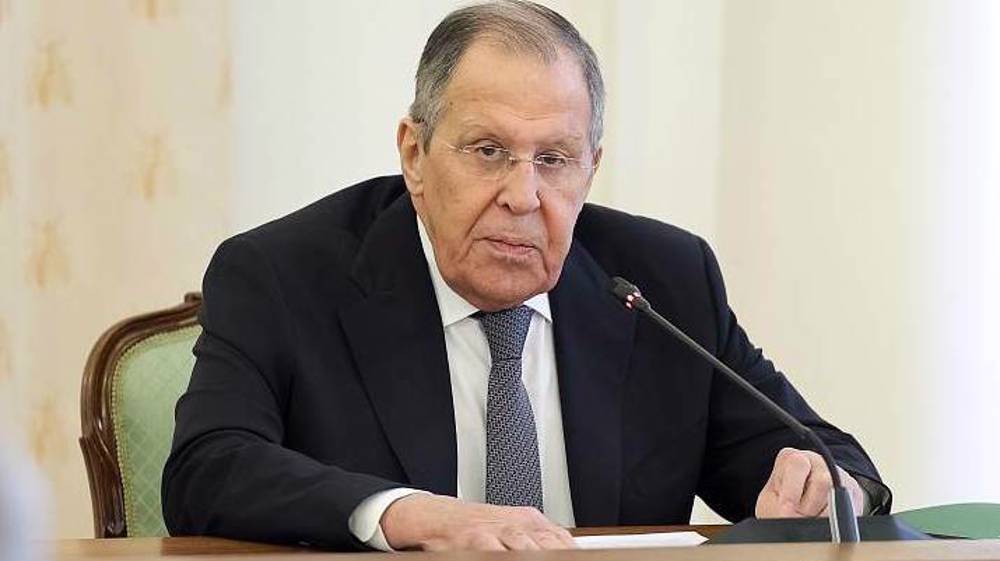
Russia: US sought to take control of Iranian oil in Persian Gulf



Iran closed Strait of Hormuz as US maintains blockade in violation of ceasefire terms: IRGC Navy
Iran's legal command replaces US bluff in Strait of Hormuz
Iran pushed back enemy in recent war using asymmetric warfare strategy: Qalibaf
Kata'ib Hezbollah: $10 million bounty testament to US failure
Iran’s closure of Hormuz forced US, Israel to accept Lebanon ceasefire: Hezbollah chief
Iran as skilled at putting tyrants in their place as at pursuing peace: Official
IRGC says 3 terrorist ringleaders killed in strike on Iraq’s Kurdistan region
Hezbollah denies involvement in deadly attack on UNIFIL in south Lebanon


 PressTV NEWSLETTER now
 This makes it easy to access the Press TV website