How Red Sea closure would cripple global economy and end Western sea hegemony
By Mohammad Molaei
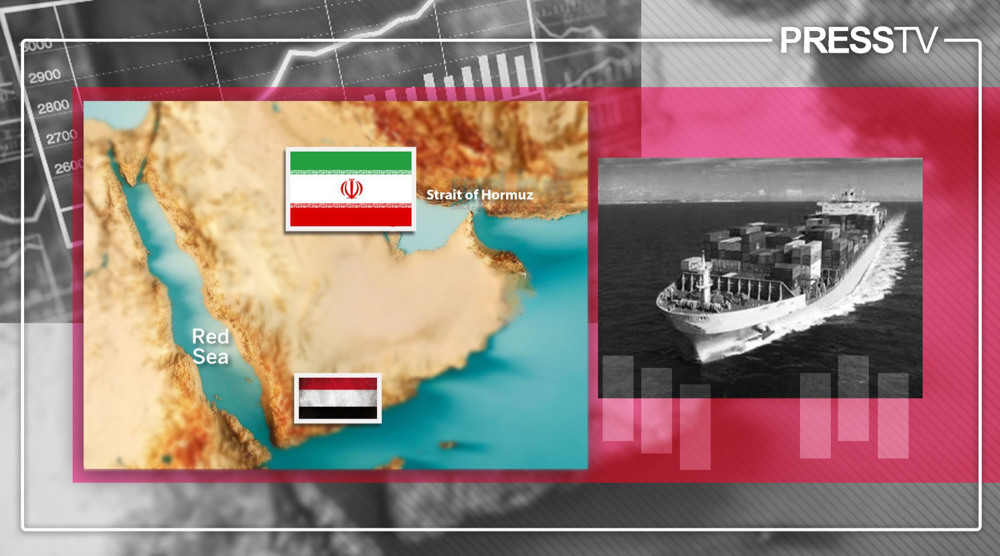
The closure – or even any serious and persistent danger of closure – of the Red Sea and the Bab al-Mandab Strait in the event of the US escalation will have devastating and far-reaching consequences for the global geopolitical and economic affairs.
It could disable supply chains across the world in a short span of time, while permanently and irreversibly shifting the economic, logistical, and maritime power equations.
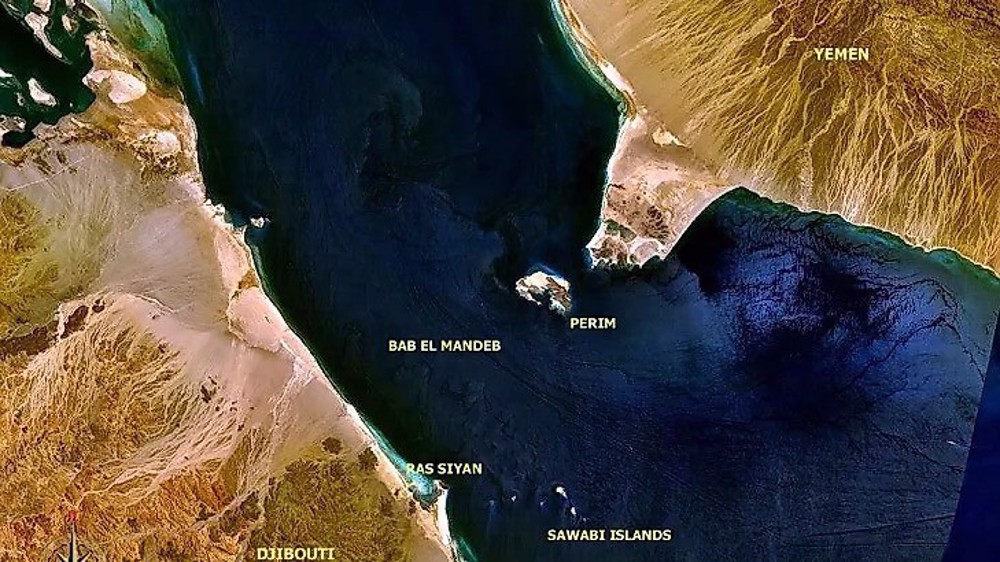
This small but crucial waterway – the direct entry point to the Indian Ocean, the Red Sea, the Suez Canal, and finally the Mediterranean Sea – has, under normal circumstances, been the epicenter of global commerce.
Through it, vast volumes of crude oil, liquefied natural gas, containerized freight, industrial raw materials, and consumer goods flow between Asia and Europe and back.
Any interruption of this route will force commercial ships to round the entire African continent via the Cape of Good Hope. This much longer, more costly, and dangerous alternative adds at least 10-14 days to voyage time, consumes up to 42 percent more fuel per container ship, and effectively reduces the capacity of the global shipping fleet by about 9 percent.
According to the latest reporting by the US Energy Information Administration (EIA) for the first half of 2025, an estimated 4.2 million barrels of crude oil and petroleum products passed through the Bab al-Mandab Strait each day.
That figure represents roughly 5 to 6 percent of the total seaborne oil trade worldwide. Although this marks a significant decline from the 2023 peak of 9.3 million barrels per day, the strait remains one of the world's biggest energy bottlenecks.
Projections for this year paint a concerning picture. Global seaborne trade growth in 2025 was projected at only 0.5 percent, a slowdown attributed to persistent disruptions in the Red Sea.
These figures make it clear that a Red Sea shutdown is not a passing logistical crisis of a day or two. Rather, it represents a structural shock to the entire global economy, one that will bring chronic inflation, supply chain stagnation, rising production costs, and ultimately a fundamental redefinition of trade routes and geopolitical dynamics.
Under the simultaneous impact of military and economic pressures, this trajectory points toward a more multipolar and resilient global order.
Geographically and operationally, the most critical choke point is the Bab al-Mandab Strait, just 18 nautical miles (approximately 33 kilometers) wide. Before the recent crises, thousands of large commercial ships passed through it during a normal day, at a rate of up to 1,200 vessels per month, according to figures from Lloyd's List and IMF PortWatch.
Iranian armed forces warned of blocking all sea trade in the Persian Gulf, the Sea of Oman, and the Red Sea if the US continues its maritime blockade.
— Press TV 🔻 (@PressTV) April 15, 2026
Follow Press TV on Telegram: https://t.co/LWoNSpkJSh pic.twitter.com/SsbIeGQjH4
Sealing this strait, along with the Suez Canal, whose traffic according to the Suez Canal Authority had decreased by 2025 to about 12,758 vessels with a net tonnage of 522 million tons, would effectively force shipping onto a detour of an extra 5,500 to 11,000 kilometers.
This not only dramatically drives up fuel prices but also creates unprecedented congestion and delays in Mediterranean ports such as Barcelona, Tangier Med, and even Rotterdam.
Reports from the World Bank and UNCTAD indicate that even small disruptions between 2023 and 2025 caused reductions in Red Sea traffic of up to 70 percent and in Suez Canal traffic of up to 60 percent. The situation worsened further in 2025, with an additional 50 percent drop in container transportation through the Suez Canal – down to just 5.46 million TEU.
When this route is entirely closed under such conditions, the world economy – 85 percent of whose trade moves by sea – would find itself effectively at a deadlock.
Reliance on alternative routes like the Cape of Good Hope would become an irreparable and expensive habit, permanently fixing logistics expenses at a higher level and destroying the so-called "just-in-time" supply chains that form the very core of global industrial and commercial production.
Analytical reports by experts at Drewry and Xeneta further warn that even a potential re-emergence of the Red Sea route in 2026 – should it happen – will not be able to promptly compensate for lost capacity or stabilize freight rates at long-term average levels.
Instead, the average container freight rate on Asia-Europe routes is projected to remain 141 percent higher than it was before the crisis.
The economic aspects of a Red Sea shutdown are much more than the mere operational disruption and will have a systemic and multi-faceted effect on energy markets, container business, insurance is a vital component and inflation worldwide.
As crude oil and petroleum products surpassing 4.2 million barrels daily transit the Bab al-Mandab Strait, a permanent shutdown would push the prices of Brent crude to a point of 120-150+ per barrel or an all-out tsunami, which analysts at JPMorgan and other reputable companies have rated as one of the most likely scenarios.
Yemen may close key Red Sea strait amid US threats to blockade Iran: Report https://t.co/r5qbkemDR4
— Press TV 🔻 (@PressTV) April 13, 2026
This would instantly increase the transportation costs of fuel, energy, and petrochemical products across the globe.
Much of the world's liquefied natural gas (LNG) exports – primarily from Qatar and other Persian Gulf countries – also pass through this route. Its closure would leave Europe, still grappling with past energy crises, facing dire shortages and intensified rivalry with Asian markets.
In the container trade industry – where data from UNCTAD estimated that approximately 12 to 15 percent of global trade, and up to 30 percent of container movements, passed through this route before the crisis – the price of shipping a typical 40-foot container on a run between Shanghai and Rotterdam or Genoa could increase by as much as nearly $2,000 to over $6,000 (a 200 percent rise).
According to the Drewry World Container Index, even with only minor disruptions, freight rates have not fallen below levels that are 141 percent higher than before the crisis. Meanwhile, war-risk insurance premiums have risen from 0.3 percent to between 0.7 and 1 percent of cargo value, imposing hundreds of thousands of dollars in additional costs per commercial voyage.
These costs are all passed on to the final consumer, sparking inflation in consumer goods, automotive parts, pharmaceuticals, industrial raw materials, and food products around the world.
Reports from the World Bank and the Suez Canal Authority also highlight that food and medicine supply chains have been disrupted, European factories have been shuttered by the crisis, and congestion at non-canal ports has made 10- to 14-day delays standard. Overall, global logistics costs are expected to remain at elevated levels for years to come.
The effects of such a shutdown on major economies in the world will also be multifaceted, deep-rooted and sudden, and they may destabilize the economies of most countries over a period of years.
Being the owner of the Suez Canal, Egypt will undoubtedly be among the largest direct losers, as canal revenues, which hit a historical record in the 2022-2023 fiscal year of $9.4 billion, will decrease significantly in the case of a total closure of the Bab al-Mandab.
Yemen’s Ansarullah warns US, Israel of new Red Sea attacks if Iran struckhttps://t.co/SWj6aaZEJh
— Press TV 🔻 (@PressTV) January 27, 2026
Europe, where energy imports and Asian imports flow through this very important route, will be hit by energy, food, and inflation, slower rates of economic growth, and industries that must depend on streamlined supply chains like car, electronic and pharmaceutical manufacturers will run out of raw materials, and face increased costs of production.
Major Asian economies like China, India and countries in East Asia that have to incur increased shipping costs will still be more resilient as long as they have diversified themselves to overland routes, alternative routes and robust strategic links to the Axis of Resistance and could even leverage this crisis as an opportunity to reassert themselves in the global trade arena.
As major importers of energy and consumer goods, the United States and its Western allies would face significant inflationary shocks and widespread supply chain disruptions, adding an estimated 0.3 to 0.7 percent to core global inflation, while intensifying domestic political and economic pressures.
Such a situation is nothing less than an intelligent and asymmetric economic war. It elevates the cost of Western maritime and logistical supremacy to an unbearable level, proving how a small geographical bottleneck can become a significant threat to vast economic empires.
In the long term, a Red Sea closure would catalyze further deep-seated structural trends, resulting in a wholesale redrawing of global trade geopolitics.
There will be a sharp increase in investment in alternative corridors, including the Belt and Road Initiative, the North-South Corridor, and African port and overland routes. The multipolarity of currencies will accelerate, and the role of the US dollar in trade transactions will decline sharply as is already being witnessed in the wake of the partial closure of the Strait of Hormuz.
Western hegemony at sea will be severely undermined, while the position of countries struggling against military-economic pressure will be strengthened.
With 85 percent of global trade dependent on the sea, the world can no longer rely on single-chokepoint and vulnerable transportation routes. This moment presents a historic opportunity to rebrand the rules of the game in favor of independent countries and the Axis of Resistance.
Hence, the Red Sea closure represents not merely an event but a historical, game-changing milestone in global economic affairs. It will deliver a fatal blow to the current global economic system, dominated by the US, end the era of Western maritime dominance, and drive the world toward a more multipolar, resilient, and fairer order – one where geography and the will of nations, rather than naval forces and Western powers, will be the decisive factors.
Mohammad Molaei is a Tehran-based military and economic affairs analyst.
Iran’s hidden aquaculture revolution over four decades
Behind Iran’s record wheat harvest amid drought, sanctions and war

US sanctions will not halt Iran’s aviation industry: Civil aviation chief



VIDEO | ‘Geneva conventions ban providing arms to war criminals’: Political commentator
VIDEO | Press TV's news headlines
Iran FM hails China consultations as ‘successful’
VIDEO | 200 nights: Streets never emptied
VIDEO | Washington's war of contradictions
VIDEO | Bessent proves US is the outcast
VIDEO | US grappling with rising cost of war on Iran
‘The American age is over’; Iran war exposes limits of US global military power: US magazine




 PressTV NEWSLETTER
now
PressTV NEWSLETTER
now
 This makes it easy to access the Press TV website
