Iran: Weapon remnants reveal Persian Gulf states’ involvement in US-Israeli aggression
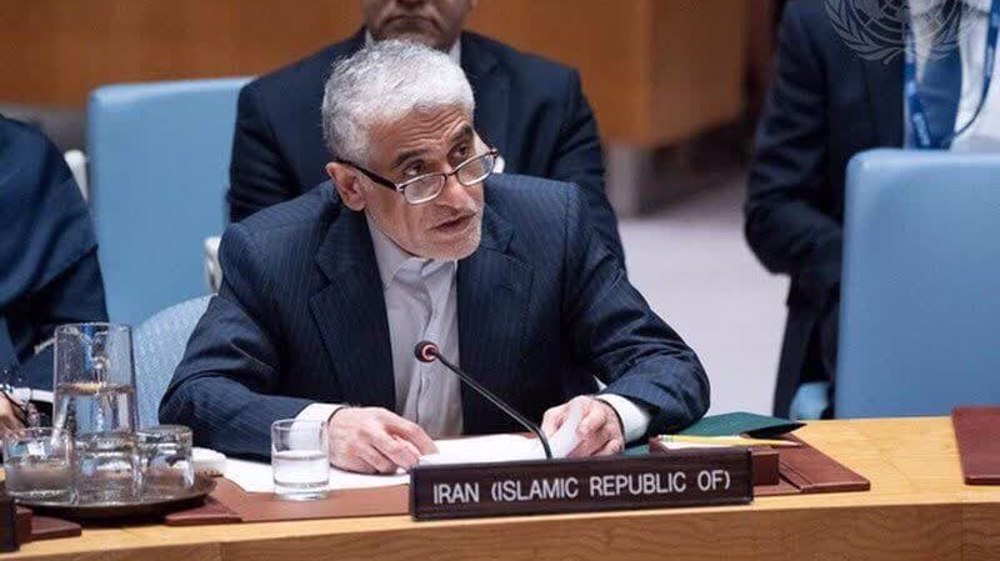
Iran says physical remnants recovered from weapons used in recent aggression, identified in multiple affected cities, confirm these arms were part of the arsenals of some Persian Gulf states.
In a letter addressed to Secretary-General António Guterres and Security Council President Jamal Fares Alrowaiei on Tuesday, Iran’s Permanent Representative to the UN Ambassador Amir Saeid Iravani issued a strong rebuttal to accusations made by the Kingdom of Bahrain and other neighboring states in the Persian Gulf.
He said Iran categorically dismisses the claims as “wholly unfounded and deliberately misleading,” asserting that the states bear international responsibility for their own “internationally wrongful acts.”
Iravani detailed a response to a letter dated April 7, 2026, from Bahrain’s UN representative, which deliberately omits a “central and determinative fact”: an unlawful armed attack against the Islamic Republic of Iran on February 28, 2026, carried out by the United States and Israel.
The letter said that the attack was a flagrant violation of international law, including the prohibition of the use of force and the norm against aggression.
It further notes that the aggressors utilized the “facilities, territory and airspace of certain States in the region” for planning and executing these acts of aggression.
As a specific example, the letter cited “barbaric terrorist attacks against a school in Minab,” which it claims resulted in the deaths of at least 168 primary school children and were launched from the territory of these states.
It stated that this conduct falls under Article 3(f) of General Assembly resolution 3314 (XXIX).
Monitoring data from Iran’s Armed Forces, according to the letter, indicates the repeated use of these states’ territories and airspace for “planning, preparation, arming and execution of unlawful military operations against the Islamic Republic of Iran.”
“Physical remnants from the weaponry used in the aggression, identified in multiple Iranian cities, confirm they were part of the arsenals of certain Persian Gulf states,” it added.
It further argued that this evidence demonstrates complicity and direct engagement in acts of aggression as defined by international law, specifically citing Articles 3 (a), (b), and (d) of General Assembly resolution 3314 (XIX).
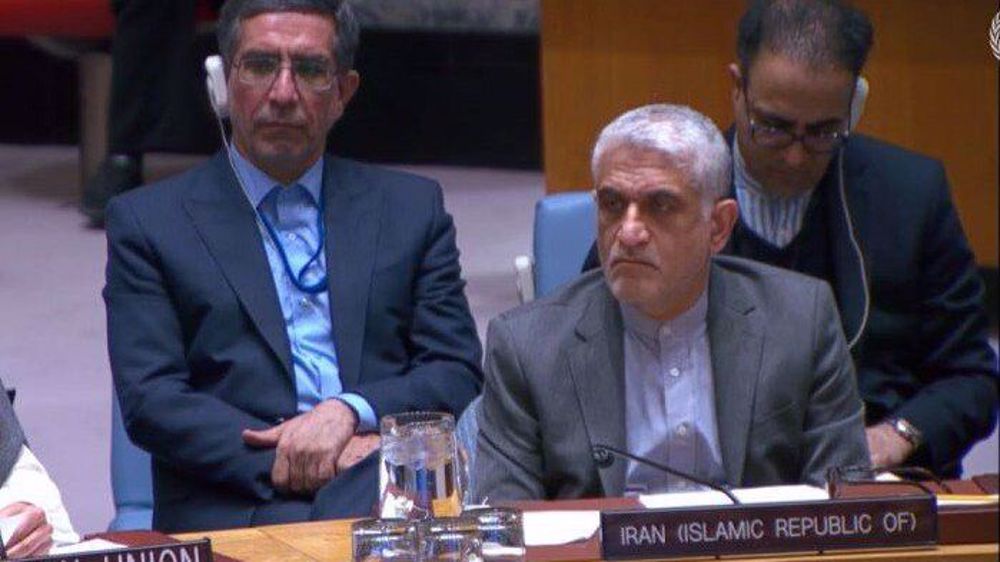
The letter emphasized that such conduct engages the international responsibility of these states, requiring them to make “full reparation, including, in particular, the provision of full compensation for the damage caused.”
Addressing terrorism, the letter said Iran positioned itself as a “major victim of terrorism” with a “firm commitment and decisive role in the fight against terrorism,” citing its efforts against terrorist groups like Al-Qaida and Daesh.
It dismissed claims of Iran’s links to terrorist groups as baseless, highlighting the “substantial human and financial costs borne by Iran in combating terrorist and extremist groups.”
Iran identified the “primary source of instability in the region” as the actions of the “Israeli regime, carried out under the auspices of the United States.”
It described resistance movements such as Hezbollah and groups in Iraq as “natural responses to apartheid, occupation and terrorism” and integral to their national identity, emerging organically against aggression and occupation, adding that Iran supports these movements in accordance with its constitution and international law.
The letter expressed its “strong and unequivocal objection” to these actions and urged Member States in the Persian Gulf to adhere to their international obligations, cease all forms of aggression, and avoid shifting the Security Council’s focus to “unfounded and false allegations.”
According to the letter, Iran reserved all its rights under international law to hold accountable those responsible for acts contributing to the aggression against its sovereignty and territorial integrity.
The letter warned that attempts to distort facts and evade responsibility risk “further escalation” and pose a “serious threat to international peace and security,” calling on the Security Council to address the “direct causes of the present situation.”
On February 28, the United States and Israel initiated a large-scale and unprovoked war against Iran, assassinating Leader of the Islamic Revolution Ayatollah Seyyed Ali Khamenei and several high-ranking military commanders.
In response, the Iranian Armed Forces carried out a series of retaliatory missile and drone operations against US and Israeli military assets for over 40 days, which resulted in significant damage.
A two-week ceasefire was brokered on April 8, followed by negotiations in Islamabad, where Iran proposed a ten-point plan seeking US troops' withdrawal and the lifting of sanctions.
Despite 21 hours of intensive discussions, the negotiations ended without an agreement, with Iran citing a lack of trust in US commitments.
Trump later announced a naval blockade of the Strait of Hormuz, aimed at intercepting vessels that had paid tolls to Iran. The US military said that the blockade would begin on Monday at 1400 GMT, escalating the situation further.
Iran: Colombia’s ‘baseless’ allegations violate mutual respect, interests
'Greatest affront to human conscience': Iran slams Netanyahu’s UN speech
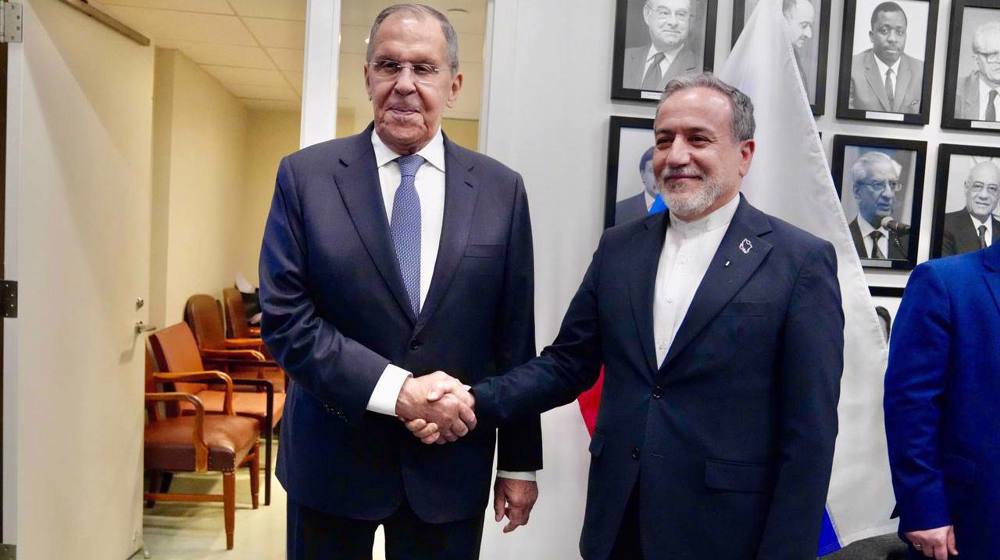
Araghchi: Iran ‘determined’ to defend national security, prevent US misuse of Hormuz



Hormuz blockade to create food insecurity for at least 45 million people: UN
Pezeshkian leaves New York for Tehran after UNGA speech, meetings
VIDEO | Ceuta: Migration crisis fuels political tension
Iraqi resistance group vows to stage airport sit-ins over Iran aerial blockade
Pezeshkian hails China’s ‘thoughtful and responsible support’ for Islamabad MoU
VIDEO | US acts like pirates in Hormuz; IRGC must evade such threat: Analyst
Sustainable development impossible without peace, respect for international law: Araghchi
VIDEO | Trump’s $5,000 offer: Can it save republicans in the midterms?


 PressTV NEWSLETTER
now
PressTV NEWSLETTER
now
 This makes it easy to access the Press TV website
