Iran will surprise aggressors with new tactics and capabilities if war resumes: IRGC

The Islamic Revolution Guards Corps (IRGC) warns that the Iranian armed forces did not use their full capacity in their reprisal missile and drone attacks against US and Israeli assets across the region, and will unveil new capabilities that are far beyond the enemy’s imagination in the event of renewed aggression.
“We haven’t yet used all our capabilities and if the war continues, we will unveil capabilities that the enemy does not have any perception about,” Brigadier General Hossein Mohebbi, an IRGC spokesman, said on Monday.
“We will unveil new warfare tactics that the enemy does not have the capability to counter,” he added.
The spokesperson for Iran’s Ministry of Defense echoed the same assessment. Brigadier General Reza Talaei Nik said, said on Monday that the armed forces’ strategic reserves, including missiles and drones, have been fully replenished and the forces are ready to defend the nation.
“Beyond the combat power and the use of new tactics and techniques, the Ministry of Defense’s logistical support remains active and aligned with the requirements of enhancing the defense power,” he said.
After 40 days of intense fighting that engulfed the entire region, Iran and the United States agreed to a two-week ceasefire, mediated by Pakistan, on April 8 to allow for diplomacy to permanently end the war.
The region is once again on edge, however, as senior Iranian and American negotiators left Islamabad on Sunday without a breakthrough following 21 hours of intense talks.
Iranian officials blamed “excessive demands” by the US for failure of those talks, with Iran’s right to enrich uranium and transit through the Strait of Hormuz being described as two of the major stumbling blocks.
Iran has placed restrictions on the Strait of Hormuz as a response to the US-Israeli strikes on the country, effectively blocking the narrow waterway in the Persian Gulf to shipping linked to the aggressors and their allies.
Maritime data has shown that traffic through the strategic strait, typically responsible for one fifth of global oil supplies, has dropped to a trickle, sending energy prices soaring and roiling the global economy.
US President Donald Trump declared on Sunday that the US military would impose a total blockade on the Strait of Hormuz, saying it would apply to all vessels going to or departing from Iranian ports.
The US president further warned that any military vessel attempting to break the blockade will be “eliminated,” raising the specter of renewed hostilities even before the current ceasefire runs its course.
Iran’s armed forces called the restrictions in international waters “an illegal act” and “piracy.” The IRGC also warned that any warships approaching the Strait of Hormuz would be considered a violation of the fragile ceasefire.
The Iranian military said on Monday that any threat to the country's ports would trigger a broader regional response, and that no port in the Persian Gulf or the Sea of Oman would remain secure if Iranian ports are targeted.
US Central Command (CENTCOM) also announced the beginning of the blockade of all Iranian Persian Gulf ports and coastal areas, and the UK’s Maritime Trade Operations (UKMTO) said it had received warnings that the blockade applies to all vessel traffic, regardless of flag.
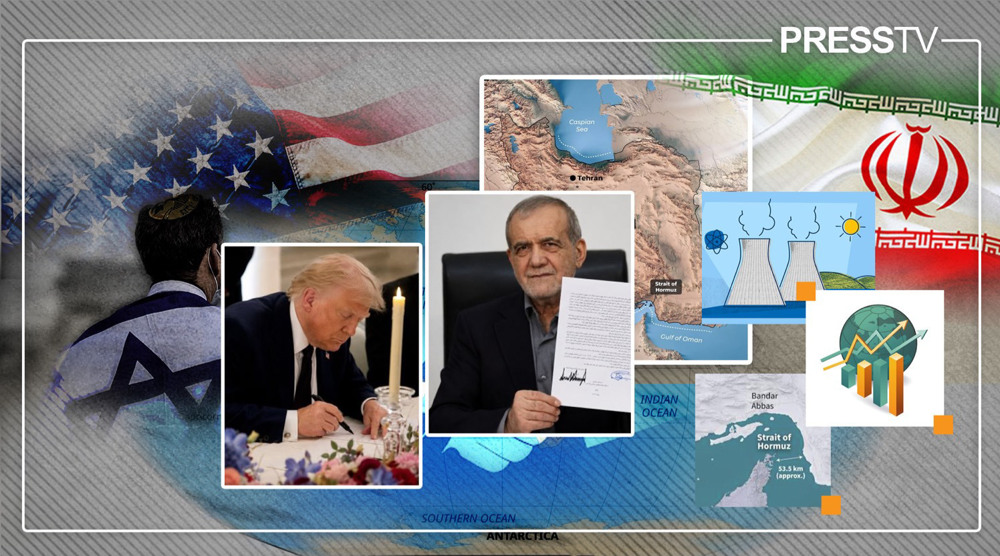
Iran-US MoU codifies Tehran's strategic leverage, cementing its status as regional superpower
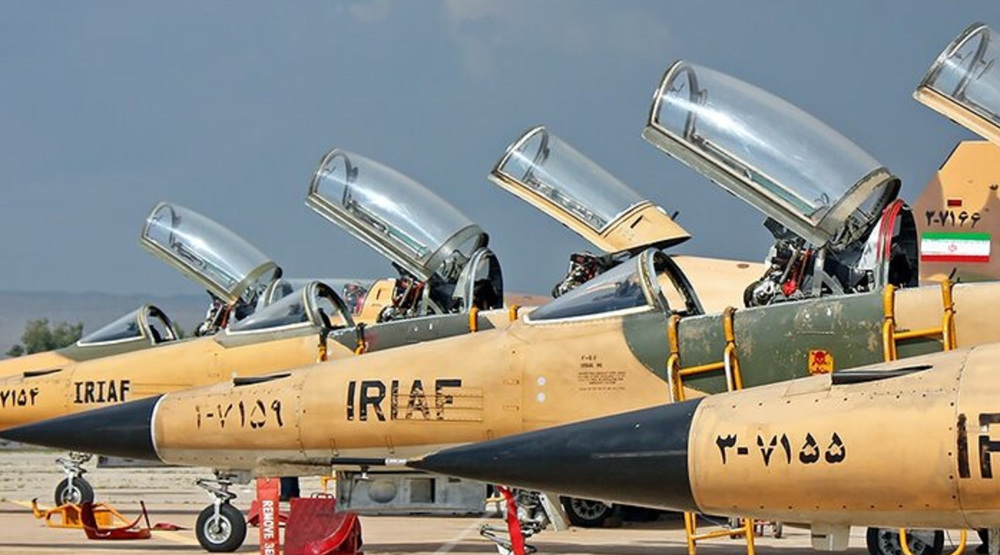
Iranian Air Force personnel recount high-risk precision operation against US base in Kuwait
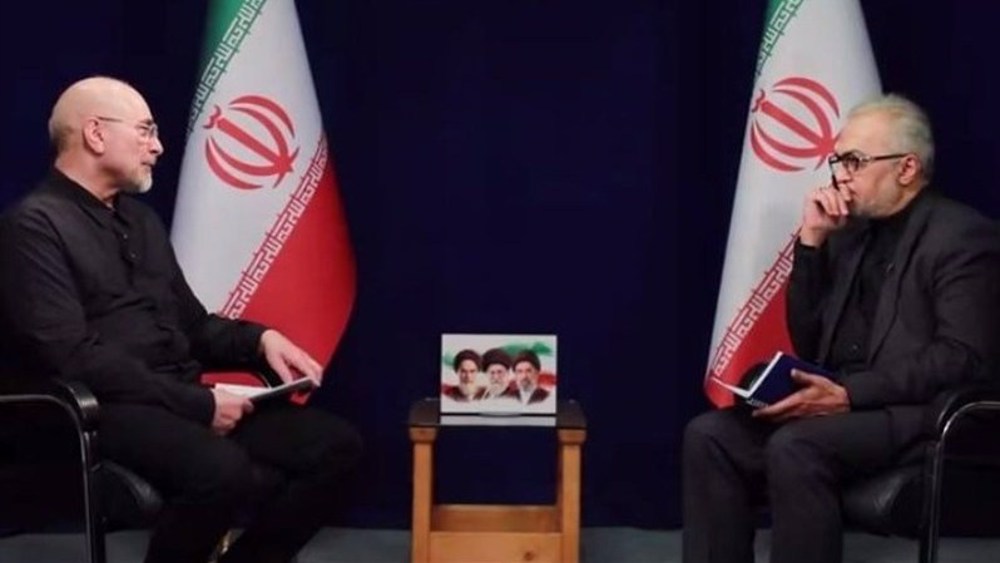
The banner of battlefield victory today underpins Iran’s diplomacy of strength: Qalibaf



Hezbollah foils Israeli infiltration attempt by leading invading forces into 'killing zone'
Iran condemns French FM's meddlesome remarks as 'height of hypocrisy, duplicity'
US emerged from war ‘desperate, defeated': Leader's advisor
US intl. warns: Netanyahu may sabotage Iran-US MoU to prolong aggression
‘Hand on trigger’: Army stresses readiness to defend Iran against any violation
Key Parliament commission hails Leader’s MoU message, says continued victories hinges on unity
UK PM advised to prepare for 'dignified, orderly exit'
UNICEF: Ceasefire in besieged Gaza is a ‘deadly illusion’ for Palestinian children




 PressTV NEWSLETTER now
  This makes it easy to access the Press TV website