Israeli missile interceptors dwindle to ‘double digits’ after aggression against Iran: Report
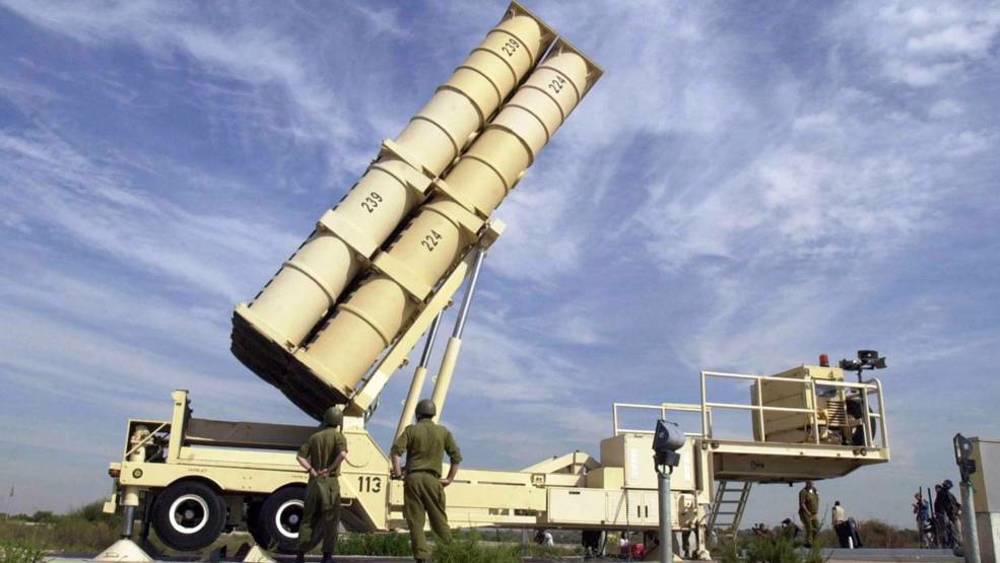
The number of ballistic missile interceptors remaining in Israel’s arsenal has dwindled to the “double digits” following weeks of US-Israeli aggression against Iran, according to a media report.
“They’re having to pick and choose what they shoot down,” an official from the administration of US President Donald Trump told Drop Site News.
A White House spokesperson referred questions about the dwindling stockpile to the Israeli military. The Israeli military responded to Drop Site by saying “we are checking” and indicated it was still working on a full answer.
The critical shortage has reportedly forced the Israeli military to be far more selective when attempting to intercept ballistic missiles from Iran and the regional Axis of Resistance.
A recent analysis by the London-based Royal United Services Institute for Defence and Security Studies (RUSI) — a think tank with ties to British intelligence — highlights the serious difficulties facing the Israeli military.
By March 24, Israel had already expended 122 of its 150 Arrow 2 and Arrow 3 missiles, along with 22 of its 48 THAAD missiles. These interceptors are both extremely expensive and time-consuming to replace.
US-Israel missile defence on brink as interceptor stocks near ‘critical depletion’: Reporthttps://t.co/1WzuvRJlJy
— Press TV 🔻 (@PressTV) March 27, 2026
Each Arrow interceptor costs $2–3 million and takes months to produce, while a single THAAD interceptor — designed to destroy ballistic missiles in their terminal phase — costs a staggering $12 million.
In many cases, multiple interceptors are needed to engage one incoming ballistic missile.
According to the report, Iran is believed to be deliberately employing a strategy of draining the Israeli stockpile. Tehran reportedly fired older missile models in the initial waves specifically to exhaust Israel’s interceptor stockpiles, effectively making a “down payment” so that future attacks with more advanced missiles would have a greater impact once interceptor reserves were depleted.
Information on missile impacts and damage in Israeli-occupied territories remains heavily censored by the Israeli military, making independent verification of Iranian attack effectiveness difficult.
However, an April 6 research paper by JP Morgan, citing data from the Jewish Institute for National Security of America (JINSA), reported that the missile impact rate against Israel had risen sharply from 3% in the first two weeks of the war to 27%.
✍️ Feature - Blinded giant: How Iran crippled America’s multi-billion dollar THAAD network in days By Ivan Kesic
— Press TV 🔻 (@PressTV) March 7, 2026
By @kesic_ivan https://t.co/7kPk7z0YIq
This increase is attributed in part to Iran’s decision to deploy missiles with cluster warheads, which create smaller, dispersed impacts and force Israel to expend more interceptors.
On Monday, the Jerusalem Post reported that the Israeli Ministry of Military Affairs intends to accelerate production of new Arrow missiles.
The shrinking supply has also increased Israel’s reliance on US Navy missile systems, particularly destroyers stationed in the region.
The recent departure of the USS Gerald R. Ford carrier strike group, driven by fears of Iranian retaliation, has further reduced that support. According to RUSI, the US has fired 431 of its roughly 2,500 Navy Aegis ballistic missile interceptors in defense of Israeli-occupied territories, making them a last-resort savior for the Israeli military.
In addition, the US military has been forced to expend large quantities of its own limited interceptor stocks to protect allied Arab states in the Persian Gulf, drawing down munitions originally intended for deterrence against China under the long-planned “Asian Pivot.”
Iran also launched more than 500 ballistic missiles at the occupied territories during the 12-Day Israeli war in June 2025, significantly depleting Israeli stocks even before the current conflict. The drain intensified after the US reportedly used roughly 25% of its THAAD inventory, along with an unknown number of Patriot and SM-3 missiles, to defend Israeli-occupied territories during that earlier war.
Beyond their high cost, missile interceptors are notoriously slow to produce.
A striking scene of Iranian missiles passing through Israeli interceptor defenses
— Press TV 🔻 (@PressTV) March 24, 2026
Follow: https://t.co/mLGcUTS2ei pic.twitter.com/Tss1QjibFn
Earlier this year, Lockheed Martin signed a deal with the Pentagon to raise annual production from 96 to 400 units. However, this expansion will be staggered over the next seven years and will do little to relieve immediate shortages. The US procured only 12 THAAD interceptors in 2025 and is scheduled to receive just 37 this year.
Israel’s war doctrine had assumed a quick victory that would rapidly reduce Iranian missile launches by destroying stockpiles and launchers.
Despite extensive US-Israeli aerial campaigns and massive American support, Iranian missile launches have continued at a steady rate for weeks. Iran’s mobile launchers and deeply buried underground bases have proven highly resilient to attack.
The entry of Hezbollah’s resistance movement and Yemen’s Ansarullah into the war has placed additional strain on Israeli defenses.
Israeli war minister Israel Katz has announced plans to scale up production while denying any serious problem.
The United States and Israel launched their unprovoked war of aggression against Iran on February 28. They assassinated the Leader of the Islamic Revolution, Ayatollah Seyyed Ali Khamenei, and struck nuclear sites, schools, hospitals, and civilian infrastructure.
On Wednesday, Iran’s Supreme National Security Council (SNSC) announced a Pakistan-brokered two-week ceasefire agreement after the US accepted Iran’s 10-point proposal, with potential negotiations to follow that could lead to a permanent end to the war.

Blair directed PA to eliminate 'Palestine' from textbooks, former UK envoy reveals
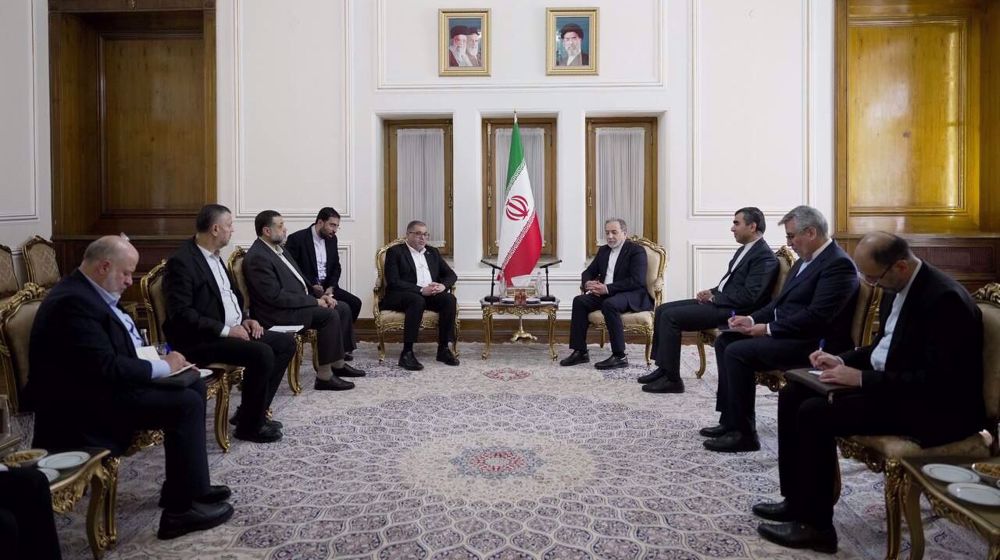
Araghchi reaffirms Iran’s firm support for Palestine
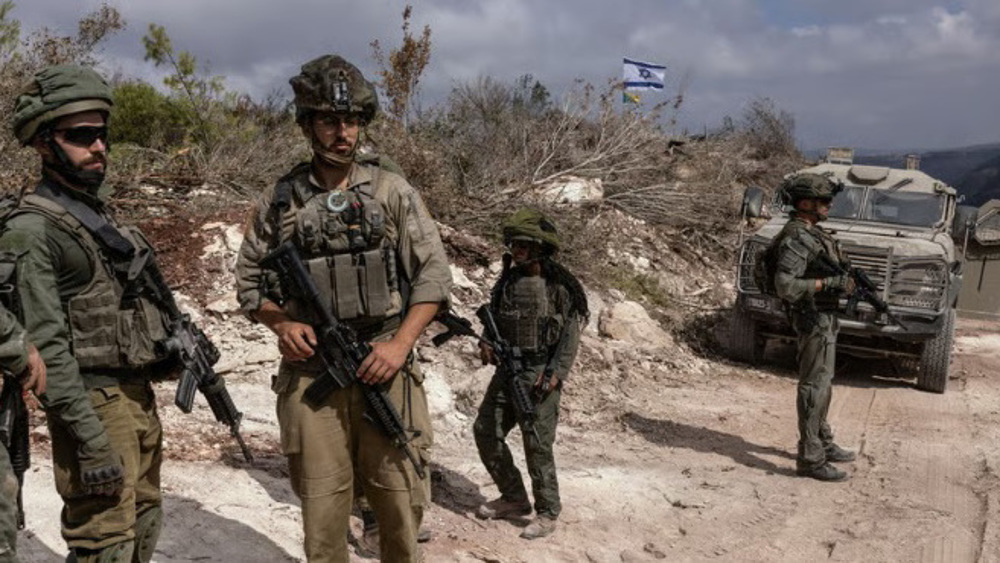
Hezbollah launches drone strike on Israeli forces in south Lebanon



VIDEO | Israel targets Gaza fishermen in latest attacks on fishing sector
IRGC chief: Blood of martyrs in US attack on wedding will not ‘go unanswered’
Iran's vice president warns of 'dark months' for US economy amid war
Lawyers seek to drop US charges against Venezuelan leader on immunity grounds
Abducted Gaza doctor’s testimony exposes appalling abuse in Israeli prisons
‘Polished-up barbarism’: Iran officials condemn US war crime of wedding bombing
VIDEO | Press TV's news headlines
Terrorizing civilians part of ‘cowardly’ US military doctrine: IRGC


 PressTV NEWSLETTER
now
PressTV NEWSLETTER
now
 This makes it easy to access the Press TV website
