Strategic defiance and reconfiguration of power: Iran’s rise as a new global power

By Abdullahi Danladi
The Islamic Republic of Iran’s 40-day confrontation with the United States and Israel may be interpreted, from a critical geopolitical standpoint, as nothing short of a profound rupture in the established architecture of global power.
What has unfolded is not merely a sequence of military exchanges or strategic posturing, but a deeply symbolic contest between hegemonic dominance and defiant sovereignty, one that has unsettled long-held assumptions about technological supremacy and coercive diplomacy.
For over four decades, since the 1979 Iranian Revolution, Iran has endured one of the most comprehensive regimes of sanctions and embargoes in modern history.
These measures were explicitly designed to strangulate its economy, fragment its institutions, and ultimately compel political capitulation.
Yet, paradoxically, they have instead incubated a doctrine of strategic self-reliance that has matured into a formidable national capability. In classical strategic theory, prolonged external pressure often induces dependency; in Iran’s case, it has produced autonomy.
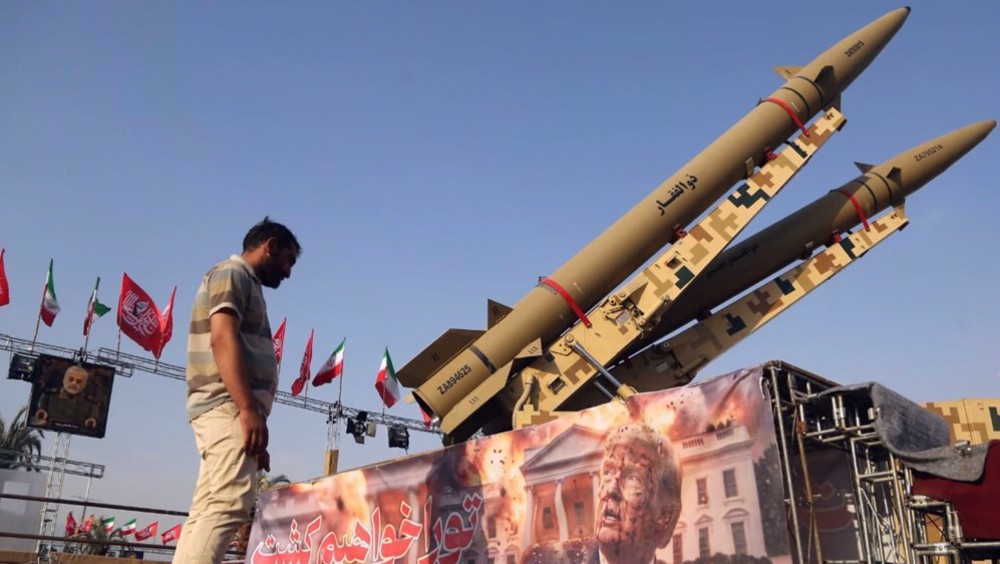
The most striking manifestation of this autonomy is evident in Iran’s indigenous military complex. Deprived of access to Western arms markets, Iran has cultivated a sophisticated ecosystem of missile engineering, drone technology, and asymmetric warfare doctrine.
Its ballistic missile programme, once dismissed as rudimentary, now constitutes a credible deterrent capable of penetrating layered defense systems.
This transformation has not only altered regional threat perceptions but has also forced global powers to reassess the efficacy of sanctions as a tool of containment.
✍️ Viewpoint - Forty days that shook the Empire: How Iran turned the tables on US and prevailed
— Press TV 🔻 (@PressTV) April 8, 2026
By Sarwar Abbashttps://t.co/i51LGERkDt
Equally significant is the ideological dimension underpinning Iran’s resilience. The martyred Leader of the Islamic Revolution had consistently framed resistance not as a tactical necessity but as a civilizational imperative.
In this paradigm, confrontation with external powers is not merely geopolitical; it is existential. Consequently, any attempt to decapitate leadership structures or destabilize the system tends to generate the opposite effect: consolidation, mobilization, and firm resolve.
The notion that the loss or targeting of key figures could ignite a latent retaliatory capacity reflects a broader historical pattern in which perceived oppression fuels rather than diminishes resistance.
From a regional perspective, Iran’s strategic depth extends far beyond its territorial boundaries. Through a network of aligned actors and ideological affiliates, it has constructed a multi-layered deterrence architecture that complicates any direct military engagement.
This distributed model of influence ensures that pressure exerted on Iran reverberates across the region, thereby raising the cost of confrontation for its adversaries.
Perhaps the most globally consequential aspect of Iran’s strategic posture is its proximity to, and complete authority over, the Strait of Hormuz. This narrow corridor, through which a significant proportion of the world’s petroleum supply transits, represents a critical chokepoint in the global economy.
The mere disruption of this strategic waterway has historically been sufficient to trigger volatility in energy markets and anxiety in global capitals. Thus, any escalation involving Iran inherently transcends regional boundaries, transforming into a matter of international economic security.
✍️ Viewpoint- Trump’s military gamble against Iran backfires spectacularly with no exit strategy
— Press TV 🔻 (@PressTV) March 15, 2026
By Abbas Ali Abedihttps://t.co/06y6NVI1pC
The reported shock and recalibration among Western political figures, often personalized in narratives involving figures such as US President Donald Trump, underscore a deeper reality: the erosion of predictability in asymmetric wars.
When a heavily sanctioned state demonstrates the capacity to impose tangible costs on far more powerful adversaries, it challenges the very logic of deterrence as traditionally conceived.
Yet, even within this fiery tableau of power and defiance, the emergence of a ceasefire highlights a critical counterpoint: the mutual recognition of vulnerability.
The reopening or stabilization of vital economic arteries, particularly maritime routes, is not merely a gesture of de-escalation but an acknowledgment that unchecked confrontation carries unacceptable systemic risks.
In sum, the Iranian experience represents a compelling case study in strategic endurance. It illustrates how sustained pressure can, under certain conditions, catalyze innovation, cohesion, and geopolitical assertiveness.
Whether characterized as a “miracle” or as the predictable outcome of an adaptive strategy, the reality remains that Iran has disrupted the conventional hierarchy of power, forcing the world to confront a new paradigm in which resilience, rather than sheer force, defines the contours of influence.
Abdullahi Danladi is a member of the Islamic Movement in Nigeria.
(The views expressed in this article do not necessarily reflect those of Press TV.)
Iran will be ‘far more advanced technologically’ in any new war: Acting defense minister
Ansarullah takes over Bab al Mandab Strait
US attack on Iranian commercial vessel kills one, injures four



Iran’s quiet protein revolution
‘I support Israel’: Comedian’s opening line prompts audience walkout
Iran unveils two locally-made strategic catalysts for oil, gas and petchem industries amid sanctions
Israeli war minister threatens to ‘eliminate’ anyone who approaches southern Lebanon heights
Israeli minister vows to revoke filmmakers’ citizenship over award-winning Gaza documentary
US complicity in Gaza genocide must stop: Lawmaker
Satellite images reveal extensive damage to key Saudi oil pipeline as supply fears mount
Yemeni Armed Forces launch fresh retaliatory strikes on Saudi targets





 PressTV NEWSLETTER now
  This makes it easy to access the Press TV website