Trump aides called Netanyahu’s regime change plan in Iran ‘farcical’: Report
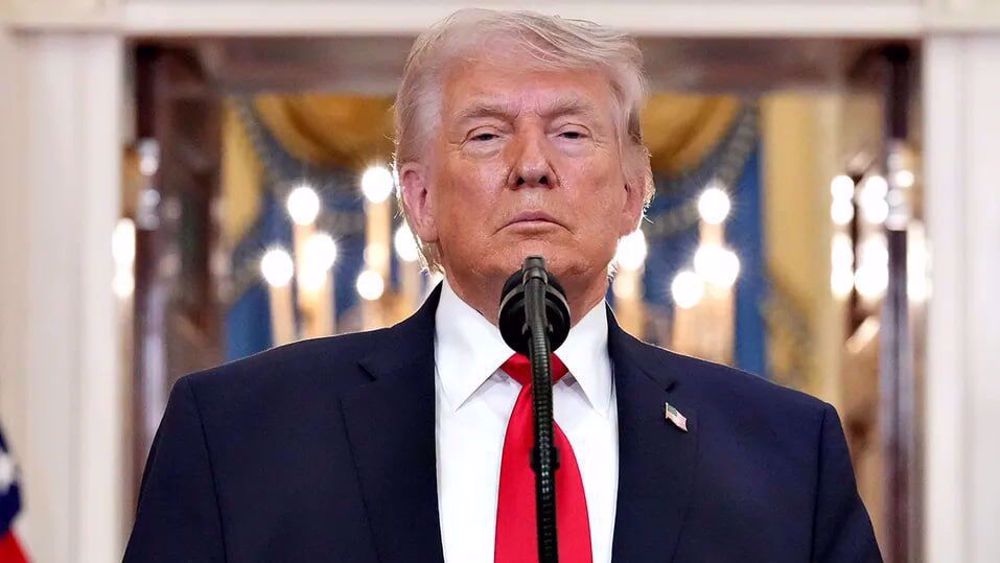
Top US officials told President Donald Trump that Israeli prime minister Benjamin Netanyahu’s “regime change” plan in Iran was “farcical”, the New York Times reports.
Netanyahu made a high-stakes pitch this February in the White House Situation Room for the US to launch a war against Iran together with Israel, selling Trump on a range of predictions regarding how swiftly the joint operation would pan out.
The report, which detailed how Trump arrived at his decision to go to war on February 28, said Netanyahu told Trump that Iran’s ballistic missile program could be destroyed in a few weeks, Tehran would be so weakened by US-Israeli attacks that it would be unable to block traffic through the Strait of Hormuz and it would likely be unable to strike US assets in neighboring countries and consequently its government would be ripe for collapse.
While Trump’s CIA chief, John Ratcliffe, and secretary of state, Marco Rubio, would later characterize Netanyahu’s “regime change” prediction as “farcical”, the president and many of his advisers were sold on the ideas that Iran’s leadership could be taken out and that its military arsenal could be destroyed.
The report cited Netanyahu’s scenario with talking Trump into green-lighting the war, but it also said that the US president needed little persuasion.
“Mr. Trump’s hawkish thinking aligned with Mr. Netanyahu’s over many months, more so than even some of the president’s key advisers recognized,” the report said.
During 41 days of the Israeli-US war of terrorism, Iran continued daily ballistic missile launches and is still assessed to have enough missiles and launchers to do so for an extended period.
It also immediately moved to administer traffic in the Strait of Hormuz, and has carried out thousands of missile and drone attacks on nearly all of US assets in the region.
When Trump asked General Dan Caine, chair of the US Joint Chiefs of Staff, for his opinion, the top military official reportedly told the president that the plan from the Israelis appeared overblown, the Times reported.
Caine told Trump that such boisterous assessments were “standard operating procedure for the Israelis,” and that Israel’s planning is “not always well-developed … They know they need us, and that is why they are hard-selling.”
Over the following days, Caine shared with Trump and others the alarming military assessment that a major campaign against Iran would drastically deplete stockpiles of American weaponry, including missile interceptors, whose supply had been strained after years of support for Ukraine and Israel.
Caine saw no clear path to quickly replenishing these stockpiles, the report said.
Caine noted the “enormous difficulty” of securing the Strait of Hormuz if Iran moved to block it, though Trump dismissed such a possibility, believing that Tehran would “capitulate before it came to that.”
While Caine’s colleagues believed the military official thought war with Iran was a bad idea, he did not tell Trump his opinion on the matter, believing his role was to provide the president with options, not sway policy, the report added.
When the time came to actually green-light the plan, Trump held a “final” Situation Room meeting on February 26, two days before the US and Israel ultimately launched their aggression.
Given the extreme sensitivity of the topic, several senior cabinet secretaries were kept from the meeting, namely Treasury Secretary Scott Bessent, Energy Secretary Chris Wright and Director of National Intelligence Tulsi Gabbard.
At the meeting, which only lasted some 90 minutes, Vice President JD Vance, who made his opposition to military action with Iran well known in previous discussions, reportedly told Trump, “You know I think this is a bad idea, but if you want to do it, I will support you.”
White House communications director Steven Cheung also voiced concern, laying out what he saw as a likely “public relations fallout,” the Times added.
Among his concerns was the fact that Trump specifically campaigned on not involving the US in any new wars.
Additionally, Cheung reportedly wondered how the administration would be able to “explain away” the fact that it had repeatedly insisted that Iran’s nuclear program was “obliterated” after the US strikes on three facilities last June, while now saying that it had to act to remove Iran’s so-called “imminent” nuclear threat.
On Wednesday, the United States and Iran agreed to a two-week ceasefire after Washington received a 10-point proposal from Tehran. Netanyahu’s office said Israel supported Trump’s decision.
Iran retains initiative in Strait of Hormuz despite US claims: Armed Forces
Iran’s nuclear doctrine not changed, but NPT withdrawal possible: Top security official
Iran dismisses White House accusations as ‘flight from reality,’ ‘act of projection’



VIDEO | Gaza schools reborn in tents as new academic year begins
Iran: US had intentionally prepared ground for withdrawing from Islamabad MoU
Hezbollah leader: Iran thwarted US-Israeli war goals; ultimate victory belongs to resistance
VIDEO | Yemen responds to Saudi aggression
Four Palestinians, including child, killed in Israeli attacks across Gaza
Iran retains initiative in Strait of Hormuz despite US claims: Armed Forces
Yemeni army targets sensitive sites in Saudi capital, Aramco facilities in Yanbu
Barzegari’s silver lifts Iran to five medals at 2026 World Poomsae Championships


 PressTV NEWSLETTER
now
PressTV NEWSLETTER
now
 This makes it easy to access the Press TV website
