Hormuz Strait remains closed to vessels involved in anti-Iran war to prevent aggressors’ misuse: FM Araghchi
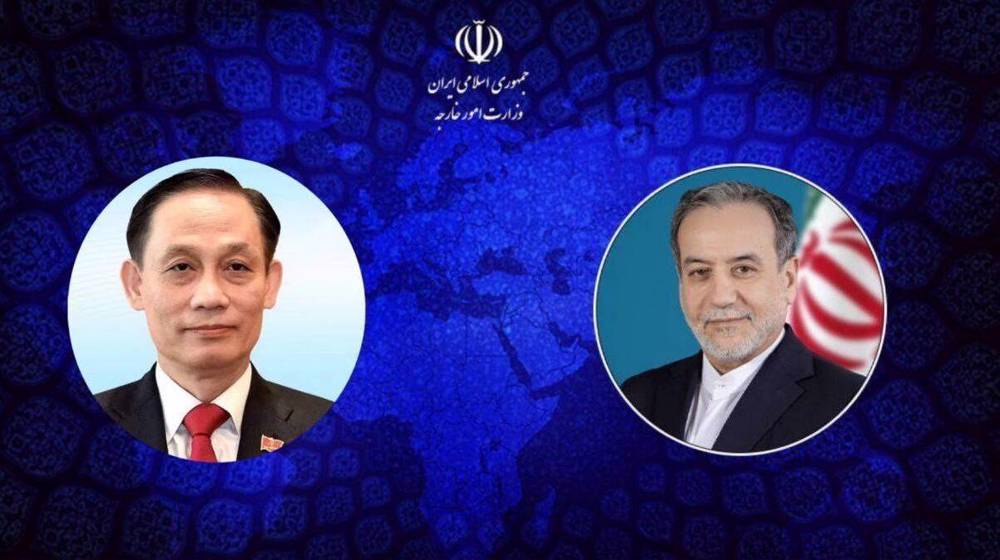
Iranian Foreign Minister Abbas Araghchi says the Strait of Hormuz remains closed to those vessels involved in the continued war launched by the United States and the Israeli regime against Iran to prevent the abuse of aggressors from the strategic waterway.
In a telephone conversation with Vietnamese Foreign Minister Le Hoai Trung on Wednesday, Araghchi described the US-Israel military aggression against Iran as the root cause of insecurity imposed on the Persian Gulf and the Strait of Hormuz.
“Based on the principles of international law and in order to prevent any misuse of aggressors from the Strait of Hormuz for conducting unlawful attacks against Iran, this waterway is closed to vessels belonging to parties involved in the military aggression against Iran,” he added.
"We're witnessing history right now"
— Press TV 🔻 (@PressTV) April 1, 2026
American journalist @propandco says Israel is to blame for the closure of the Strait of Hormuz, which has sent US gas prices through the roof.
Follow Press TV on Telegram: https://t.co/LWoNSpkJSh pic.twitter.com/nH7M5PK4Ee
“However, vessels belonging to other countries continue to transit in coordination with relevant Iranian circles,” the top Iranian diplomat emphasized.
Iran has intensified its restrictions on the passage of ships through the Strait of Hormuz amid the ongoing US-Israeli war against the country.
The restrictions on the world's vital energy lifeline, through which nearly one-fifth of global oil passed before the war, have led to a significant rise in global energy and commodity prices, with experts suggesting that the impact could escalate to historic levels if the confrontation continues.
Araghchi further said Iran would continue to exercise its right to self-defense in the face of aggressors by targeting their military bases and facilities located in regional countries.
“The reason behind Iran’s defensive operations is the US use of territories and bases located in these countries to wage an illegal war against Iran,” the Iranian foreign minister explained.
Iran’s Army: Retaliatory strikes target AWACS at Tel Aviv airport, tankers, US baseshttps://t.co/kyrDOuMt1t
— Press TV 🔻 (@PressTV) April 1, 2026
He emphasized that Iran’s actions fall within its inherent legitimate right to self-defense and should not be regarded as a violation of the sovereignty of the host countries.
He also outlined US-Israeli war crimes and cases of gross human violation and humanitarian law, particularly attacks on schools, universities, educational and research centers, historical and cultural sites, hospitals, vital infrastructure, production facilities, and residential areas.
He noted that in one instance, an attack on a school in the city of Minab resulted in the deaths of around 170 students and teachers.
The Vietnamese foreign minister, for his part, pointed to his country’s historical experience in defending itself in the face of aggressors and occupiers and stressed the importance of respecting political independence, national sovereignty, and territorial integrity of states, as well as adherence to international law and the United Nations Charter.
Hoai Trung reiterated his country’s opposition to the use or threat of force.
He also expressed concern over the consequences of the ongoing war for the region, now in its fifth week, and expressed hope that peace and stability would be swiftly restored to the region.
Pointing to the Vietnamese president’s message of condolences following the assassination of Leader of the Islamic Revolution Ayatollah Seyyed Ali Khamenei, he also extended sympathy on behalf of his country’s government and nation to the Iranian people over the martyrdom of the Leader and senior officials.
Iran, Oman jointly postpone Persian Gulf foreign ministers’ meeting
Iran calls on UN to protect Lebanese civilians as Israel’s attacks continue
Oman deal will not mean reopening of Hormuz Strait: Iran FM



Yemeni army strikes aircraft hangars, radars, arms depots at Saudi airbase
Meet the 7-year-old Iranian prodigy who won gold at 2026 International Junior Informatics Olympiad
Iranian academic and entrepreneur wins top prize at BRICS women’s startup contest
Iran slams Austria’s barring of nuclear chief from IAEA conference under US pressure
Rights group: 37 Palestinian journalists being held in Israeli prisons
Qatar Red Crescent Society pledges cooperation over captive Iranian pilots: Official
Iran: Regional talks in Oman called off at Saudi Arabia's request
Iran's Judiciary seizes assets of 240 individuals over collaboration with hostile regimes


 PressTV NEWSLETTER now
  This makes it easy to access the Press TV website