A young woman defies Israeli bombings to help displaced families in South Lebanon

By Hiba Morad
On the rugged roads of southern Lebanon, Zahraa Kobeissi has become a lifeline for families displaced amid the Israeli-American war on the Arab country.
In her late thirties, Kobeissi drives across the country every single day to evacuate civilians and deliver aid, undeterred by the threat of Israeli airstrikes.
“I will continue to help the displaced people until my last breath,” she told the Press TV website in a conversation, exuding confidence and determination, even as the Israeli regime announced that it was launching a full-fledged ground offensive in the country.
Kobeissi’s journey began during the 2024 Battle of the Mighty Ones, when she first started evacuating civilians under fire.
“That became my mission: to evacuate civilians and the wounded,” she recalled.
As ambulances came under bombardment, she focused on transporting the injured people, moving people from the Beqaa Valley, Beirut’s southern suburbs, and the south to safer places.
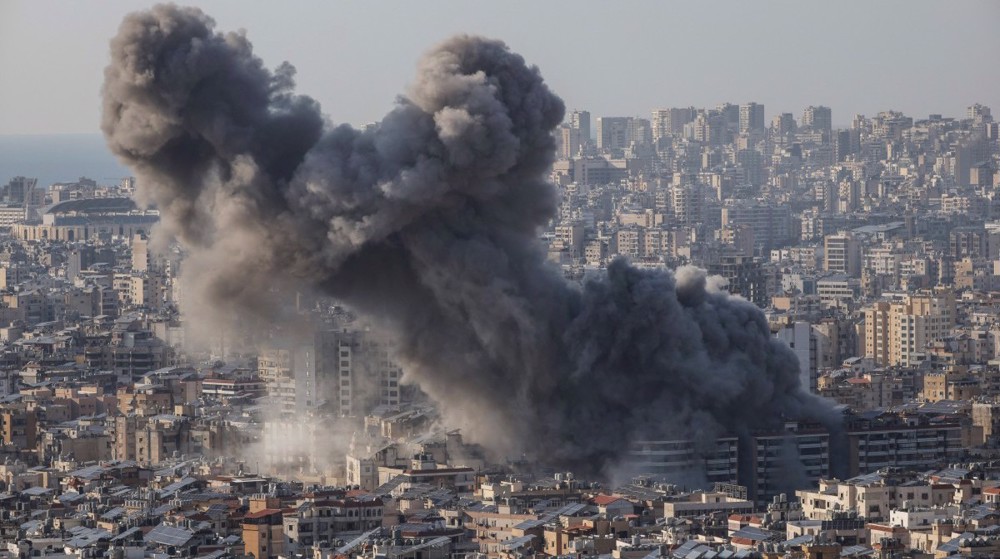
The ongoing Israeli war on Lebanon has led to mass displacement amid incessant bombings. The UNHCR reported on Tuesday that over 667,000 people are now registered as displaced inside the country, a jump of 100,000 in a single day.
Some 120,000 are sheltering in government-designated facilities, while many others are staying with relatives or have no shelter at all.
Prepared for the worst
The war on Lebanon has not ended despite the fragile ceasefire that was reached in late 2024. During this period, the regime has launched near-daily bombardments on the country.
During this period, the Lebanese resistance movement exercised strategic patience, while urging the Lebanese authorities to play their role in forcing the regime to adhere to the truce.
Earlier this week, Hezbollah finally decided to retaliate, which was followed by no-holds-barred aggression against the Lebanese civilians, especially in the South.
Kobeissi was ready for it. She had packed her car with essentials, prepared to move at a moment’s notice. Once the road from the south to Beirut reopened, she published an announcement offering help.
Despite her own injury, which she had sustained during the previous war, she pressed on, determined to keep the routes open for those who had no other means of escape.
Her passengers come from every walk of life: children, teenagers, parents, and the elderly. Each journey brings its own challenges.
Children grow restless, tugging at her shoulder as bombs fall nearby. Elderly evacuees require patience and reassurance. “I start soft conversations with them, make them feel comfortable and calm,” she told the Press TV website.
One trip remains etched in her memory: an elderly couple forced to leave the home they had shared for 50 years. The wife wept at the loss, while her husband tried to lighten the mood with jokes.
“I then asked him to recite poetry for his wife, and amid the chaos of falling bombs, his words brought a moment of peace,” she recalled.
Daily rounds of courage
Her days follow a relentless rhythm. Each morning, she said she drives evacuees out of war zones.
“On my return trips, I bring groceries, diapers, milk, and supplies for those who choose to remain in the south. Then I rest briefly before repeating the cycle,” she told the Press TV website.
Kobeissi said she is unafraid. “I remain steadfast in the South. I sleep here every night after hours of driving to transport the displaced or deliver aid,” she said.
Videos from 2024 show her confronting an Israeli tank, telling it to go home, a moment that captured her fearless spirit. Since then, she has been following up on treatment for the shrapnel and injuries inflicted upon her by Israeli soldiers.
Devoted to the mission
For Kobeissi, the work she is currently doing is more than duty – it is devotion.
“I long for victory or martyrdom, and this is what drives me to be active all the time, with all my being and existence, with not even a grain of fear in my heart,” she noted.
Through her courage and compassion, Kobeissi has become more than a driver. She is a symbol of resilience, carrying Lebanon’s displaced not only to safety, but toward hope.
She vowed not to leave her homeland and to continue working for her people.
Kobeissi said she looks forward to experiencing a striking triumph and seeing the hundreds of thousands of displaced head back to their homes, victorious.
Hezbollah leader: Iran thwarted US-Israeli war goals; ultimate victory belongs to resistance
Remembering Sabra and Shatila massacre: Why memory is the ultimate shield against erasure
Two years after Israel’s pager terrorism in Lebanon: Scars, loss, and the will to carry on



US aggression, economic warfare amount to crimes against humanity: Iran's UN envoy
Protests erupt in US as ICE agent shoots Venezuelan driver
US pressure fuels cooperation among Muslim states: Pezeshkian
Major TV networks suspend White House pool coverage after Trump ban
US visa ban on Palestinian UN delegation violates international agreements: Hamas
VIDEO | Press TV's news headlines
Iran calls on France to respect law after suspending French cultural institute in Tehran
Israel lobby no longer shy about its grip on US policy on Iran: Araghchi


 PressTV NEWSLETTER
now
PressTV NEWSLETTER
now
 This makes it easy to access the Press TV website
