NY Times: Trump miscalculated Iran’s retaliation as war costs soar

US President Donald Trump miscalculated Iran’s response to the ongoing aggression by a US-Israeli coalition, while the Strait of Hormuz remains virtually impassable with oil prices hiking up, The New York Times says.
The leading American daily said Wednesday that Trump seriously underestimated Iran’s response to the unprovoked war of aggression waged by a US-Israeli military coalition on February 28 and its ripples through the markets.
According to the article, citing multiple unnamed sources, the Trump administration wrongly believed that oil prices blip up for a few days and then go down, just like they did during the 12-day war in June last year.
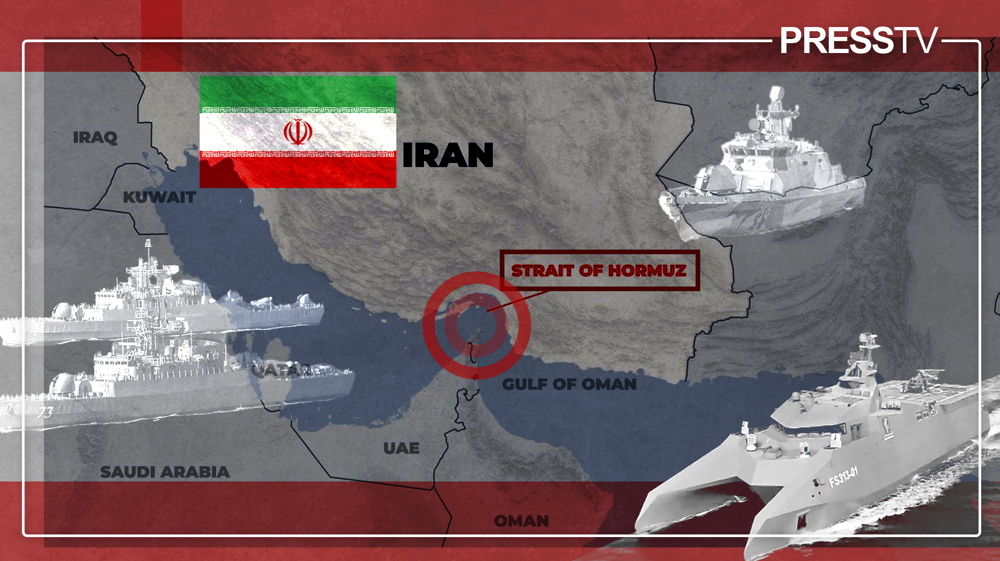
However, the White House proved to be wrong this time as it had not taken Tehran’s threats of closing the strategic Strait of Hormuz in the Persian Gulf seriously.
According to the Times, commercial shipping has come to a standstill in the Persian Gulf, oil prices have spiked, and the Trump administration has scrambled to find ways to tamp down an economic crisis that has triggered higher gasoline prices for Americans.
“The episode is emblematic of how much Mr. Trump and his advisers misjudged how Iran would respond to a conflict that the government in Tehran sees as an existential threat,” it said.
“Iran has responded far more aggressively than it did during last June’s 12-day war, firing barrages of missiles and drones at US military bases” in the Persian Gulf Arab states, as well as the Israeli occupied territories, it added.
Following a closed-door briefing to lawmakers by Trump administration officials on Tuesday, Senator Christopher Murphy said on social media that the administration had no plan for the Strait of Hormuz and did “not know how to get it safely back open.
”According to the Times, officials inside the administration are becoming increasingly pessimistic about the lack of a clear strategy by Trump to finish the war, but they have been careful not to voice that directly to the president, who has repeatedly claimed that the war is a complete success.

War secretary Pete Hegseth acknowledged on Tuesday that Iran’s ferocious response to the aggression by striking US bases in the Persian Gulf Arab states caught the Pentagon somewhat off guard.
“I can’t say that we anticipated necessarily that’s exactly how they would react, but we knew it was a possibility,” Hegseth said at a Pentagon news conference.
In an interview with Fox News, Trump displayed growing frustration over how the war is disrupting the oil supply globally, urging oil tanker crews to “show some guts” and sail through the Strait of Hormuz.
According to the Times, a number of military advisers warned before the onset of war that the Islamic Republic could launch a strong campaign in response, and that it would view the US-Israeli war as a threat to its existence.
Energy Secretary Chris Wright triggered a market commotion on Tuesday when he posted on social media that the Navy had successfully escorted an oil tanker through the Strait of Hormuz.
His post drove up stocks and reassured oil markets. Then, when he removed the post after administration officials said no escorts had taken place, markets were once again thrust into turmoil.
The search for pathways out of the war has gained urgency since the weekend, as global oil prices surge and as the United States burns through costly munitions.
Pentagon officials said in recent closed-door briefings on Capitol Hill that the military used up $5.6 billion of munitions in the first two days of the war alone, according to congressional officials, cited by the newspaper.
“That is a far larger amount and munitions burn rate than had been publicly disclosed,” it added.
Iran’s retaliatory attacks started on February 28, just hours after the US and Israel launched an aerial aggression on Iran by assassinating the Leader of the Islamic Revolution, Ayatollah Seyyed Ali Khamenei, and several senior military commanders.
Iranian reprisal attacks have successfully targeted many locations in the Israeli-occupied territories as well as US military bases in several countries neighboring Iran.
313,000-strong ‘Jan-Fada’ drill signifies Iran’s popular mobilization and social readiness amid war
Leader’s advisor: Any foreign forces attempting to land in Iran ‘will certainly be destroyed’
Iran’s military warns of ‘unpredictable blows’ in response to US threats



Yemeni woman killed, girl injured as Saudi warplanes launch 50+ airstrikes in 24 hours
Iran’s Khodaei wins historic pommel horse silver at 2026 Asian Games
OpenAI models 'infiltrated' Australian govt. websites during internal testing: PM
Pezeshkian’s strong UN speech exposed US-Israeli crimes: Judiciary chief
Austria's hijab ban tells Muslim girls their religious visibility is political problem: Activist
Israel’s election body bars both main Arab parties from Knesset race
Army chief: Pezeshkian's UN speech manifested steadfastness of Iran
White House ordered by judge to restore access for CNN, MS NOW and Politico



 PressTV NEWSLETTER now
  This makes it easy to access the Press TV website