

Russian Foreign Ministry spokeswoman Maria Zakharova says Western countries are trying to divert attention from the Epstein files with their statements about the alleged poisoning of blogger Alexey Navalny, listed as a terrorist and extremist in Russia.
In a joint statement, Britain, France, Germany, Sweden, and the Netherlands on Saturday claimed analyses of samples from Navalny’s body “conclusively” confirmed the presence of epibatidine, a toxin found in poison dart frogs in South America and not found naturally in Russia.
US Secretary of State Marco Rubio on Sunday said the initiative came from the EU member states themselves, not from Washington, adding, “This does not mean that we disagree with the result. It was simply not our initiative.”
Commenting on Channel One on European statements and the fact that the US distanced itself from them, Zakharova pointed out that she does not intend to “distance herself from these statements, because she knows what is going on.”
“This statement was necessary to interrupt the information agenda, which, from the Western perspective, was literally ruined by the publication of the Epstein files,” the spokeswoman explained.
Alexei Navalny, a prominent adversary of Russian President Vladimir Putin for the past ten years, passed away in February 2024, while imprisoned in an Arctic penal colony. He had been sentenced to 19 years for “extremism.”
Navalny was taken ill on a domestic flight on August 20, 2020. He was later transported to the German capital, where he was hospitalized with alleged poisoning. His aides, as well as the German government and some Western countries, claimed he had been poisoned before the domestic Russian flight, blaming Moscow.
Moscow has repeatedly rejected the allegations, saying the West is exploiting the case for political reasons and using it as a pretext to impose more sanctions against Russia.
Zakharova added that the scale, reaction, and impact of the Epstein files’ publication on the entire world were comparable to a global flood, and therefore, something was needed to direct the international community’s attention in a different direction.
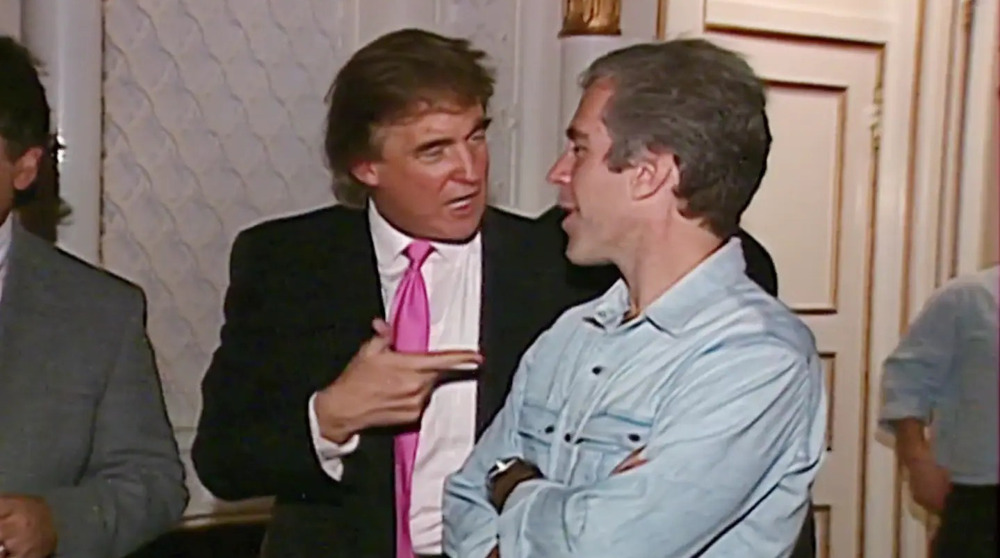
Epstein, who had connections to numerous powerful figures, including US President Donald Trump, Britain’s former Prince Andrew, and former US President Bill Clinton, was arrested in 2019 on federal charges of sex trafficking minors.
Two months later, he was found dead in a New York jail cell. His death was officially ruled a suicide, though the circumstances have fueled years of speculation about his high-profile associates and possible efforts to conceal the full scope of his crimes.
Under the Epstein Files Transparency Act, passed by Congress, the DOJ released files on Epstein and his accomplices and enablers.
Some of the sex trafficker’s emails reveal correspondence suggesting he acted as a private diplomat and intelligence fixer for a range of political figures.
Zakharova pointed out that Westerners once hyped up the topic of Navalny to the utmost, forcing the topic of his poisoning upon the world for years by framing it with elements of detective work and conspiracy theories to make it interesting, all in order to “overshadow the Epstein issue.”
She noted a second reason for the West's actions, pointing out that the entire Munich Security Conference was devoted to the topic of Russia’s special military operation, and something was needed to get the ball rolling.
She emphasized that no one takes the representatives of the Kiev regime seriously anymore, as they are marginalized even by the Western community, so a springboard was needed to continue pushing the thesis that Russia is about to attack.
 This makes it easy to access the Press TV website