Iran FM declares ‘good start’ as US–Iran talks conclude in Muscat
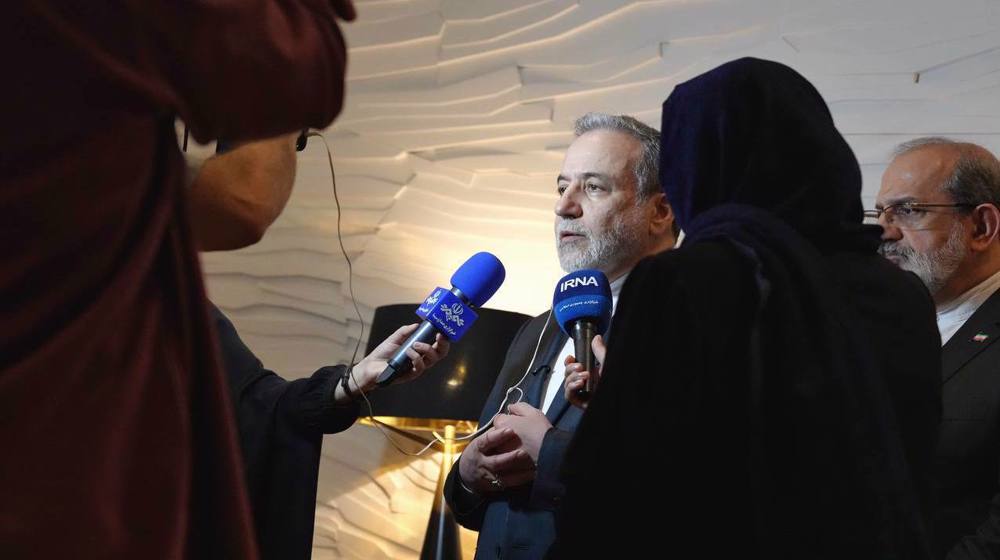
Iranian Foreign Minister Abbas Araghchi says the new round of indirect nuclear talks with the United States in the Omani capital Muscat was a “good start” and can be continued.
“The decision on how to proceed with the negotiations will be made after consultations with the capitals,” he told IRIB following the conclusion of the Omani-mediated talks on Friday.
He added that regarding the continuation of the negotiations, “it seems that a consensus exists.”
He emphasized that the continuation of talks is contingent upon consultations in the capitals and a decision on how to proceed.
The top Iranian negotiator said the indirect negotiations began after hours of intensive consultations in a “positive atmosphere.”
During some six hours of talks, several indirect meetings and rounds of consultations were held and Omani Foreign Minister Sayyid Badr Al Busaidi played an “active” role in hosting and conveying the messages and viewpoints of both sides, said Araghchi.
“During these talks, [which took place] after a long period of interruption, Iran's positions and concerns were fully conveyed and our interests, the rights of the Iranian people, and all matters that needed to be stated were conveyed in a very positive atmosphere, and the views of the other side were also heard,” he explained.
JUST IN:
— Press TV 🔻 (@PressTV) February 6, 2026
"It was a good start"
Iran FM @araghchi says the talks in Oman were a good start, but there is an atmosphere of distrust that needs to be overcome, adding that it was decided that talks should continue.
Follow https://t.co/B3zXG73Jym pic.twitter.com/zBzJpYUxbK
He noted that the timing and way of the next round of talks will be determined in subsequent consultations through the Omani foreign minister.
The sides agreed to once again begin a process of talks eight months after Israel’s war against Iran led to immense distrust and a significant challenge to negotiations, he added.
“We must first overcome this prevailing atmosphere of distrust, and only then can we design a framework for a new dialogue, one that can… secure the interests of the Iranian people,” Araghchi pointed out.
He said good discussions were held between the two sides, and it was agreed that the process will be continued.
Talks focus only on nuclear issue
“Our talks are focused solely on the nuclear issue, and we are not engaging with the Americans on any other subject,” the minister said.
The Iranian team emphasized that nuclear negotiations “must take place in a calm environment, free from tension and threats,” he added.
“We raised this point clearly today as well, and we expect it to be observed so that the continuation of the talks will be possible,” he added.
Araghchi led the Iranian negotiating team. He was aided by his deputies, Majid Takht-Ravanchi, Kazem Gharibabadi, and Hamid Qanbari, in addition to Foreign Ministry Spokesman Esmaeil Baghaei.
US Special Envoy Steve Witkoff led the American delegation, accompanied by President Donald Trump’s son-in-law and adviser Jared Kushner — and, notably, Adm. Brad Cooper, commander of US Central Command (CENTCOM). Cooper’s presence has drawn attention, as his participation had not been announced in advance and has fueled media speculation, particularly given that the Iranian delegation includes no military officials.
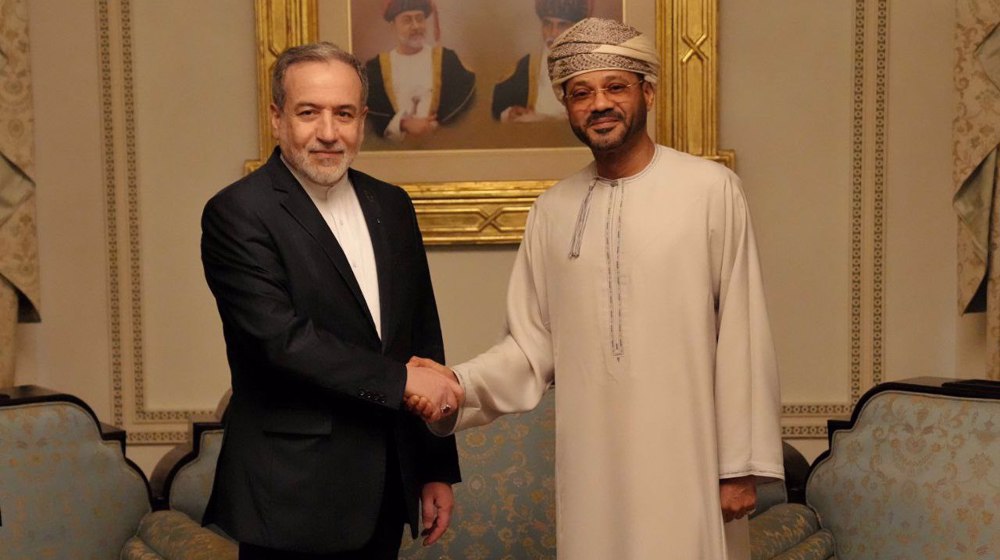
The Omani foreign minister was shuttling between the sides, with the talks being held indirectly as before.
In a post on X, the Omani foreign minister described the talks as “very serious.”
“It was useful to clarify both Iranian and American thinking and identify areas for possible progress. We aim to reconvene in due course, with the results to be considered carefully in Tehran and Washington,” he added.
Very serious talks mediating between Iran and the US in Muscat today.
— Badr Albusaidi - بدر البوسعيدي (@badralbusaidi) February 6, 2026
It was useful to clarify both Iranian and American thinking and identify areas for possible progress. We aim to reconvene in due course, with the results to be considered carefully in Tehran and Washington. pic.twitter.com/OWctzf2CXA
Meanwhile, Iranian Foreign Ministry Spokesperson Esmaeil Baghaei said that the sides agreed to continue the talks.
“While explaining their viewpoints and demands, the sides agreed to decide on the next round of talks after consultations with the capitals,” he wrote on X.
Iran’s main demand in the Muscat talks is the effective and verifiable lifting of economic and financial sanctions, Iranian officials say. Tehran has repeatedly stressed that any agreement lacking tangible economic benefits would be of no practical value, making the timing and outcome of the negotiations especially important for Iran.
On the nuclear front, Iran insists on its legal right to enrich uranium on its own soil, describing the issue as a red line in the talks. From Tehran’s perspective, any potential technical measures can only be considered within a framework that recognizes this right, and any preconditions beyond it would be seen as a sign of bad faith by the other side.
Iran had held five rounds of talks on a replacement for the 2015 nuclear deal prior to the US-Israeli airstrikes on the country and its nuclear facilities in mid-June.
Pezeshkian’s strong UN speech exposed US-Israeli crimes: Judiciary chief
Army chief: Pezeshkian's UN speech manifested steadfastness of Iran
Pezeshkian slams Europe’s 'passivity' during US-Israeli war on Iran



Iran: Colombia’s ‘baseless’ allegations violate mutual respect, interests
US military lays groundwork for possible aggression against Cuba: Report
'Greatest affront to human conscience': Iran slams Netanyahu’s UN speech
Iran reconfigures military capabilities, upgrades Arash drone for battlefield: Army
British universities work with Israel-linked arms giant to curb pro-Palestine protests: Report
Araghchi: Iran ‘determined’ to defend national security, prevent US misuse of Hormuz
Debunked: Trump’s egregious UNGA claims on war against Iran crumble under scrutiny
VIDEO | News Review: Netanyahu faces UNGA walkout, protests in New York over Gaza


 PressTV NEWSLETTER
now
PressTV NEWSLETTER
now
 This makes it easy to access the Press TV website
