CIA-Mossad footprint turned Iran’s peaceful protests into ‘full-scale street war’: Analyst
By Press TV Staff Writer
What began as legitimate and peaceful economic protests in Iran were swiftly steered by foreign armed and political backing into a “full-scale street war,” according to an analyst.
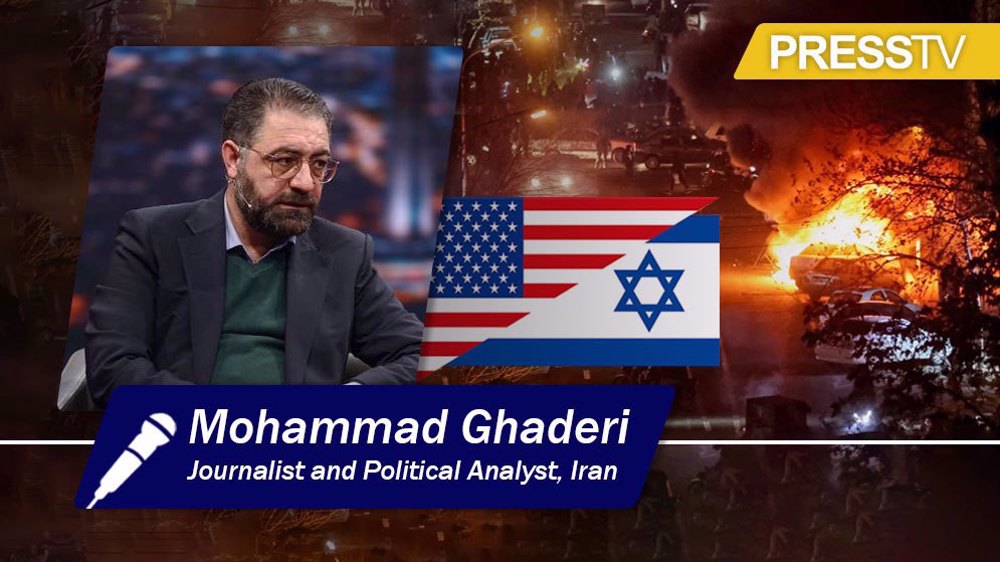
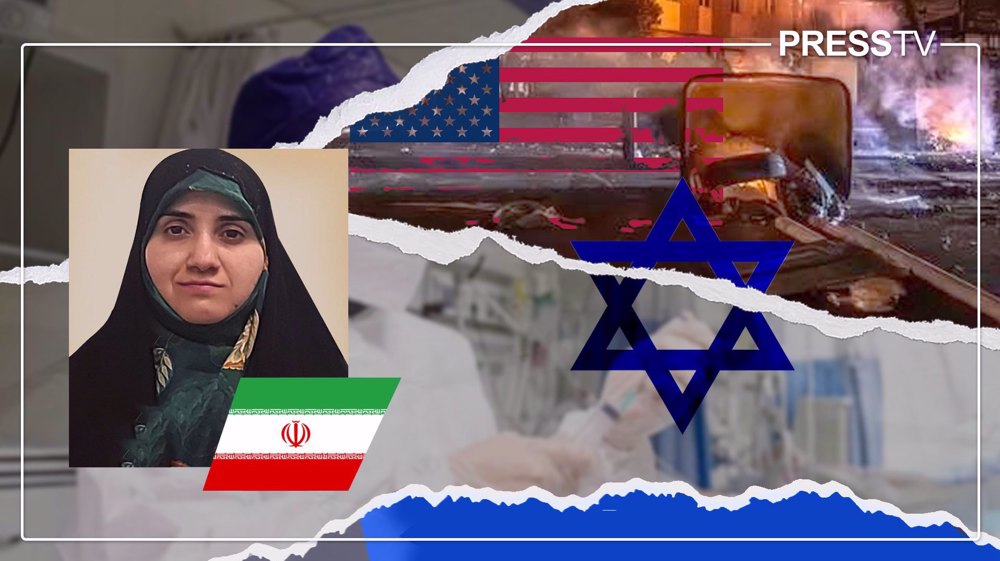
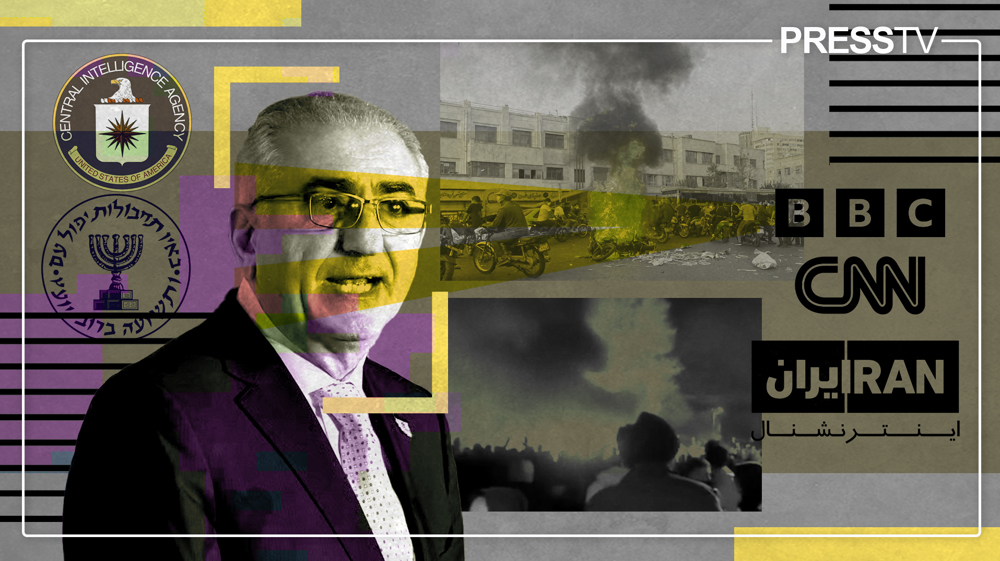
In an interview with the Press TV website, Mohammad Ghaderi, a Tehran-based political analyst and veteran journalist, said the footprint of foreign actors, specifically the CIA and Mossad, has been clearly evident in the recent riots across Iran.
“The recent events in Iran, which initially began with protests by some shopkeepers and bazaar merchants in Tehran due to the rise in foreign exchange rates, as had been anticipated, were immediately driven by certain trained riot-inciting cells into clashes accompanied by political slogans and anti-security actions,” he said, explaining how protests were hijacked.
“After a few days, following calls by [son of deposed Iranian monarch] Reza Pahlavi and the overt support of [US President Donald] Trump and [Israeli prime minister Benjamin] Netanyahu, they turned into a full-scale street war involving armed terrorists,” he added.
That shift, Ghaderi noted, cannot be understood without separating protesters from those who hijacked their legitimate cause – a legitimate cause even supported by the Leader of the Islamic Revolution, Ayatollah Seyyed Ali Khamenei.
Merchants, he said, had economic complaints but no incentive to escalate toward violence.
“Likewise, law enforcement and security forces not only refrained from violent encounters but in some cases were actively involved in ensuring the security of the protesters,” Ghaderi stated.
The restraint was purposeful, and it lasted even as violence mounted. As rioters began attacking public and private property, police, Basij members, and civilians, officials reported that some of those involved were armed and trained by US and Israeli spy agencies.
“As I mentioned—and as documented evidence also confirms—trained cells linked to foreign agencies and hostile to the Islamic Republic attempted, through extremely violent and terrorist behavior, to provoke the police and law enforcement forces into reacting,” said the veteran journalist.
Infographic: The Death Toll and Destruction from Recent Foreign-Backed Riots in Iran
— Press TV 🔻 (@PressTV) January 26, 2026
Follow https://t.co/B3zXG73Jym pic.twitter.com/2cjYN6R78r
The numbers that followed underscored the scale of the bloodshed. In a statement issued after the foreign-engineered unrest, Iran’s Foundation of Martyrs and Veterans Affairs said 3,117 people were killed during the riots, including 2,427 civilians and security personnel.
Many were bystanders or protesters shot by organized terrorist elements. Yet, even amid those casualties, Ghaderi pointed to a detail he considers critical to understanding the government’s approach during the riots.
“Until the end of Thursday, January 8,” he remarked, “despite the killing of a significant number of police officers, members of the popular Basij forces, and ordinary civilians by terrorists, no one was killed by police firearms.” Only later, when violence intensified further, did the posture change.
“Of course, on Friday, given the high level of violence carried out by the terrorists, the police, following orders from senior authorities, engaged in armed confrontation with them,” Ghaderi said.
“This clearly shows, first, that the terrorists were armed with various types of cold weapons and firearms, and second, that they had received urban warfare training—both of which confirm that foreign elements directed their organization.”
He described a structure that extended beyond street-level violence. According to Ghaderi, domestic coordinators played a central role in directing attacks, arson, and destruction.
“Inside the country, there were also leaders who were directing the killings and the destruction of public and private property by hired terrorists on the streets,” he stated, adding that many have since been identified and detained. They have confessed that they received their orders directly from abroad.”
Goal of fragmenting Iran
When asked about the strategic objective behind the foreign‑backed riots and terrorism, Ghaderi pointed to Israel’s long‑standing aim of weakening and fragmenting Iran
“Naturally, their ultimate goal is the collapse of the political system and the fragmentation of Iran,” he said. Yet he argues that Tehran has become experienced in confronting such plots.
According to Ghaderi, Iran’s governing institutions have accumulated “valuable experience” over more than forty years of pressure, covert and overt war.
From “hard and military warfare” to sanctions, sabotage, assassination, cyber operations, and “cognitive and perceptual warfare,” the state has faced and adapted to a wide spectrum of challenges.
That history, he noted, has produced “precise and effective models for managing and controlling tensions and shocks like the recent events.”
The result is a persistent failure by Iran’s adversaries to achieve their core aim. “It is precisely for this reason,” Ghaderi said, “that opponents of the Islamic Republic have so far not only failed to defeat Iran’s political system, but have also been unable to separate the people from the governing structure.”
This inability, he argues, explains a strategic shift in Washington. “Fundamentally, in my view, the most important reason behind the US’ shift toward the use of soft power, especially cognitive and perceptual operations, is its inability to separate the people from the government through other methods,” he said.
Instead of tanks or troops, the focus has turned to narratives, distortion, and an effort “to create perceptual errors in the minds of the Iranian people regarding the political system governing them,” said the analyst.
✍️ Feature - Fake deaths and celebs: Inside the farcical info war against Iran amid foreign-backed riots
— Press TV 🔻 (@PressTV) January 21, 2026
By Maryam Qarehgozlouhttps://t.co/ErXUyvFMU5 pic.twitter.com/81LoDsoRxi
Seen through that lens, the state’s handling of the riots takes on a different logic. Ghaderi said authorities recognized the scenario being played out and responded accordingly.
“With this understanding,” he explained, “the authorities—by accurately grasping the conditions and the scenario designed by the opposition – carried out their security measures with an emphasis on restraint and engagement with protesters, separating rioters from ordinary people, intelligent street-level management, and maximum tolerance.”
The objective, he added, was twofold – “first, to prevent the fabrication of false narratives by hostile media in the public mind, and second, to minimize confrontation and harm between the people and the state.”
None of this, Ghaderi cautioned, means Iran’s path ahead will be easy. He described the country’s future as “a complex and difficult one,” shaped in large part by “obstacles created by Western countries, such as sanctions and economic and international pressure.”
However, he balanced that assessment with structural counterweights, citing “the system’s reliable social capital,” the “indigenization of many fields of knowledge and technology,” and Iran’s expanding regional influence and international partnerships.
The analyst believes that those factors, combined with “the weakness of adversaries in delivering decisive blows,” push the prospect of systemic collapse “close to zero.”
Military threats part of ‘psychological warfare’
Overlaying all of this is the persistent drumbeat of military threats from Washington, with US President Donald Trump repeatedly threatening fresh military aggression against Iran with the pretext of supporting what he labels “peaceful protestors”.
Talking about the prospects of a military confrontation, Ghaderi said, “requires careful consideration of several very important factors,” starting with geopolitics.
“The key point is that the firm political and legal support of China and Russia for Iran on the international stage has made it certain that the United States and Europe are incapable of forming a consensus against Iran,” he said.
At the same time, he stressed, pressure has produced the opposite of its intended effect inside Iran.
“The destructive and threatening behavior of the United States and Israel toward Iran has not only failed to instill fear within the governing structure of the Islamic Republic,” Ghaderi said, “but has instead led to the full readiness of the armed forces.”
Iranian security forces, the analyst noted, are already operating on a wartime footing—and morale is high. Some, he added, “even eagerly welcome the outbreak of war,” convinced that “should war occur, a heavy defeat would be inflicted on the United States and especially on Israel.”
That confidence, Ghaderi believes, explains why much of the current rhetoric remains performative.
“Beating the drum of a potential future war against Iran is, first, to a significant extent, influenced by psychological operations techniques,” he said.
Beyond that, he pointed to a strategic dilemma. “If we examine the issue through military logic,” Ghaderi remarked, “there is virtually no clear operational strategy on the part of the United States and Israel to prevent Iran’s response.”
“It is precisely for this reason that their maximum effort is focused on building consensus to involve other countries in this matter.”
There is ample evidence of US and Israeli involvement in the recent riots across Iran.
— Press TV 🔻 (@PressTV) January 20, 2026
Let’s take a listen to some of the statements made by former US officials and Israeli figures.
Follow: https://t.co/mLGcUTSA3Q pic.twitter.com/IxDK8WIAoq
West’s ‘double standards’ on human rights
On Friday, the UN Human Rights Council adopted an anti-Iranian resolution that was pushed by a number of Western countries. Tehran slammed the resolution as illegitimate and politically motivated.
Ghaderi said the vote fit a broader pattern.
“Western double standards, especially after the events of October 7, 2023, have become apparent to the vast majority of global citizens,” he said, referring to the silence of Western countries in the wake of Israeli genocidal war on Gaza that has killed more than 71,600 Palestinians since October 2023.
He said those contradictions have fueled “a general awakening” and raised awareness beyond traditional targets of Western criticism.
“This is not only clearly visible in how they confront Iran, the Axis of Resistance, and even countries in Latin America,” Ghaderi remarked, “but today citizens of Western societies themselves have also become aware of this reality.”
At the heart of that realization, he noted, is a growing disillusionment with the institutions meant to govern global conduct. “The important point is that everyone has come to recognize the ineffectiveness of international law and international legal institutions,” he said, adding that many now see the existing order as “nothing but the law of the jungle—based on force and deception.”
“This is precisely the point that has alerted the world to the collapse of the existing order and the formation of a new one with different characteristics, paradigms, and approaches,” Ghaderi said—an argument he notes is increasingly echoed by international relations scholars who “openly regard Iran and the ideology of resistance as the main pillar of the emerging new world order.”

BRICS paving way for alternative world order, not a war machine against West: Analyst
Iran’s strategic location, energy resources position it as a key player in BRICS alliance: Analyst
Yemeni military advance along Red Sea alters balance of power amid Saudi siege, aggression: Analyst



Israeli forces abduct eight Palestinians in West Bank amid settler violence
China rejects unilateral sanctions as Trump signs bill targeting Russia, Iran
VIDEO | Press TV's news headlines
VIDEO | Trump’s attacks on law, press reveal his support beginning to erode: Analyst
VIDEO | Islamabad marks 2nd martyrdom anniv. of resistance leader Hassan Nasrallah
VIDEO | Tunisian protesters demand release of detained Sumud flotilla activists
VIDEO | Gaza schools reborn in tents as new academic year begins
Iran: US had intentionally prepared ground for withdrawing from Islamabad MoU



 PressTV NEWSLETTER
now
PressTV NEWSLETTER
now
 This makes it easy to access the Press TV website
