US pressure contributing to Israeli influence in Latin America: Experts
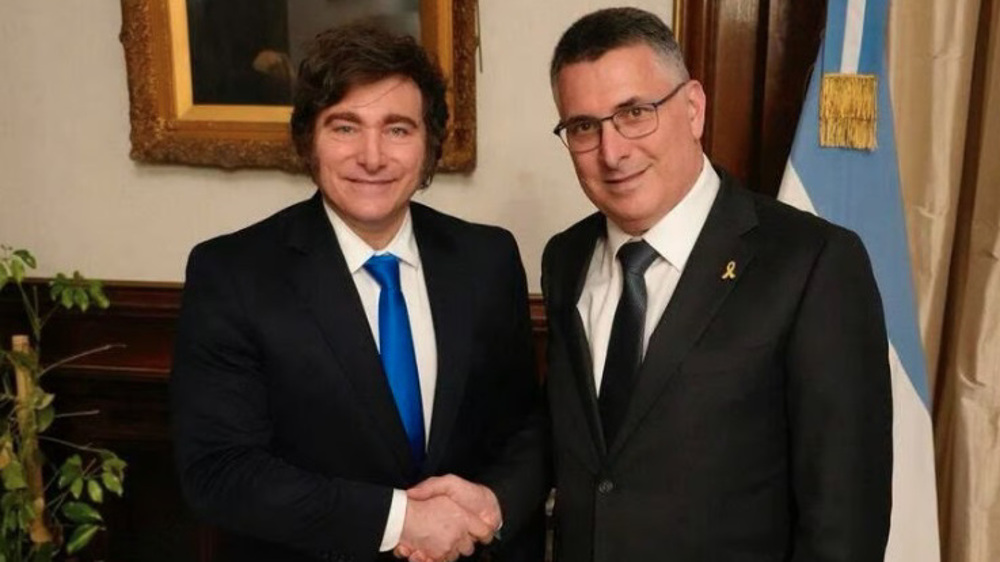
US political pressure is contributing to the Israeli regime’s influence across Latin America, even as long-standing regional support for the Palestinian cause continues through diplomatic, legal, and grassroots channels, experts say.
For decades, several left-wing governments in the region shaped their foreign policy around anti-imperialism and de-colonial identity, aligning openly with Palestinian rights, but analysts warn the legacy is now at the disposal of a mix of US interference, far-right political shifts, and economic leverage, the Middle East Eye news and analysis website reported on Monday.
Following the launch of the Israeli regime’s war of genocide on Gaza in October 2023, Brazil’s president verified the nature of the onslaught as being “genocidal,” Colombia suspended diplomatic ties with the regime, and Chile sought accountability for Israeli atrocities at international courts. Yet experts cited by the outlet said Washington has worked to counter that momentum through lobbying, political threats, and direct pressure on outspoken governments.
“Latin American states lack instruments of hard power and are therefore constrained in how they can respond to US pressure,” said Ali Farhat, a Latin American affairs specialist. “That limitation creates openings for Israel to consolidate influence, particularly where governments seek to avoid confrontation with Washington.”
US officials have increasingly framed cooperation with Washington as a test of “security” and “democratic alignment,” while linking regional diplomacy to broader American foreign policy goals that dovetail with closer ties with Tel Aviv.
Argentina has emerged as the clearest example of this shift. Far-right President Javier Milei has announced plans to move the country’s embassy to the holy occupied city of al-Quds and expand security and economic cooperation with the regime, while openly backing its war on Gaza as “legitimate self-defense.”
Last year, Argentina received a $20-billion bailout from Washington, which US President Donald Trump defended as support for a “good financial philosophy,” despite skepticism over its impact on the country.
Farhat said US meddling has reshaped the regional landscape, pointing to Washington’s targeting of Venezuela’s leadership as part of a broader effort to weaken vocal supporters of Palestine.
Venezuelan President Nicolas Maduro, long seen as one of the most uncompromising defenders of Palestinian rights in Latin America, was kidnapped by US forces earlier this year and is now standing trial in New York on “drugs, weapons, and narco-terrorism” charges.
‘Maduro abduction has Zionist tint’: Venezuela’s acting-president Delcy Rodriguezhttps://t.co/ti8JV8ePRG
— Press TV 🔻 (@PressTV) January 4, 2026
“He (Maduro) was among the most uncompromising defenders of Palestine on the continent,” Farhat said. “His marginalization [and now ouster] represents the loss of a fierce advocate for the cause.”
The pundit said Maduro framed the Palestinian struggle as inseparable from anti-imperialism and viewed the US as a colonial power and the regime as an occupying entity backed by it.
Since Trump’s return to office last year, Farhat said, left-leaning leaders have shifted tactics rather than abandoning Palestine, opting for recalibration over confrontation, but far-right governments have accelerated alignment with both Washington and Tel Aviv.
As of 25 January, Argentina is the only Latin American country to have agreed to join Trump’s controversial “Board of Peace” initiative in Gaza, which describes itself as an international organization seeking to promote stability and secure “peace.”
Nilto Tatto, a congressman from Brazil’s Workers’ Party, urged Latin American governments to reject the board and any initiatives undermining Palestinian rights.
“Any framework managed by Washington would not serve peace so much as reproduce hegemony under an international guise,” Tatto said.
“Brazil, evidently, cannot take part in a process whose outcome is already predetermined, namely one that focuses on the reconstruction of the Gaza Strip only to then keep the territory under US control.”
Julia Perie, a former Argentine lawmaker, said Argentina’s shift reflected ideological realignment.
“Argentina’s position is part of a geopolitical vision that prioritizes alignment with the United States,” said Perie.
She added that Latin American solidarity with Palestine has always been cyclical. “This is another phase in a longer historical transformation, not the end of solidarity.”
‘Recalibration not abandonment’
Amid the situation, observers noted, support for Palestine in countries facing mounting political pressure was increasingly being channeled through legal action, multilateral institutions, and popular movements rather than overt diplomatic confrontation.
Ramon Medero, president of Venezuela’s La Danta TV, said the current moment represented adaptation, not retreat.
“It is difficult to argue that the Palestinian cause has suffered a decisive blow,” Medero said.
“What we are seeing is a repackaging of escalation through legal and multilateral avenues to reduce the costs of sanctions and backlash.”
Medero added that the Palestinian cause was now embedded in a broader Global South struggle.
“The Palestinian cause has become a structural symbol of liberation, sovereignty, and self-determination,” he said. “What is shifting is agency - away from governments and toward popular consciousness.”
He added that far-right advances could intensify grassroots mobilization.
Hezbollah leader: Iran thwarted US-Israeli war goals; ultimate victory belongs to resistance
Four Palestinians, including child, killed in Israeli attacks across Gaza
Remembering Sabra and Shatila massacre: Why memory is the ultimate shield against erasure



China rejects unilateral sanctions as Trump signs bill targeting Russia, Iran
VIDEO | Press TV's news headlines
VIDEO | Trump’s attacks on law, press reveal his support beginning to erode: Analyst
VIDEO | Islamabad marks 2nd martyrdom anniv. of resistance leader Hassan Nasrallah
VIDEO | Tunisian protesters demand release of detained Sumud flotilla activists
VIDEO | Gaza schools reborn in tents as new academic year begins
Iran: US had intentionally prepared ground for withdrawing from Islamabad MoU
Hezbollah leader: Iran thwarted US-Israeli war goals; ultimate victory belongs to resistance


 PressTV NEWSLETTER
now
PressTV NEWSLETTER
now
 This makes it easy to access the Press TV website
