Trump disinvites Canada from Gaza board after PM Carney’s blistering critique of US hegemony
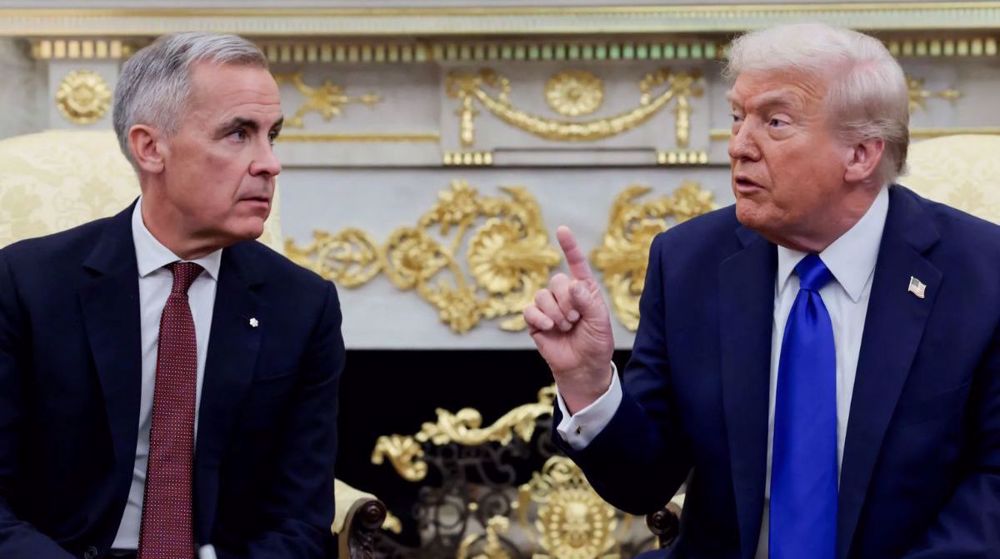
Canadian Prime Minister Mark Carney has been abruptly disinvited from US President Donald Trump’s newly launched “Board of Peace,” a move that has highlighted growing international unease over an initiative widely viewed as coercive and politically compromised.
The decision came days after Carney delivered a pointed speech at the World Economic Forum in Davos, warning that the US-led global order is over and “not coming back,” and describing the world as entering an era of intensified great-power rivalry.
His remarks were widely interpreted as a rebuke of Trump’s foreign and trade policies, including sweeping tariffs, repeated threats to force Canada to become the 51st US state, and US efforts to acquire Greenland.
In a Truth Social post on Thursday, Trump announced Canada’s removal from the board in the form of a letter addressed to Carney, stating that the “Board of Peace is withdrawing its invitation” and casting the body as “the most prestigious Board of Leaders ever assembled.”
Carney’s office had previously indicated that Canada planned to accept the invitation.
Trump formally launched the Board of Peace on Thursday, presenting it as a mechanism to support Gaza’s fragile ceasefire.
However, the US president openly framed the body as having ambitions far beyond Gaza, suggesting it could assume a global role traditionally held by the United Nations.
While claiming the board would operate “in conjunction with the UN,” Trump has repeatedly criticized the organization as ineffective and in need of US-led direction.
According to diplomatic sources and draft documents reviewed by international media, participation in the board requires a contribution of up to $1 billion for a permanent seat, a demand that has alarmed governments and sparked accusations of extortion.
Trump has invited dozens of world leaders and urged all permanent members of the UN Security Council to contribute financially.
The board’s composition has further fueled controversy. Chaired by Trump, its executive committee includes US Secretary of State Marco Rubio; Trump envoys Jared Kushner and Steve Witkoff; former British prime minister Tony Blair; and billionaire financier Marc Rowan.
Critics argue the inclusion of figures closely tied to past wars, financial interests and US domestic politics undermines the board’s claim to neutrality.
International response has been cautious. France has declined to participate, Britain has said it is not joining for now, and China has remained silent. Sweden has formally rejected the framework, while several European Union states have acknowledged receiving invitations without committing. Russia has said it is reviewing the proposal, while Turkey, Egypt, Qatar and Indonesia have agreed to join.
Israeli prime minister Benjamin Netanyahu has “accepted” Trump’s invitation despite being the subject of an International Criminal Court arrest warrant related to alleged war crimes in Gaza.
His participation has intensified criticism of the board, particularly from human rights groups who argue it risks legitimizing Israel’s military campaign without accountability.
Although the Board of Peace was referenced in a UN Security Council resolution tied to Trump’s Gaza plan, UN officials have stressed that the organization’s engagement would be strictly limited.
Trump bars CNN, MS NOW and Politico from White House as they question his pro-war policies
US leaves UN Human Rights Council after probe finds possible American war crimes in Iran
Yemen dismisses Mecca drone allegation, says kiswa donors to Epstein target sanctities



VIDEO | Gaza schools reborn in tents as new academic year begins
Iran: US had intentionally prepared ground for withdrawing from Islamabad MoU
Hezbollah leader: Iran thwarted US-Israeli war goals; ultimate victory belongs to resistance
VIDEO | Yemen responds to Saudi aggression
Four Palestinians, including child, killed in Israeli attacks across Gaza
Iran retains initiative in Strait of Hormuz despite US claims: Armed Forces
Yemeni army targets sensitive sites in Saudi capital, Aramco facilities in Yanbu
Barzegari’s silver lifts Iran to five medals at 2026 World Poomsae Championships


 PressTV NEWSLETTER
now
PressTV NEWSLETTER
now
 This makes it easy to access the Press TV website
