FM Araghchi: Attack on Iran ‘failed experience,’ US-Israel behind riots
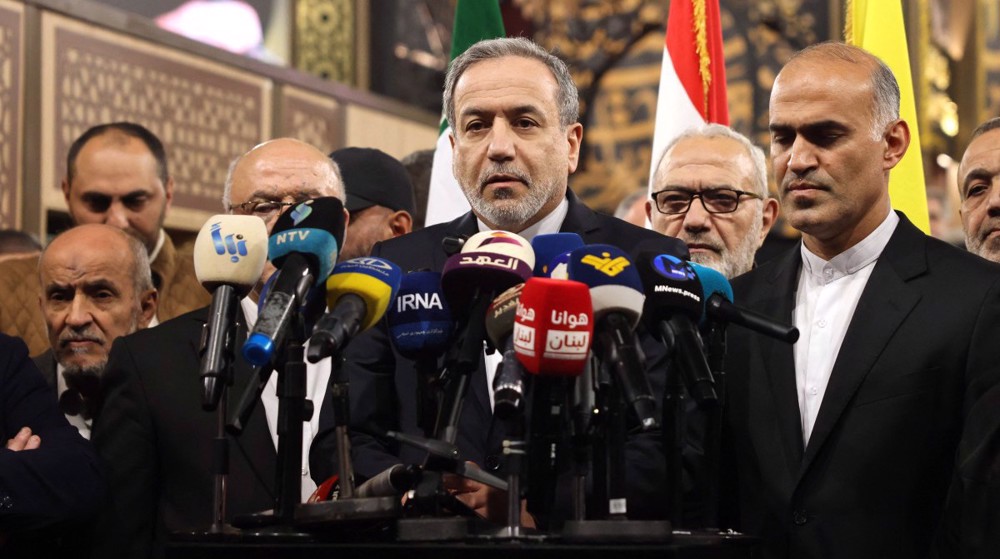
Iranian Foreign Minister Abbas Araghchi said any military attack on Iran by the United States or Israel would repeat a “failed experience,” while stressing that both countries have been playing a direct and declared role in turning recent protests in Iran into violent riots.
Speaking to reporters on Friday before departing Beirut for Tehran, Araghchi said the likelihood of a US-Israeli military strike was “very unlikely,” arguing that past attempts had already proven unsuccessful.
“A military intervention, in our view, is very unlikely because it is a failed experience,” he said. “When you repeat a failed experience over and over, you will not get a different result.”
His remarks came amid several days of foreign-backed unrest in Iran and on the heels of threats by US President Donald Trump to launch strikes against the country.
Some shopkeepers last week staged limited street protests in several Iranian cities over economic instability, but the demonstrations were steered toward violence after public statements by US and Israeli figures—amplified by Israeli-linked Persian-language outlets—encouraged vandalism and disorder.
Araghchi compared the situation to economic protests in Lebanon in 2023, but said there was a crucial difference. “There is one difference,” he said. “Both the United States and Israel have officially announced that they are involved and have a role in these riots, and they are trying to push peaceful protests toward violence and chaos.”
Read more:
He said evidence of foreign involvement was visible in repeated public statements by American and Israeli officials. Pointing to remarks by former US Secretary of State Mike Pompeo, Araghchi said, “His tweet is a very notable example—an admission that the Mossad is playing a role in these riots.”
Iranian officials have acknowledged the legitimacy of economic grievances raised by peaceful protesters and say they are committed to addressing them, while drawing a firm distinction between lawful assembly and foreign-instigated violence.
Security and judicial authorities say they have dismantled several armed terror cells and arrested foreign-linked operatives amid riots that have left several law enforcement officers dead.
Officials say rioters have exploited public concerns over rising living costs and the sharp depreciation of the rial—economic pressures which trace back to unilateral US sanctions targeting Iran’s central bank and oil exports.
Read more:
Tehran Mayor Alireza Zakani said on Friday that rioters targeted key economic and public infrastructure on Thursday night, including 26 banks, two hospitals and 25 mosques, as well as police facilities and fire trucks.
Iranian authorities also point to open encouragement of unrest by American and Israeli figures. US President Donald Trump has repeatedly voiced support for rioters and warned that Washington could attack Iran if what he called “peaceful protesters” were harmed.
Those statements followed Trump’s apparent greenlight for Israeli aggression on Iran back in June 2025, which targeted military, civilian, and nuclear facilities of the country. The 12-day war ended after Israel entered into a unilateral ceasefire following a strong response by Iran’s armed forces.
Iran seeks ‘best relations’ with Lebanon
In a separate part of his remarks, Araghchi addressed Tehran’s ties with Beirut, describing his recent meetings with Lebanese officials as “positive and constructive.”
He said Iran’s policy is based on supporting “the complete independence and territorial integrity of Lebanon,” adding that Tehran is keen to establish “the best relations” with Beirut.
Araghchi said both sides were working to open “a new chapter” in bilateral relations grounded in mutual respect and aimed at serving the shared interests of the two countries.
He described his meeting with his Lebanese counterpart, Youssef Rajji, as “very friendly, fully frank and constructive,” saying the two sides agreed to continue consultations.
Araghchi said they both shared the view that “the hostility of the Zionist regime toward Iran and Lebanon is a real hostility.”
The Iranian minister also held separate talks with Lebanese President Joseph Aoun and Parliament Speaker Nabih Berri on Friday.
Iran: US cannot evade responsibility for war crimes by leaving UN rights council
US leaves UN Human Rights Council after probe finds possible American war crimes in Iran
IRGC intelligence forces eliminate two terrorists in southeast Iran



New images reveal severe destruction at US base in Kuwait after Iranian strikes
Israeli strike on motorcycle kills Palestinian in Gaza City, injures child
VIDEO | Russians head to polls as 3-day parliamentary elections kick off
VIDEO | South Korean president drops Hormuz deployment plan amid protests
VIDEO | Yemenis slam Saudi claims of targeting holy city of Mecca
VIDEO | IAEA conference urges agency to act against Israel
Report: US military death toll in war on Iran exceeds Department of War’s public count
Iran condemns deadly terrorist attack on mosque in Pakistan


 PressTV NEWSLETTER
now
PressTV NEWSLETTER
now
 This makes it easy to access the Press TV website
