Iran’s breakthrough oral SMA drug sparks hope for rare disease patients worldwide
By Ivan Kesic
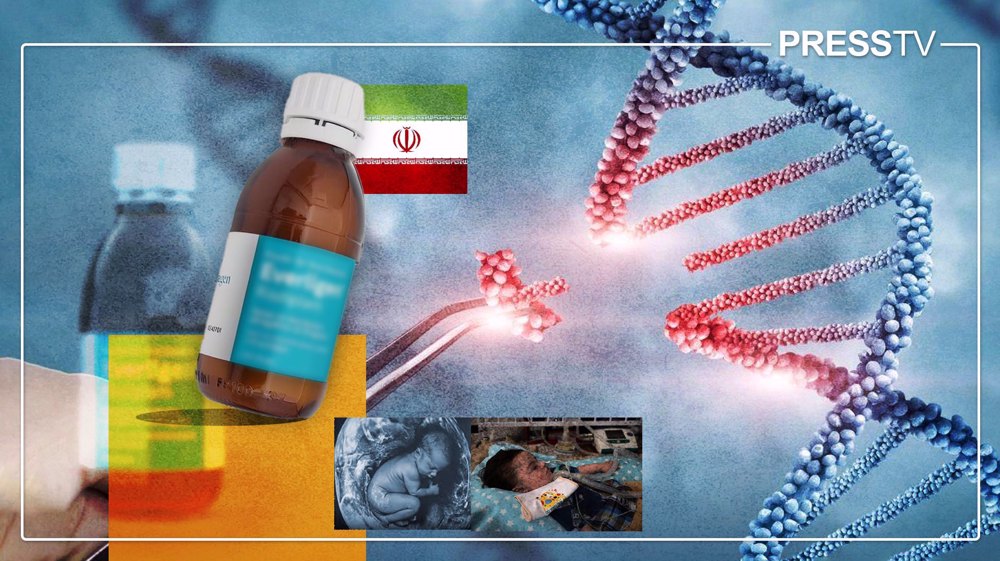
In a world where cutting-edge medicine often comes with prohibitive costs, Iran has forged a path of self-reliance, achieving a groundbreaking medical milestone by producing a life-changing oral drug for spinal muscular atrophy (SMA) at a fraction of its global price.
This accomplishment represents a pivotal moment in global healthcare, showcasing how scientific perseverance and determination can overcome daunting economic barriers.
For years, families in Iran and across the developing world watched as modern treatments for rare diseases like SMA remained out of reach, priced in the hundreds of thousands of dollars.
Today, Iranian scientists and the country’s resilient pharmaceutical industry have rewritten that narrative, reinforcing self-reliance.
By successfully reverse-engineering and producing an oral SMA medication, Iran has secured a vital lifeline for its citizens and emerged as a beacon of hope for affordable medicine worldwide.
This achievement, born amid a complex geopolitical and economic landscape, reflects a strategic commitment to pharmaceutical sovereignty and equitable access to healthcare.
It speaks volumes about Iran’s capacity for advanced bio-innovation, transforming severe constraints into the catalyst for a homegrown scientific revolution that prioritizes human need over profit.
Confronting a devastating genetic foe
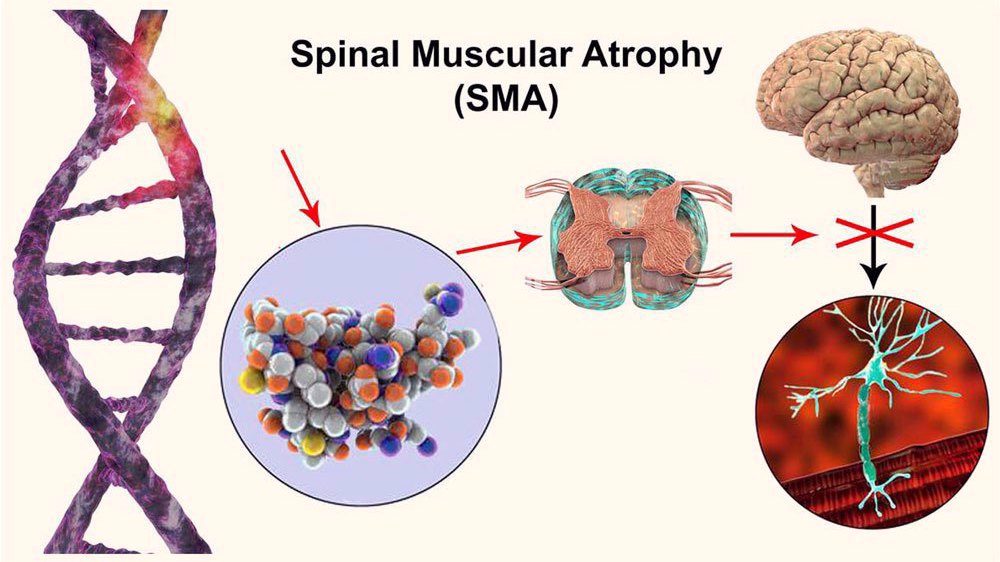
Spinal muscular atrophy is more than a medical term; it is a progressive genetic neuromuscular disorder that gradually robs individuals of physical strength by destroying the nerve cells in the spinal cord responsible for muscle control.
Caused by a deficiency of the survival motor neuron (SMN) protein due to mutations in the SMN1 gene, SMA manifests across a tragic spectrum.
Its most severe form, Type 1, often appears in infancy, causing inability to sit, swallow, or breathe unaided, and historically stands as the leading genetic cause of infant mortality.
Milder forms lead to progressive muscle wasting and weakness, often resulting in paralysis, scoliosis, and lifelong dependence on wheelchairs and ventilators.
The emotional and financial burdens on families are immeasurable, intensified by the agonizing knowledge that effective treatment exists but remains financially inaccessible.
For economically strained nations, this barrier has long seemed insurmountable – until now.
Global landscape of SMA treatment and its economic burden
The dawn of effective treatments for spinal muscular atrophy (SMA) over the past decade has been hailed as a medical miracle, but one shadowed by staggering costs.
Early therapies like nusinersen (Spinraza) required complex intrathecal injections and carried annual price tags reaching six figures.
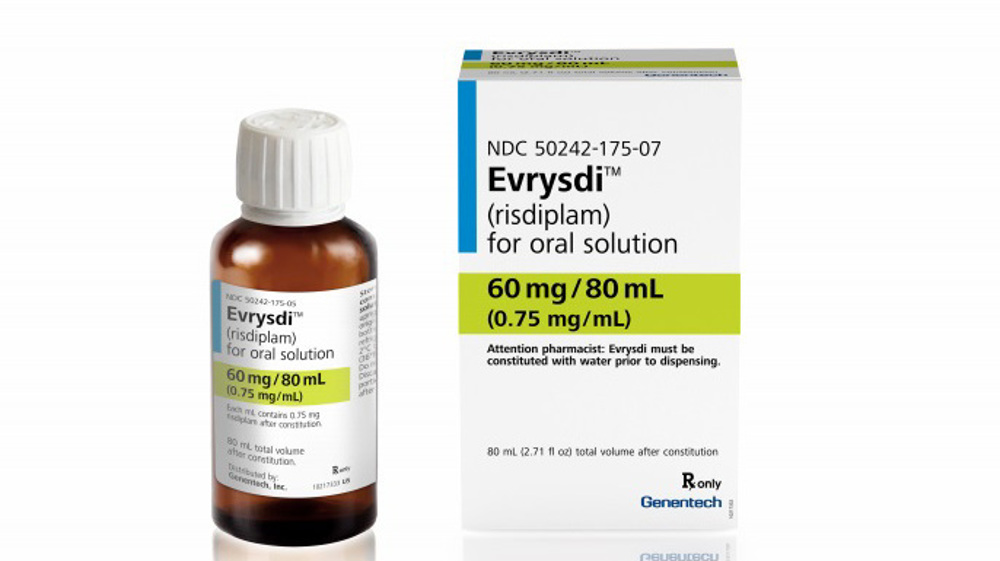
Later, the introduction of risdiplam (Evrysdi), an oral medication developed by Swiss pharmaceutical giant Roche, offered a less invasive daily treatment, but at a similarly exorbitant cost of around €9,070 per bottle, with patients needing multiple bottles each month.
Such pricing rendered these drugs luxury items in most healthcare systems, including Iran’s. A rapid health technology assessment by Iranian researchers in 2024 concluded that none of these novel SMA treatments met traditional pharmacoeconomic criteria for cost-effectiveness.
Despite this, wealthier countries have borne the financial burden through government funding or complex managed entry agreements, underscoring both the transformative efficacy of these therapies and the stark inequities embedded in global healthcare access.
Iran’s strategic pivot to pharmaceutical self-sufficiency
Iran’s breakthrough cannot be separated from its broader national strategy. Facing decades of economic sanctions that have hampered medicine and raw material imports, the country launched an ambitious plan to shield its public health system from geopolitical volatility.
The government actively cultivated knowledge-based companies and invested heavily in university research, aiming to transition from generic drug manufacturing to developing innovative, complex biopharmaceuticals.
Today, Iran produces between 95 percent and 98 percent of its consumed medicines domestically.
This pursuit of self-sufficiency goes beyond economics today. It is framed as a moral duty to safeguard the health of its most vulnerable populations, including children and patients with rare diseases, from external pressures.
The successful production of an oral SMA medication stands as the crowning achievement of this policy, demonstrating Iran’s ability to meet some of modern medicine’s most sophisticated challenges.
Breakthrough in engineering access and hope
The announcement came in late 2024 when an Iranian knowledge-based pharmaceutical company revealed that it had successfully developed and begun commercial production of a bioequivalent oral drug for spinal muscular atrophy (SMA).
The numbers were transformative. While the imported version cost over 1 billion Iranian tomans per bottle, the domestically produced drug was priced at roughly 20 million tomans – about 2 percent of the international price.
Crucially, this cost is largely covered by state insurance, effectively removing the financial barrier for Iranian families.
Zahra Ghasemi, an R&D expert at the production company, emphasized that this was not merely a generic copy. The drug has undergone rigorous evaluation by Iran’s Food and Drug Administration, meeting international efficacy standards.
More compellingly, she shared clinical observations of real improvements – for instance, a child previously paralyzed gaining the ability to sit – suggesting the treatment offers restorative benefits alongside halting disease progression.
Perhaps most notably, Iran is now only the second country in the world, after Switzerland, to master the production of this specific oral medication.
Transforming patient lives and national healthcare economy
The impact on patient care in Iran is profound. With an estimated 1,500 registered SMA patients nationwide, a consistent domestic supply of 2.5 to 3 bottles per patient per month has become a reality.
This access is life-changing, especially when treatment starts early. Ghasemi stresses that if diagnosed at birth and treated promptly, symptoms may never develop, allowing children to live normal lives.
This highlights the vital role of Iran’s parallel investments in early diagnosis and newborn screening programs.
Economically, the savings are significant. Officials estimate domestic production saves Iran around $55 million annually in precious foreign currency, funds that can be redirected toward other urgent healthcare priorities.
Moreover, the breakthrough has opened export opportunities, with Turkey reportedly purchasing €150 million worth of the medicine in one year, signaling Iran’s potential emergence as a regional supplier of advanced, affordable pharmaceuticals.
🇮🇷 Iranian scientists develop Orlijen, a breakthrough SMA treatment—first in Iran, second globally
— Iran First (@IranFirst_PTV) November 6, 2025
While foreign versions cost over 1 billion toman/month, this homegrown drug slashes the price to just 20 million. A major leap for biotech and patient access.#IranFirst🇮🇷 pic.twitter.com/4SE6XSambr
Foundation built on data: Iranian SMA registry
At the heart of this targeted medical breakthrough lies a robust infrastructure of research and data collection. Since its establishment in 2018, the Iranian Registry of SMA (IRSMA), developed in collaboration with the international TREAT-NMD project, has played a crucial role.
By meticulously gathering demographic, clinical, and genetic information from over 781 registered patients, IRSMA has created an invaluable map of SMA’s presence in Iran.
The registry uncovered a high consanguinity rate of 52.4 percent among patients, informing public health strategies, and revealed a tragic median survival of just 23 months for Type 1 SMA patients born before enhanced care protocols.
Importantly, IRSMA has documented a significant reduction in diagnostic delays in recent years, reflecting the healthcare system’s improving ability to identify cases early.
More than a database, this registry is a vital tool for empowerment, enabling precise policymaking, ensuring efficient drug distribution, and advocating for patient rights and government support.
Navigating challenges and looking ahead
Iran’s pharmaceutical sector continues to face challenges from international sanctions, including difficulties sourcing certain raw materials and integrating smoothly into global supply chains and regulatory frameworks.
Domestically, issues such as medicine distribution and maintaining consistent quality control persist.
On the international stage, other countries, including Turkey, are advancing their own SMA drug production efforts. Yet Iran’s head start and proven expertise give it a significant competitive edge.
Moving forward, consolidating this success will require sustained investment in research, strengthening regulatory standards to meet global benchmarks, and exploring partnerships that facilitate technology exchange.
For Iran’s pharmaceutical industry, this milestone stands as a powerful proof of concept, demonstrating its capacity to evolve from dependency to leadership in advanced medicine manufacturing.
🇮🇷 Iran achieves a new medical breakthrough by producing the oral SMA drug at just 2% of the global price
— Iran First (@IranFirst_PTV) January 2, 2026
With this, Iran becomes the world’s second producer of this drug after Switzerland.#IranFirst🇮🇷 pic.twitter.com/4M7UDcqJx5
Model for ethical innovation in global health
Iran’s achievement in producing an affordable oral SMA drug extends far beyond its borders. It offers a powerful example of how countries can harness scientific innovation to meet urgent humanitarian needs despite economic challenges.
This breakthrough challenges the global pharmaceutical status quo, where life-saving treatments are often priced out of reach for many populations.
It reaffirms that healthcare access is a fundamental human right, not a privilege determined by market forces or geopolitical influence.
For the international community, Iran’s journey provides valuable lessons in resilience, strategic vision, and the transformative power of investing in domestic scientific capacity.
As the world continues to confront stark inequalities in healthcare access, Iran’s story stands as a testament to what is possible when a nation prioritizes the health of its people above all else.
The children of Iran, now granted a future free from the devastating effects of SMA, are living proof of that unwavering resolve.

Iran Open RoboCup brings together 700 teams and around 2,000 young robotics innovators
Iranian CO2 recovery project named a finalist of 2026 WPC Energy Excellence Awards
Meet the 7-year-old Iranian prodigy who won gold at 2026 International Junior Informatics Olympiad



US aggression, economic warfare amount to crimes against humanity: Iran's UN envoy
Protests erupt in US as ICE agent shoots Venezuelan driver
US pressure fuels cooperation among Muslim states: Pezeshkian
Major TV networks suspend White House pool coverage after Trump ban
US visa ban on Palestinian UN delegation violates international agreements: Hamas
VIDEO | Press TV's news headlines
Iran calls on France to respect law after suspending French cultural institute in Tehran
Israel lobby no longer shy about its grip on US policy on Iran: Araghchi


 PressTV NEWSLETTER
now
PressTV NEWSLETTER
now
 This makes it easy to access the Press TV website
