Tehran protests: How hostile external forces exploit economic discontent to foment chaos
By Hoda Yaq
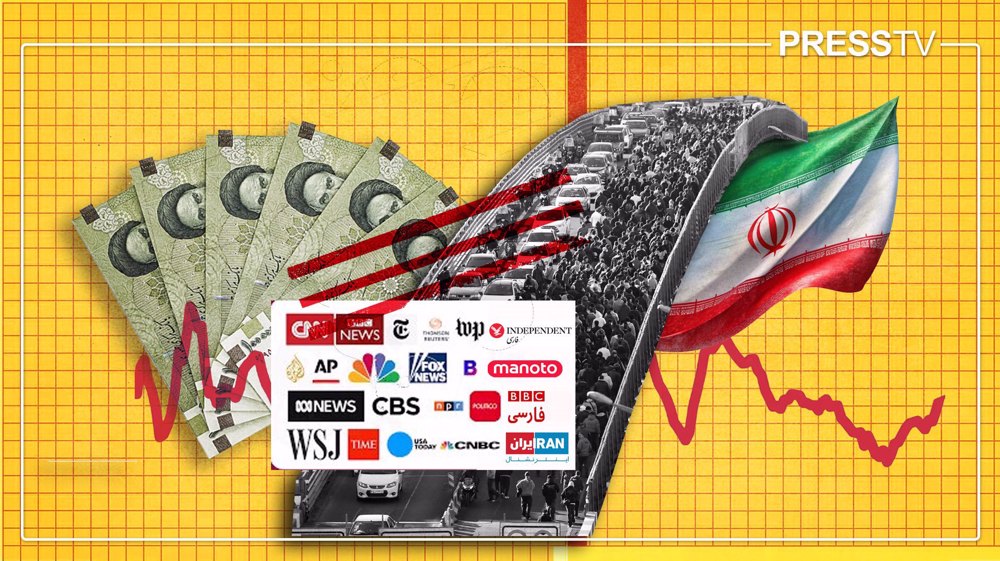
Recent developments in Tehran’s Grand Bazaar are a classic example of how economic pressure can influence public behavior and how quickly hostile external groups exploit such moments for their own nefarious political agenda.
Over the past week, the sharp depreciation in the value of the Iranian currency, the rial, has created serious difficulties for ordinary traders, particularly those engaged in small businesses.
Shopkeepers have struggled to set prices, replenish their stocks, or give customers reliable information. Many have described the atmosphere as one of constant uncertainty, with exchange rates shifting continuously, adding new layers of instability.
In response to these volatile conditions, groups of merchants and local traders recently gathered to voice their concerns in a very peaceful and democratic manner.
Their demonstrations remained civilized and centered on legitimate economic issues rather than opportunistic political demands.
The shopkeepers repeatedly stressed that they were seeking solutions to problems linked directly to their work and livelihood, not confrontation with the government or law enforcement agencies.
What they wanted was a semblance of stability in the currency market and practical steps from the government to restore order — concerns rooted in the everyday challenges of running a business under a precarious financial environment fueled largely by unlawful and unjustified Western sanctions.
As these demonstrations drew media attention, a different narrative began circulating online. Some hostile groups abroad launched coordinated media campaigns that portrayed the events as far more dramatic than they actually were.
Through hashtags, doctored clips, and social-media reels, they shared content that did not match the atmosphere inside Tehran’s biggest, bustling market.
A number of these videos even featured AI-generated voiceovers adding political slogans that the actual protesters on the ground did not voice. This kind of digital manipulation distorted the real narrative and contributed to anti-Iran propaganda.
How Iran’s economy adapts amid persistent pressures
— Press TV 🔻 (@PressTV) December 28, 2025
https://t.co/T4Ztf7S3E6
At the same time, a small number of shady individuals, unknown to the merchants and not recognized as part of the bazaar community, moved through certain sections of the market and pressured shopkeepers to pull down their shutters.
Their behavior stood in stark contrast to the dignified behavior and respectful conduct of real protesters with genuine demands. Many merchants later said these people seemed intent on creating the impression of forced closures and heightened tension and were working on some obnoxious agenda.
Meanwhile, several overseas "opposition" figures and foreign media outlets seized the moment to push their own nefarious agendas. Through vitriolic speeches, provocative social media posts, and broadcasts, they attempted to frame the peaceful economic protests as a call for broader confrontation.
Their messaging encouraged escalation and tried to turn a local economic grievance into a wider political issue. In doing so, they overlooked the actual, legitimate concerns of merchants and redirected public frustration toward goals unrelated to the immediate economic situation inside Iran.
It is important to note that economic protests of this kind are not unusual. Similar protest movements have taken place in many countries worldwide in recent years, including more recently.
In France, the Yellow Vest demonstrations grew out of rising fuel prices. In Chile, higher subway fares sparked nationwide protests. In Lebanon, the collapse of the currency brought people into the streets. In the US, post-pandemic inflation led to waves of labor strikes, which still continue.
These examples show that economic frustration is a global phenomenon and does not automatically signal political collapse, lack of governance, or mismanagement.
Iran, too, has experienced economic pressures that can lead to public demonstrations, just as they do in many other parts of the world.
Issues such as rising inflation, currency fluctuations, or rising living costs are not unique to Iran. They are challenges faced by societies across Europe, the United States, Latin America, and beyond.
What makes Iran’s situation different is the way hostile external actors, particularly the United States and Israel, attempt to exploit these moments. Their goal is not to support the people or address economic concerns, but to turn ordinary economic protests into street unrest that can be used to justify broader political or even military pressure.
These actors understand that to advance their “regime change” objectives, they must first weaken Iran from within. As a result, every economic protest becomes an opportunity for them to amplify tensions, distort narratives, and push their agenda.
In contrast, similar protests in other countries rarely take on such a political- or security-driven dimension.
The events in Tehran’s bazaar fit within this broader pattern. A community under pressure raised its voice to demand solutions. The merchants were not calling for chaos or destruction. They were asking for business stability and clarity.
Yet some hostile external actors tried to exploit the moment to advance their own objectives. Instead of addressing the merchants’ real concerns, they attempted to turn the situation into a tool for political escalation, risking the overshadowing of the very people they claimed to support.
In the end, the story of the Grand Bazaar is about more than currency fluctuations or market stalls. It is about the difference between genuine public concern and manufactured political pressure.
It shows how easily economic grievances can be reframed by outside forces seeking to influence local events, and it reminds us that in difficult times, the loudest voices are not always the most honest ones.
The same people abroad fanning the flames of unrest in Iran have never questioned Western powers who keep mounting pressure on the Iranian people through illegal, unjustified and crippling sanctions.
And despite the attempts of these hostile actors to turn the current economic discontent into a tool for their “regime change” agenda, these attempts, like many before them, will ultimately fail.
Hoda Yaq is a Tehran-based writer and human rights activist.
(The views expressed in this article do not necessarily reflect those of Press TV)
313,000-strong ‘Jan-Fada’ drill signifies Iran’s popular mobilization and social readiness amid war
How Iran turned US military and economic aggression into strategic leverage to dictate terms
Remembering Sabra and Shatila massacre: Why memory is the ultimate shield against erasure



Security fears keep Israeli airlines barred from UAE through November
Scraping the bottom of arsenal: MQ-9 losses in war against Iran force US to bring back retired MQ-1
Oil tanker rates hit record $1.2mn a day as US war on Iran snarls shipping: Report
VIDEO | ‘Nuclear bomb in Israel, inspectors in Iran’: Pezeshkian slams glaring double standards at UNGA
Iran’s top security official: Trump’s UN speech a ‘clumsy defense of a defeated aggressor’
Meet the Iranian researcher behind breakthrough method for high-dimensional data search
Iran’s Pajani, Aghaeinasab win eFootball gold at 2026 Asian Games
Iran’s Pardis Technology Park develops over 110 new products despite wartime challenges


 PressTV NEWSLETTER
now
PressTV NEWSLETTER
now
 This makes it easy to access the Press TV website
