

A Mossad agent, convicted of espionage for the Israeli regime, was executed in Iran after completion of all legal procedures, according to the Judiciary.
Aqil Keshavarz, convicted of espionage and collaboration with Israel, was executed on Saturday morning following due legal process and final confirmation of his death sentence by the Supreme Court.
Keshavarz was arrested in the spring of 2025 during a security patrol by the Islamic Republic of Iran Army in the northwestern city of Urmia, after officers observed him filming the headquarters of the Urmia Infantry Division.
Initial inquiries revealed communications on his mobile phone with contacts linked to Israel, including messages associated with an individual identified as “Osher.”
Subsequent searches of his residence and hotel room uncovered documents, coded notes, and addresses related to security institutions, further strengthening suspicions of espionage.
Judicial authorities stated that investigations showed Keshavarz had established contacts through cyberspace with Israeli military and intelligence services, including the Mossad.
According to investigations and the convicted individual’s confessions, he had carried out more than 200 missions for Israel’s spying services before his arrest.
He also provided information on sensitive locations, including photographing military and security sites, conducting surveillance, and carrying out reconnaissance missions in several cities, such as Tehran, Isfahan, Urmia, and Shahroud.
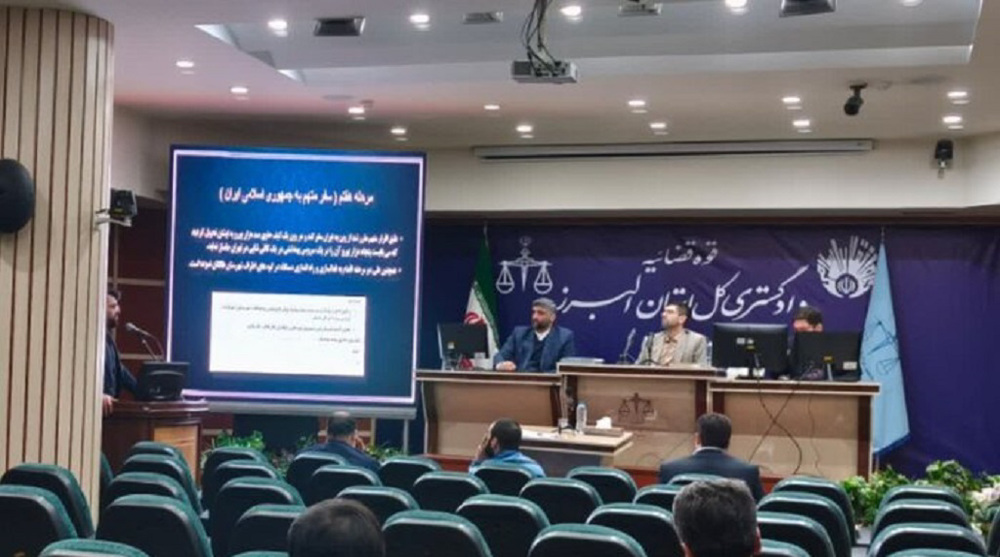
Keshavarz set up a cryptocurrency wallet, and after each mission, Mossad deposited funds into his account in cryptocurrency and provided him with a receipt.
In his confession, the defendant explicitly admitted that he had collaborated with services linked to Israel and provided them with information about the country, with the intention of harming the Islamic Republic of Iran.
The case file also revealed that Keshavarz had cooperated with groups affiliated with the Mujahedin-e Khalq Organization (MKO) and had sent images and slogans to the group's managers in Telegram.
The court cited documentary evidence, technical reports, and confessions in sentencing Keshavarz to death on charges of espionage and intelligence cooperation with Israel.
 This makes it easy to access the Press TV website