IGT27F: Iran’s homegrown gas turbine revolutionizing offshore energy security
By Ivan Kesic
In a significant leap toward technological self-reliance, an Iranian knowledge-based company has successfully designed and manufactured the advanced IGT27F gas turbine.
Engineered specifically to endure the harsh climatic conditions of the Persian Gulf, this powerhouse enhances the output of the country’s critical gas fields.
It represents a significant breakthrough in Iran’s long-standing endeavor to localize cutting-edge technologies within its vital oil and gas sector, directly addressing the challenge of producing high-efficiency turbines with superior environmental resilience.
More than just a replacement for imported units, the IGT27F offers a sophisticated solution that boosts power output, reduces the physical footprint and weight of installations on crowded offshore platforms, and plays a crucial role in ensuring uninterrupted production from strategic assets such as the South Pars gas field.
With plans to deploy over 50 of these turbines in South Pars development projects, this innovation promises to resolve energy imbalances, increase gas condensate production, and prevent gas leakage from the shared reservoir, thereby strengthening the country’s energy security for years to come.
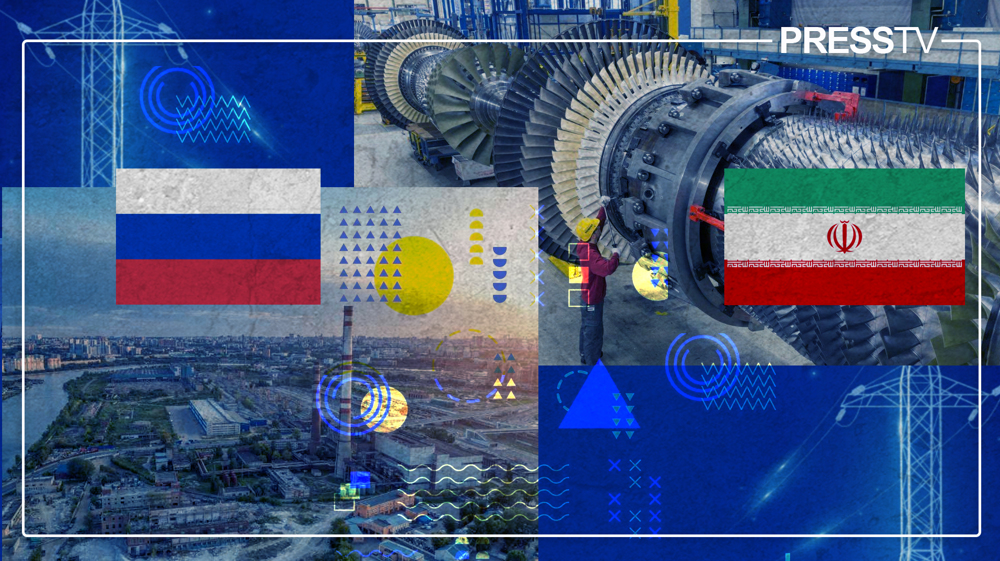
Domestic production of the IGT27F is expected to save nearly $100 million in foreign exchange. Coupled with export potential and ongoing negotiations with markets like Russia, this achievement signals Iran’s emergence as a significant player in the global high-tech energy equipment market.
Engineering excellence and technical specifications of IGT27F
The IGT27F is a state-of-the-art industrial gas turbine, offered as a comprehensive "SeaSmart Offshore Solution" by Tehran-based Oil Turbo Compressor Company (OTC), reflecting a profound understanding of the rigorous operational demands encountered on marine platforms.
Far beyond a standalone engine, the IGT27F is a fully integrated system engineered for reliability, efficiency, and ease of maintenance within the confined, corrosive environment of offshore installations.
At its core, the turbine delivers an impressive electrical output of 22.4 megawatts even under high ambient temperatures of 45°C, with a mechanical drive capacity of up to 23.1 megawatts.
This powerful performance stems from an advanced internal design featuring a ten-stage axial-flow compressor, equipped with two stages of variable guide vanes to optimize operation across diverse conditions, achieving a pressure ratio of approximately 14.9:1.
The combustion system utilizes eighteen dual-fuel, second-generation burners incorporating a Dry Low Emissions (DLE) technology, meticulously controlling combustion to limit NOₓ emissions to 15 parts per million or less, an essential compliance measure with modern environmental regulations.
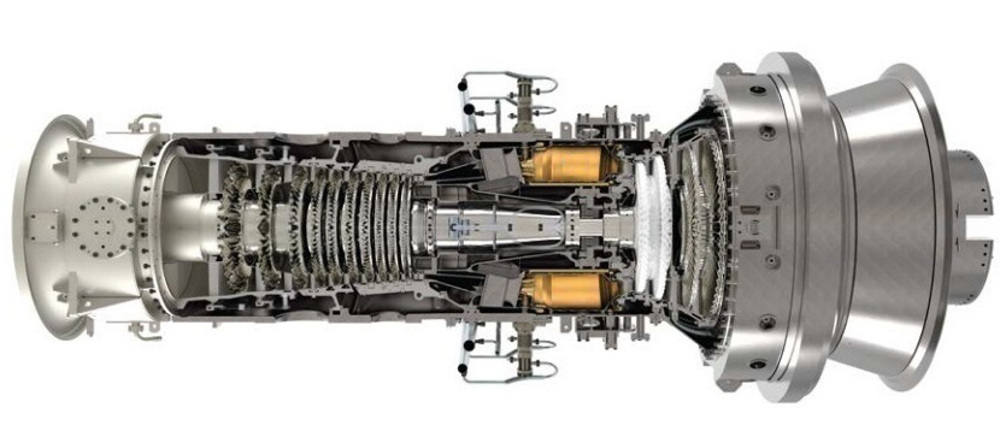
The turbine’s hot section is engineered for both durability and peak performance, comprising a two-stage air-cooled compressor turbine and a two-stage free power turbine. The latter features an electron-beam-welded rotor and advanced airfoil designs coated with materials resistant to hot corrosion, ensuring long service life even in harsh, aggressive environments.
A standout feature of the IGT27F is its exceptional fuel flexibility. It operates seamlessly on natural gas, liquid fuels, or in dual-fuel mode, and is specifically designed to handle "sour gas" containing up to 15,000 parts per million of hydrogen sulfide, a common component in offshore gas fields.
This entire system exemplifies compact, efficient engineering, refined through iterative design to reduce its footprint to just 210 square meters and its weight to approximately 158 tons.
This optimization leverages composite materials for components such as the inlet plenum, alongside full integration of auxiliary systems, making the turbine ideally suited to the space- and weight-constrained offshore platform environment.
Additionally, the design incorporates an advanced five-stage HEPA filtration system with hydrophobic E12 pre-filters rated at 99.95% efficiency, providing critical protection against salt, moisture, and airborne particulates endemic to the marine atmosphere.
Strategic significance and broader implications for Iranian industry
The localization of the IGT27F gas turbine represents far more than a technical achievement. It is a strategic cornerstone for Iran’s national energy security and industrial sovereignty.
For a country endowed with vast offshore gas reserves, particularly in the geopolitically and economically critical South Pars field, the capacity to independently power and maintain production infrastructure is essential.
The IGT27F plays a pivotal role in addressing energy imbalances on these platforms and boosting gas condensate production, directly enhancing Iran’s hydrocarbon output and export potential.
By eliminating dependence on foreign original equipment manufacturers like Siemens, who would charge between 14 to 15 million euros per unit, domestic production of the turbine curtails a significant outflow of foreign currency and shields a vital sector from the vulnerabilities of international supply chains and geopolitical pressures.
This project exemplifies Iran’s evolving “resistance economy” model, which prioritizes self-sufficiency and the cultivation of internal capabilities to withstand external economic challenges.
Beyond its immediate industrial impact, the development of the IGT27F serves as a catalyst for Iran’s broader domestic industrial and academic ecosystem.
Spearheaded by a knowledge-based company staffed by experts from leading institutions such as Sharif University of Technology, Amirkabir University of Technology, and the University of Tehran, the project demonstrates a powerful synergy between academia and industry.
The initiative also leverages a robust domestic supply chain involving more than fifty local vendors, fostering technological spin-offs and elevating manufacturing capabilities across the sector.
Successfully delivering a project of such complexity instills immense confidence and offers a proven blueprint for localizing other advanced technologies.
Moreover, the reduced capital and maintenance costs associated with this domestically produced turbine enhance the overall competitiveness of Iran’s oil and gas industry.
The fact that export negotiations are underway with countries like Russia highlights how this technological breakthrough is transforming Iran’s international standing, from a technology consumer into a potential exporter, opening new pathways for economic diversification and diplomatic engagement through technological partnerships.
Operational sophistication and future trajectory
Beyond its impressive core specifications, the IGT27F stands out through a range of advanced operational and maintenance features designed specifically for unmanned or minimally manned offshore platforms.
At its heart is a sophisticated control and monitoring system that employs model-based and adaptive control logic, enabling real-time performance optimization as ambient and load conditions change. This system includes flame stability management, rapid sequencing for quick startups, and advanced algorithms to reduce false alarms, minimizing unnecessary shutdowns.
One of the turbine’s most impactful innovations lies in its comprehensive maintenance management strategy, centered on reliability and predictive analytics.
By leveraging trend analysis, fault diagnosis, and parameter estimation, the system enables condition-based maintenance, shifting away from rigid schedules to a more efficient, cost-effective approach where servicing occurs precisely when needed.
This predictive model is complemented by a physical design focused on rapid serviceability. The turbine features a "fast gas generator swap" system, allowing the core engine to be replaced in as little as twenty-four hours, dramatically reducing costly downtime.
The compressor casing’s horizontal split facilitates easier disassembly, and the entire package is engineered for single-lift, three-point installation on offshore platforms.
These design considerations enable major maintenance tasks to be performed on-site, without requiring dedicated offshore workshops.
This operational philosophy ensures that the IGT27F is not only a high-performance machine but also a reliable, economically sustainable asset throughout its lifecycle.
The successful deployment and operation of this turbine set the stage for the next generation of Iranian energy technology, cementing the nation’s ability to meet its industrial needs while driving innovation and competing on the global stage.
The IGT27F stands as a shining example of how a nation can harness its intellectual capital and industrial resolve to achieve technological sovereignty in one of the most demanding and critical engineering fields.
Iranian academic and entrepreneur wins top prize at BRICS women’s startup contest
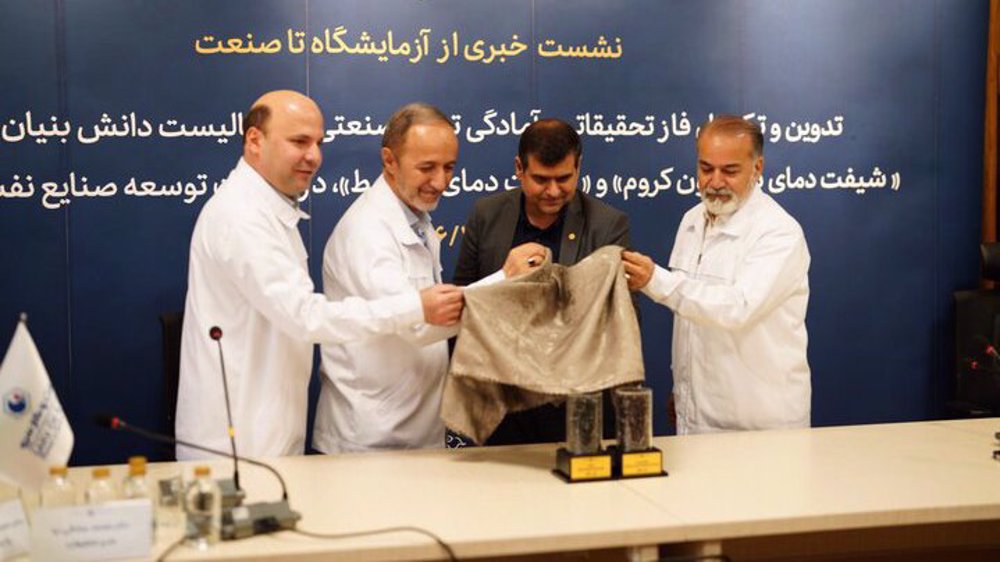
Iran unveils two locally-made strategic catalysts for oil, gas and petchem industries amid sanctions
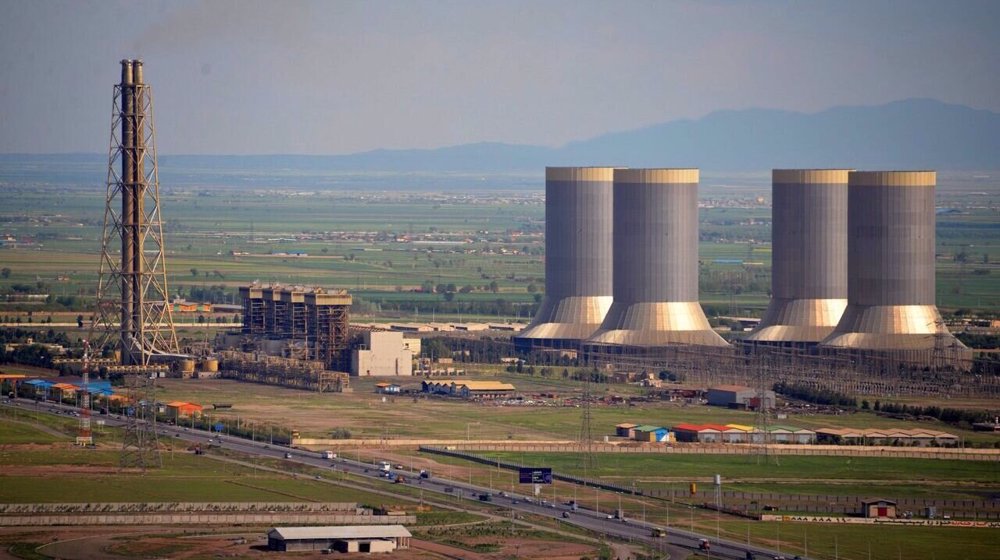
Iranian knowledge-based company develops nanofilters to reduce power plant energy consumption



US senator slams ‘bogus’ spy claims, demands immediate release of Press TV journalist
IRGC Navy strikes Togo-flagged tanker after illegal attempt to transit Strait of Hormuz
VIDEO | We salute the Palestinian woman
US lawmaker slams Trump’s $5 billion weapons sale to Saudi Arabia
VIDEO | Iran changing US war equations
Russia, China veto US backed anti-Iran resolution at UN Security Council
Araghchi welcomes Xi’s initiatives, hails China-Iran strategic partnership
VIDEO | Gaza transport crisis deepens as 70% of vehicles remain out of service


 PressTV NEWSLETTER
now
PressTV NEWSLETTER
now
 This makes it easy to access the Press TV website
