Discover Iran: Ezmeyghan – A South Khorasan village where rice paddies bloom in desert
By Mohammad Ali Haqshenas
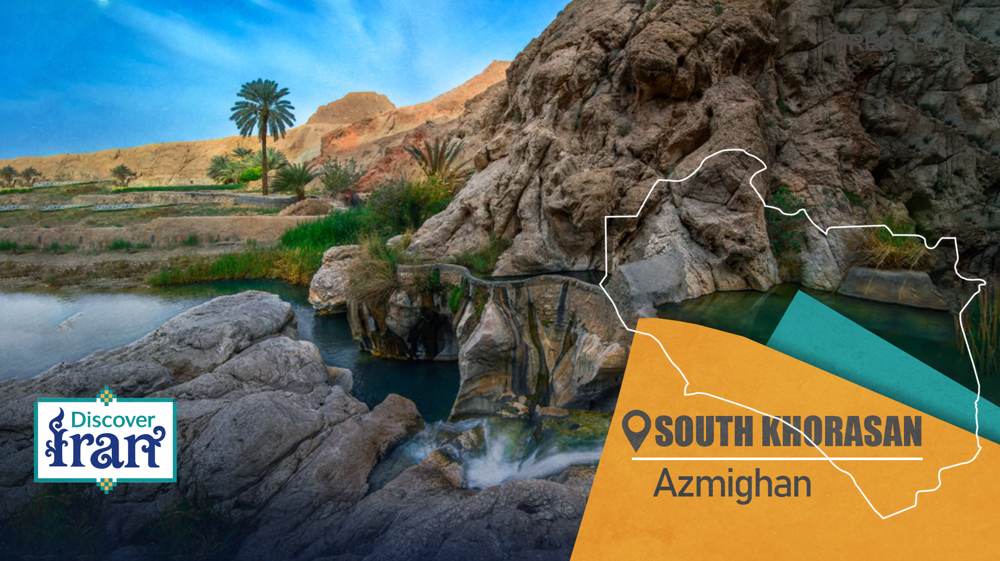
A short drive from Tabas in South Khorasan province brings you to the village of Ezmeyghan, where rice paddies shimmer beside date palms and citrus orchards, tucked away in a vast desert landscape.
Ezmeyghan, also spelled Azmighan, is located roughly 40 kilometres east of the city of Tabas, at an elevation of nearly 956 metres.
Approaching along the main road from Tabas, one crosses endless dunes and sun-baked hills, only to round a final bend and discover a valley teeming with lush greenery.
“When travellers arrive at this village...suddenly that burst of greenery really astonishes them,” a local tour-guide Mohsen Kazemi told the Press TV website, capturing the scene’s dramatic contrast.
He pointed out that on arrival, visitors first see date-palm groves, pomegranate trees, and green fields, only to be astonished again upon realizing that those are rice paddies.
The very idea of paddies in a desert region may seem improbable, but Ezmeyghan is far from a typical arid settlement. Indeed, the village is one of the few places in Iran where date palms and rice fields grow side by side.
The secret lies both underground and above. Kazemi explained that the groundwater level in the valley is high, and the valley’s microclimate provides enough humidity to support water-intensive crops like rice.
“Rice needs plenty of water … the groundwater level here is high … and that humidity allows farmers to grow it,” he stated.
Permanent springs feed the fields and palms, and the village lies in a shallow valley that channels and retains moisture.
One of the region’s celebrated natural features is the spring known as Takht‑e Aroos, or “Bride’s Bed,” a white rock set in a riverbed with water flowing on both sides.
A local highlight is the clear pools where small fish gather around feet dipped into the stream, providing a natural, free “fish spa” for visitors.
“There are fish … we can experience it naturally and for free,” Kazemi said.

Deep-rooted cultural and natural riches accompany the agricultural surprises. Old homes made of mud, earth, and wood still stand amid the gardens and fields, reflecting the region’s native desert architecture.
Numerous old Arabic-style inscriptions and a 300-year-old fig tree over 20 metres tall add to the sense of depth and continuity.
Kazemi described how the region surprises visitors in many ways and on multiple levels.
“You even see trees like apple, pear, and apricot … there are oranges and bitter oranges too,” he noted.
That mixture of warm-climate and cooler-climate crops is uncommon and highlights the village’s unique micro-environment.
The guide also referred to the annual agricultural event held each year in late October and early November, which celebrates the rice harvest amid the date-palm groves. The event has been nationally registered and helps promote the village’s agro-tourism profile.
The local community is another pillar of the village’s emerging appeal. Kazemi emphasized the hospitality of the villagers and the growing number of charming accommodations built in traditional style.
“The people are kind and hospitable … very attractive accommodations have been built because the air is very pleasant,” he said.
Indeed, rural tourism in South Khorasan is expanding. According to the province’s cultural-heritage and tourism authorities, Ezmeyghan is one of the officially approved “target destination villages” thanks to its natural, cultural, and agricultural assets.
Walking through the alleys between palm groves and rice paddies, visitors move between desert silhouettes and emerald fields. Citrus orchards, cooling streams, and other fruit trees frame the setting for most of the year.
Spring brings the scent of orange blossom, summer the shimmering rice paddies, and autumn and winter a gentler, more moderate climate, better suited to desert exploration.
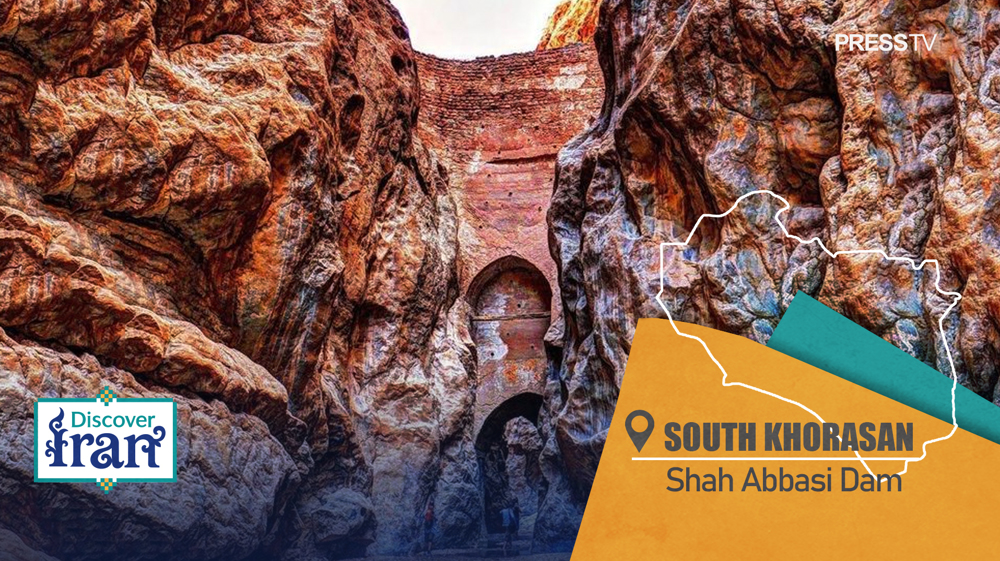
Beyond the village lies the dramatic natural landscape of the nearby KalJeni Valley (also spelled Kal-e Jeni), sometimes called the “Valley of the Jinn,” featuring eroded cliffs and ancient tunnels.
Around 35 to 40 km north of Tabas and near Ezmeyghan, the valley presents another striking contrast: dry canyon walls edged by lush springs and deep pools.
From a tourism perspective, Ezmeyghan presents a compelling case of desert-green contradiction: a place where unexpected greenery thrives; where date palms grow at the feet of hills and rice paddies feed off desert springs; where architectural heritage meets modern visitor lodges.
For international travelers seeking a lesser-known destination, the village offers tranquility, authenticity, and a living example of human adaptation to nature’s extremes.
Local agriculture is small-scale and geared toward domestic consumption. One report notes that only around 45 people cultivate rice over some 12 hectares, producing a modest quantity for village use and local markets. That small scale, however, makes the lush rice fields amid the palms all the more remarkable.
The enduring appeal of Ezmeyghan lies in the layering of experiences: the dust-colored desert beyond; the palm and paddy green in the valley; the crisp citrus scent in spring; the sound of water flowing in hidden springs; and the warmth of village hospitality.
As Kazemi put it: “These few very important features have made Ezmeyghan … become an attractive destination for tourists.”
For travelers in Iran willing to go beyond the major cities and standard desert tours, Ezmeyghan provides an intimate, off-grid encounter with Persian rural life at its most surprising.
Its agriculture, climate, and landscape offer not just a photo opportunity, but a story of nature’s persistence and human ingenuity.
The date-palm groves, the rice fields, the natural springs, and the citrus orchards all combine to tell a tale of life in a place that, at first glance, seems inhospitable, yet pulses with green, water, and abundance.
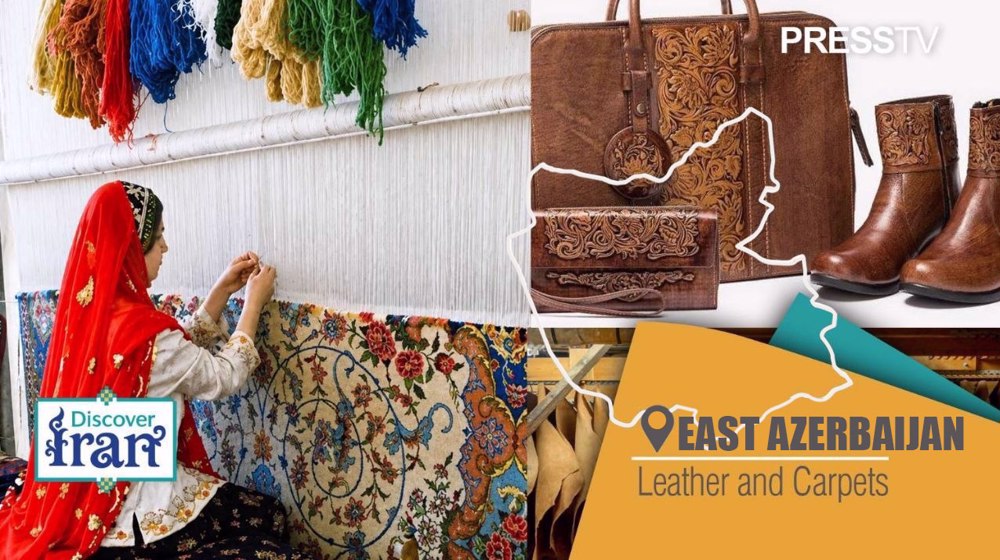
Discover Iran: Tabriz’s centuries-old trading culture drives carpets, leather, industry and exports
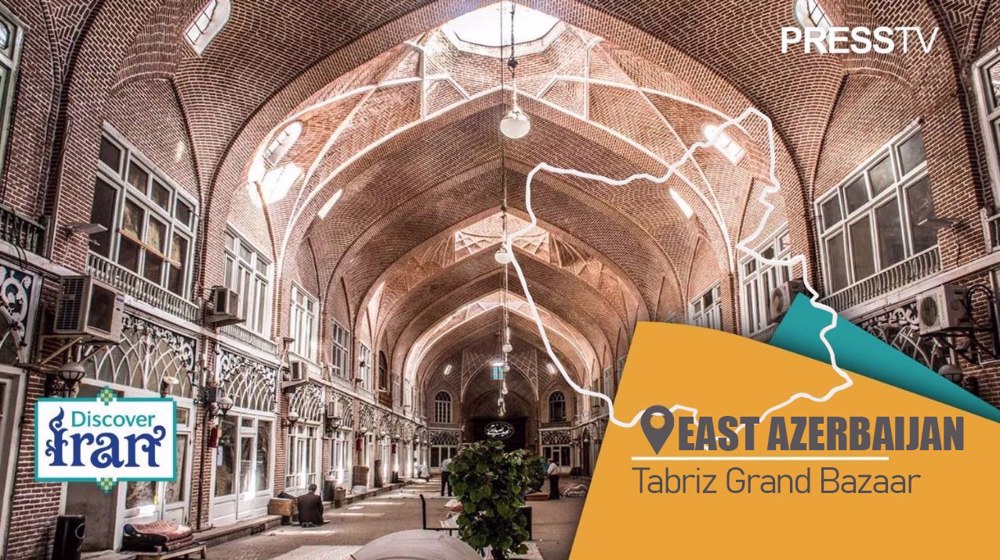
Discover Iran: Tabriz Grand Bazaar, where centuries of trade, culture and craftsmanship still thrive
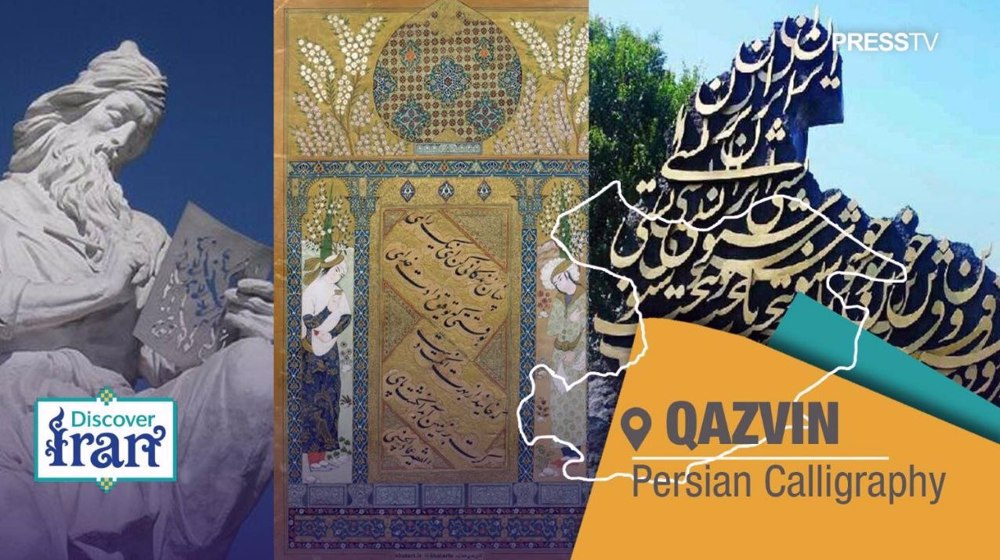
Discover Iran: Qazvin, the beating heart of Iran’s centuries-old calligraphy tradition



Iran finds new platform in SCO to develop its rare-earth potential
US senator slams ‘bogus’ spy claims, demands immediate release of Press TV journalist
IRGC Navy strikes Togo-flagged tanker after illegal attempt to transit Strait of Hormuz
VIDEO | We salute the Palestinian woman
US lawmaker slams Trump’s $5 billion weapons sale to Saudi Arabia
VIDEO | Iran changing US war equations
Russia, China veto US backed anti-Iran resolution at UN Security Council
Araghchi welcomes Xi’s initiatives, hails China-Iran strategic partnership



 PressTV NEWSLETTER
now
PressTV NEWSLETTER
now
 This makes it easy to access the Press TV website
