Discover Iran: Lush and artistic Persian gardens in South Khorasan’s arid terrain
By Ivan Kesic
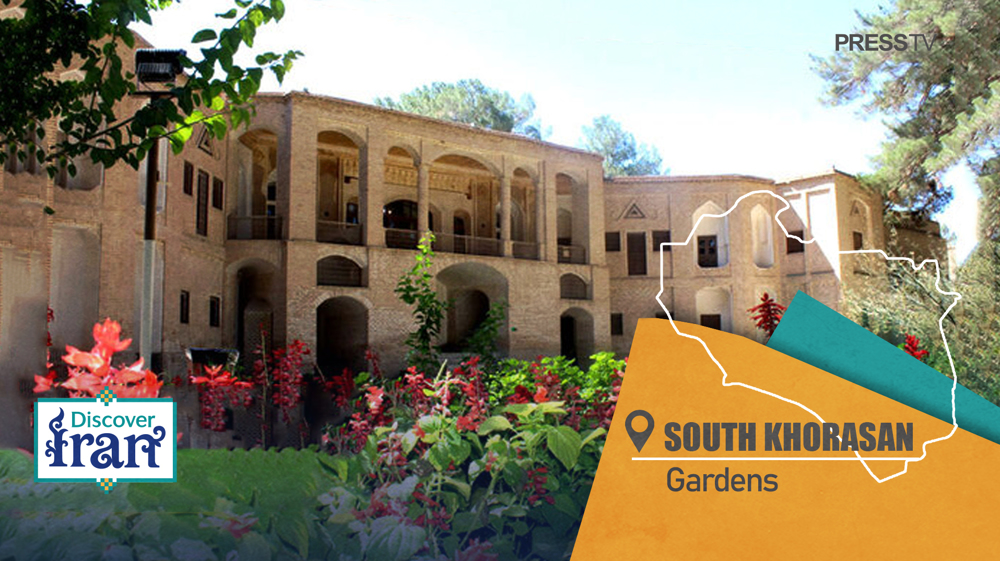
Gardens in South Khorasan, conceived as symbolic representations of Eden, were ingeniously designed to create self-sustaining microclimates that provide a cool, fragrant, and visually harmonious refuge from the harsh desert environment.
The gardens of South Khorasan, such as Rahimabad and Showkatabad, were not merely private retreats but also functioned as sophisticated centers of governance and social life, with their layouts and architecture carefully designed to host ceremonies, entertain guests, and separate public and private life within their verdant enclosures.
Akbarieh Garden's water system is a masterpiece of hydraulic engineering, featuring a deliberate interplay of surface streams for aesthetic pleasure and subterranean canals to minimize evaporation, all meticulously designed to sustain the garden in a region with an average annual rainfall of only 18.6 cm
In the rugged terrain of South Khorasan province, where the sun scorches dry plains and mountains stretch across the horizon, Persian gardens stand out not just for their beauty, but as a powerful display of human creativity and determination.
These lush green gardens, created despite harsh climate conditions in the region, are a remarkable blend of philosophy, art, and practical ingenuity, turning the arid Iranian desert into small and beautiful paradises.
South Khorasan is home to several magnificent examples of this ancient architecture, each telling a story of adaptation and resilience. The renowned Akbarieh Garden in Birjand is their crowning jewel, recognized by UNESCO for its outstanding universal value.
Other notable gardens include Rahimabad and Showkatabad in Birjand and the tranquil Golshan in Tabas. These living spaces follow the principles of the Chahar Bagh, or fourfold garden, creating microclimates of coolness, fragrance, and visual harmony.
They bring the idea of Eden to life, standing in striking contrast to the surrounding desert, and remain lasting symbols of a culture that learned to engage with nature through geometry and the flow of water.
Akbarieh Garden: a UNESCO-recognized masterpiece
Akbarieh Garden in Birjand city represents the pinnacle of Persian garden design in South Khorasan, where the principles of the Chahar Bagh are realized with remarkable clarity and elegance.
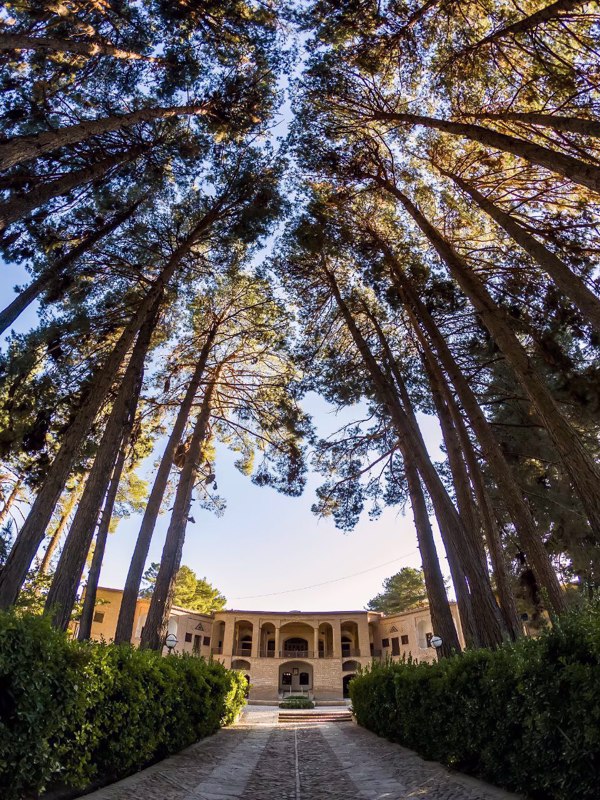
The garden’s layout is a study in geometry and symmetry, anchored by a strong north-south axis. This central pathway, flanked by towering rows of pine trees, is more than a walkway. It organizes the entire garden, creating a sense of order and grandeur from the very first step.
The landscape design balances the tall pines with shorter box trees at their base, forming a layered, harmonious green wall that naturally guides the eye toward the main pavilion. Every step along this axis is carefully orchestrated to offer deliberate, composed views, showing a deep understanding of perspective and spatial flow.
Water, the lifeblood of any Persian garden, is handled in Akbarieh with precision and artistry. Drawn from the garden’s qanat, it enters from the south, filling a central basin before flowing through a symmetrical network of channels. Some water courses remain visible, providing the cooling sight and sound of moving water, while other channels run underground to reduce evaporation in the arid climate.
The main channels branch into smaller streams that water the six symmetrical planting beds along the central axis. Ceramic nahr-tabs regulate flow, preventing soil erosion and ensuring every tree receives proper moisture, demonstrating that the garden’s beauty is supported by advanced, thoughtful engineering.
Akbarieh Garden’s rectangular plan, measuring 217 by 90 meters, frames nature within a strict geometric structure, allowing plants to flourish in orderly harmony. The main pavilion is strategically positioned to oversee the entire garden, with wide porticos and terraces that act as outdoor rooms framing the verdant landscape.
This design creates a layered visual experience, moving visitors from enclosed architectural spaces into expansive gardens.
Pathways and water basins are arranged to reveal the garden gradually, reflecting the sky and foliage while enhancing the sense of discovery. The design is not mere decoration; it is a seamless fusion of intelligent water management, spatial planning, and symbolic artistry, creating a space that is both practical and spiritually uplifting.
Other renowned gardens of South Khorasan
While Akbarieh Garden is the UNESCO-recognized masterpiece, the tradition of Persian garden design in South Khorasan province thrives in other remarkable sites as well, each adapting the core principles to its own context and purpose.
Rahimabad Garden in Birjand, built by Ismail Khan Shokat-ol-molk, presents a formal and stately version of the classic Persian garden.
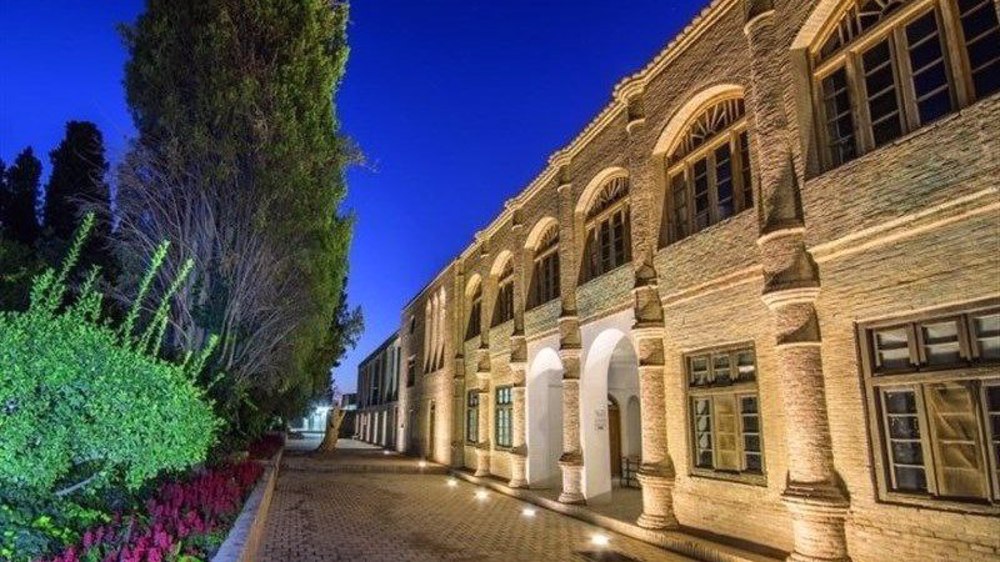
Its geometry conveys a sense of authority and order, centered around a strong main axis lined with cypress trees, which directs the eye and emphasizes the garden’s solemn grandeur. The axis is anchored by buildings that define the garden’s beginning and end, reinforcing its symmetrical layout.
A key feature of Rahimabad Garden is how it handles a natural change in elevation: a gentle series of three steps integrates the terrain into the formal design.
Unlike Akbarieh’s flowing streams, Rahimabad uses water more reflectively. Basins and a half-circular pond in front of the main buildings and at the garden’s midpoint mirror the sky and surrounding architecture, fed by the garden’s own ancient qanat.
Showkatabad Garden, also in Birjand, offers a different character, emphasizing privacy and ceremonial life. Its compact layout interconnects buildings with the cultivated landscape, separating public and private areas. The southern section was reserved for the ruler’s family, with internal spaces designed for ceremonies and gatherings.
Architectural features such as cloister vaults and cradle ceilings respond to the warm, dry climate, while the façade’s outward-projecting octagonal center adds a dynamic touch to the geometric garden backdrop.
Over time, corridors and additional rooms show how the garden evolved with its inhabitants, while maintaining the essence of Persian garden principles.
In Tabas, Golshan Garden offers a contrasting yet equally captivating experience, resembling a natural palm grove flourishing in the desert. Its design is more organic than the formal Birjand gardens, structured around two intersecting pathways dividing the space into productive plots.
The garden is densely planted with towering palms, under which pomegranate and sour orange trees create a lush, layered canopy.
Golshan Garden’s life-giving stream, formed by several springs, flows through the garden via channels and jets before exiting to supply Tabas, demonstrating its practical as well as aesthetic purpose.
The simple frontispiece, rebuilt after an earthquake, serves as a modest entrance to this oasis, where vegetation, shade, and a sophisticated irrigation system combine to create a serene refuge, a true enclosed paradise in the heart of a harsh desert.

Discover Iran: Tabriz’s extraordinary architectural legacy through royal palaces, merchant mansions
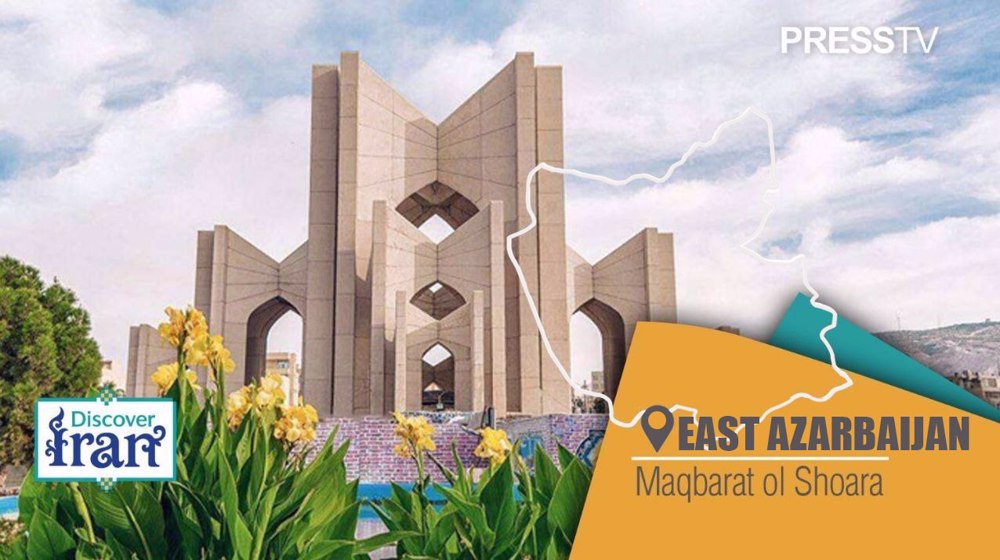
Discover Iran: Tabriz’s ‘Mausoleum of Poets,’ where centuries of Persian literary history live on

Discover Iran: Tabriz, where Iran’s Silk Road legacy meets industry, trade and a new economic future



US aggression, economic warfare amount to crimes against humanity: Iran's UN envoy
Protests erupt in US as ICE agent shoots Venezuelan driver
US pressure fuels cooperation among Muslim states: Pezeshkian
Major TV networks suspend White House pool coverage after Trump ban
US visa ban on Palestinian UN delegation violates international agreements: Hamas
VIDEO | Press TV's news headlines
Iran calls on France to respect law after suspending French cultural institute in Tehran
Israel lobby no longer shy about its grip on US policy on Iran: Araghchi


 PressTV NEWSLETTER
now
PressTV NEWSLETTER
now
 This makes it easy to access the Press TV website
