Sudan: The Empire’s hidden battlefield for gold, ports, power and dominance
By Zainab Zakariyah
In 2007, General Wesley Clark, former NATO Supreme Allied Commander, revealed that shortly after the 9/11 attacks, he was shown a secret Pentagon memo outlining a plan to “take out seven countries in five years” — Iraq, Syria, Lebanon, Libya, Somalia, Sudan, and Iran.
Nearly two decades later, that shadow strategy still echoes. And it is through this lens that Sudan’s tragedy must be seen.
What’s happening in Sudan is not a civil war. It is a global power struggle disguised as an internal conflict, a proxy battlefield where empires, old and new, fight for land, resources, and routes.
As always, it is ordinary Africans who pay the price for imperial ambition. Sudan is not tearing itself apart by chance; it has been chosen, once again, as a pawn in the long war for control — control of gold, ports, farmland, and trade corridors that link Africa to the world.
Beneath the smoke and blood lies a familiar script: foreign powers waging their rivalries on African soil, while Sudan bleeds for someone else’s empire.
Colonial blueprint: How Britain divided a nation
To understand Sudan’s present crisis, we must go back to its colonial blueprint.
When Britain ruled Sudan, it divided the country into two parts. The north was governed indirectly through Egypt, promoting Arabic language with Islam as the dominant religion, while the south was ruled directly by British officers who banned Arabic, promoted Christianity and Western education and heavily restricted movement between the two regions.
This classic British “divide and rule” policy created two nations within one. An Arab, Muslim north and a Christian, African south, divided by culture, faith, and even skin tone.
The legacy was devastating and lasting. People learned to see each other not as Sudanese but as tribes, sects, or ethnic groups. Your accent, the texture of your hair, or your name is a dividing factor, not a sign of a multi ethnic nation.
These fractures endured long after independence in 1956, with the country immediately plunging into several decades of civil war. Until finally, in 2011, South Sudan became the fifty-fourth African country.
Backed by Western and US interests, the young African country took with it Sudan's main asset, oil. Proving once again that the West never supports liberation, it encourages partition. A century-old imperial design had succeeded in keeping Sudan weak, divided, and easy to exploit.
And a continuation of America's plan of destroying 7 Muslim majority countries in defense of Israel and its expansionist plan.
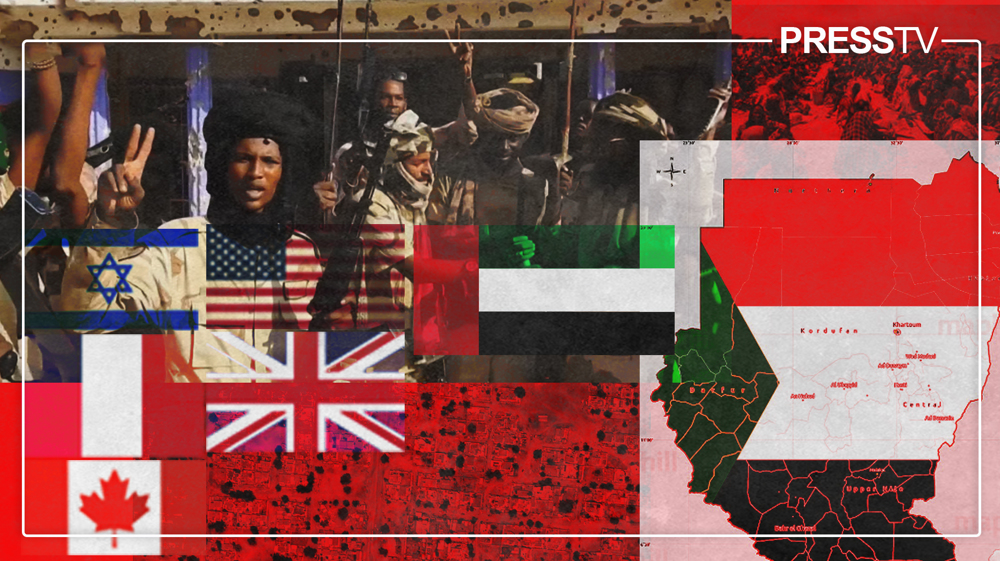
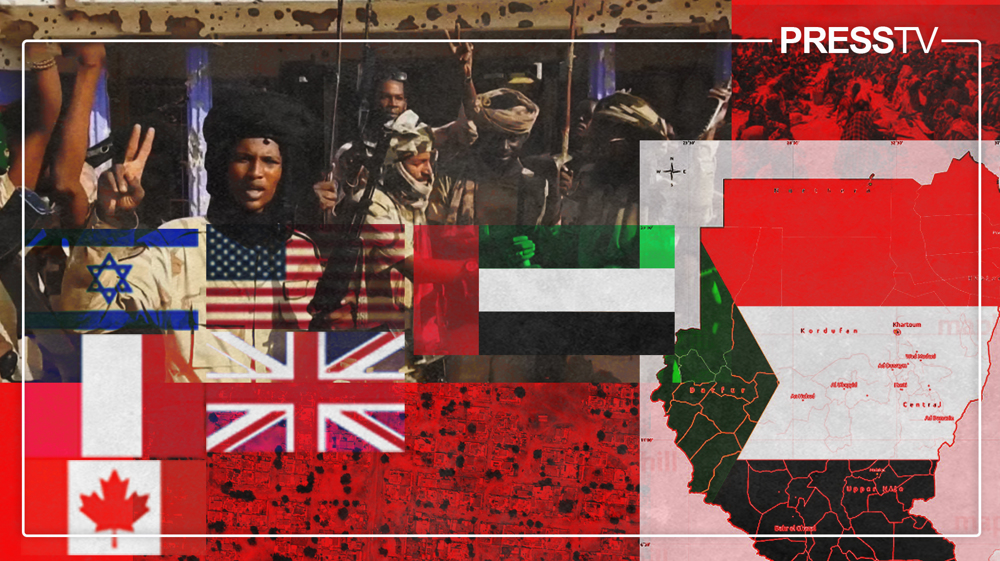
‼️ INFOGRAPHIC - The genocide in Sudan — backed by the UAE through the RSF militia and fueled by Western-supplied arms — has claimed tens of thousands of lives and displaced over 14 million people in just two years.
— Press TV 🔻 (@PressTV) November 1, 2025
Follow Press TV on Telegram: https://t.co/LWoNSpkJSh pic.twitter.com/yZTiKD100Q
From Bashir’s fall to the hijacked revolution
For thirty years, Omar al-Bashir ruled Sudan with repression and cunning. He played every side, courting the West when he needed aid, turning to China when sanctioned, and relying on Gulf allies to fund his wars.
But by 2019, his usefulness had run out. Popular anger boiled over, and protests erupted across the country. The people’s movement demanded justice, jobs, and civilian rule. Yet as so often happens, the revolution was hijacked.
When Bashir fell, power did not pass to civilians. It passed to military generals and to the Rapid Support Forces (RSF), a paramilitary group born from the notorious Janjaweed militias that terrorized Darfur.
The military takeover was hailed abroad as “stability,” but it was merely a reshuffle to preserve foreign access, assets and influence. Sudan’s revolution, like so many in Africa and West Asia, was colored, redirected, and engineered to ensure that no truly independent, grassroots movement could take hold.
RSF: From Janjaweed killing machine to global mercenaries
The RSF’s rise is one of the most telling stories in Sudan’s modern history. Originally a tribal militia used to crush dissent in Darfur, the group was formalized by Bashir as part of the state’s security machine, though always kept separate from the regular army.
Then came Yemen. Under Saudi and Emirati command, the RSF was deployed to fight in the war against the Ansarullah resistance movement and the Yemeni nation.
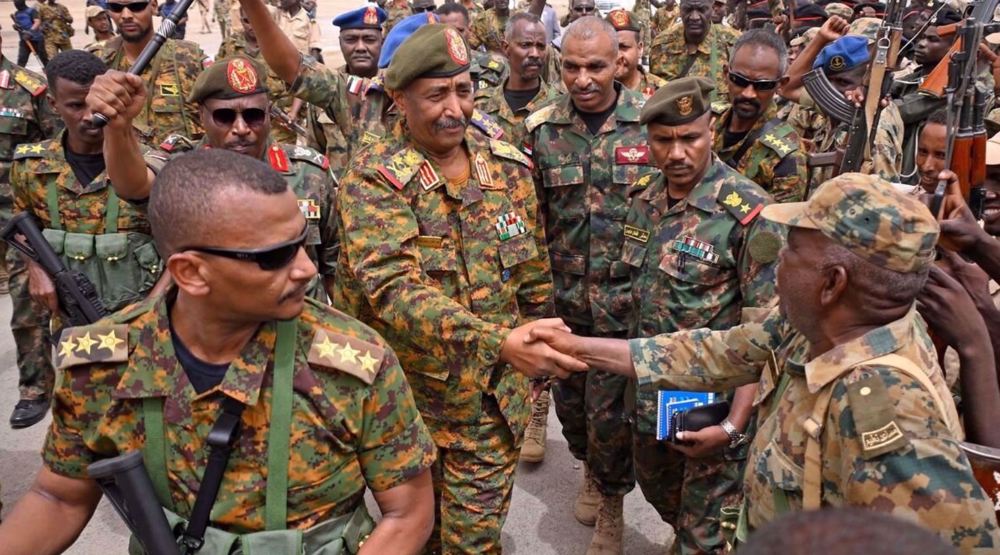
There, they gained combat experience, weapons, money and influence, turning them into a professional mercenary force. When war broke out between the RSF and the Sudanese army in 2023, it was no surprise that the RSF appeared unusually well funded and well equipped.
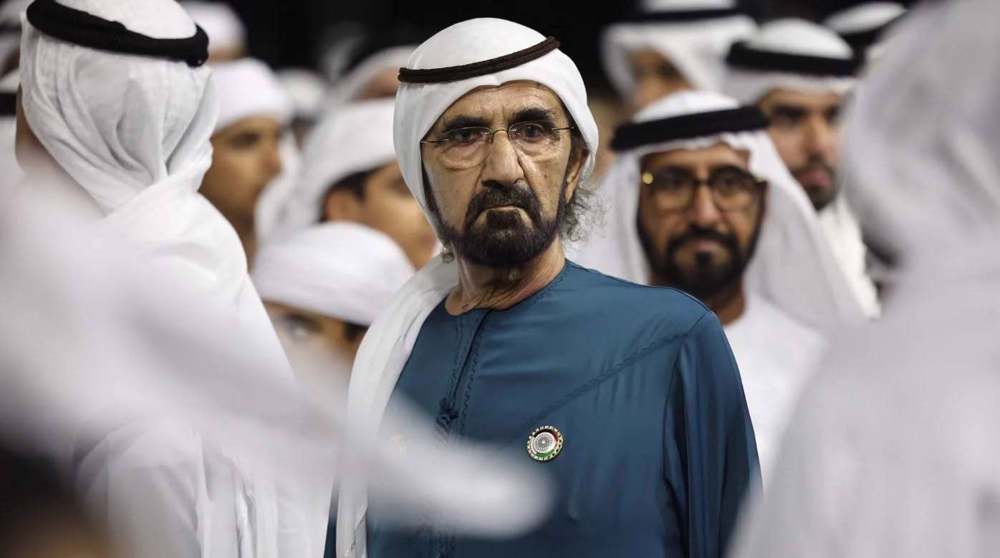
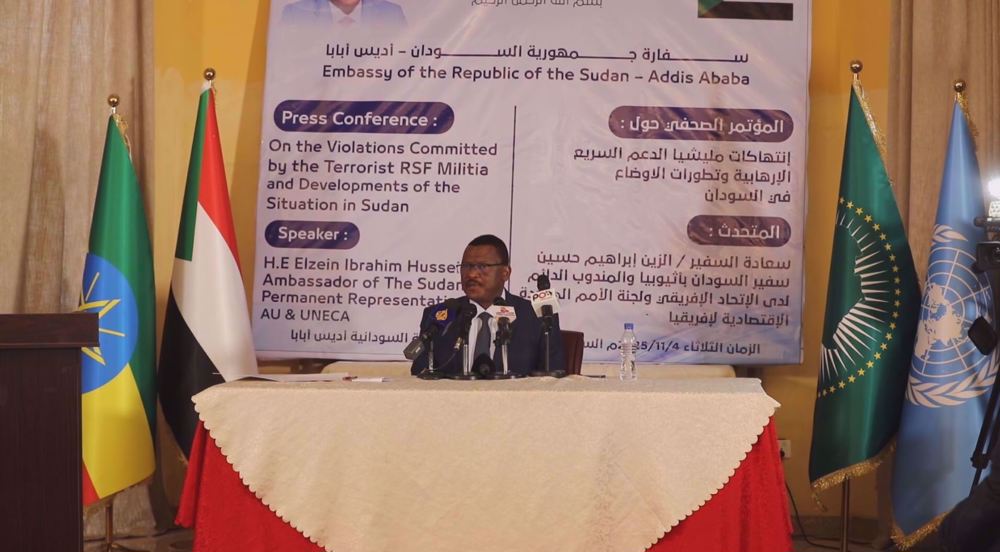
Sudanese officials accused the United Arab Emirates (UAE) of financing and arming the group. Sudan’s ambassador to the United Nations publicly stated that “the RSF’s aggression is directly supported with weapons and funds from the Emirates.”
The Sudanese Defense Ministry went further, describing the UAE as a “state of aggression” bent on dismantling Sudan’s sovereignty through proxy warfare. Independent UN investigators have also confirmed “credible indications” of arms transfers reaching the RSF through UAE-linked networks.
Other open source information shows a high influx of UAE military cargo planes landing in Libya. This evidence suggests that the RSF’s strength is not self-made, but imported, funded, and fueled from abroad.
"They buy Western weapons and supply them to the militias."
— Press TV 🔻 (@PressTV) November 9, 2025
Hundreds gathered near Paris' iconic Eiffel Tower to denounce the genocide taking place in Sudan.
Follow: https://t.co/mLGcUTS2ei pic.twitter.com/9CZRMp9QZ5
Blood gold: Hidden economy of war
Although Sudan lost access to its oil-generating income when South Sudan was created, the country is still rich in other resources, one of which is gold.
And that adds an extra factor to the battlefield that the country has become. That gold is both a treasure and a curse. Sudan holds some of the richest deposits in Africa, yet another rich African country with an impoverished population.
The reason is simple: the gold leaves, but the profits never return. According to a recent Chatham House report, almost 97 percent of Sudan’s official gold exports go to the UAE.
Other investigations show that more than 80 percent of Sudan’s total gold production is smuggled from illegal mines, which are increasingly controlled by the RSF through Chad, South Sudan, or Egypt before landing in Dubai. This gold funds the RSF, enriches brokers, and props up foreign economies.
A UN advisory on conflict gold confirmed that much of the gold mined in Darfur ends up in Dubai’s markets, laundered of its violent origins. The UAE, a country with no gold mines of its own, has become one of the world’s largest gold exporters.
The contradiction is striking: Sudan bleeds its wealth while Dubai banks it. Which is why many Sudanese and independent observers say that gold, not ideology, fuels this war. Each shipment of untraceable metal means more weapons, more power for militias, and more reason for foreign sponsors to keep the conflict alive.
Ports, routes, and the new great game
But perhaps beyond its minerals, Sudan’s geography makes it the heart of a global contest. It sits where the Sahel, the Red Sea, and the Horn of Africa converge, a vital junction for trade and energy. Whoever controls Sudan controls access to the Red Sea and the routes linking Africa to Asia and Europe.
Global powers understand this. China sees Sudan’s coastline as a potential node in its Belt and Road Initiative, a route that could connect East Africa to global trade without Western intermediaries. Russia seeks a naval base in Port Sudan to anchor its growing influence in Africa.
Meanwhile, the UAE and its Western partners are racing to secure control of the same ports and islands. Some of the ports and islands under Abu Dhabi’s expanding port network are Perim, Socotra, and others along the Red Sea corridor.
Sudanese military officials have held the Emirates responsible for using the RSF to destabilize the country and seize control of its coast.
Earlier this year, a Sudanese spokesman warned, “The aggression supported by the Emirates and its militias will not decide our future,”. Maybe he is right, but how many innocent souls must die before then?
The battle for Sudan’s ports is the twenty-first century’s version of the Scramble for Africa, this time fought with contracts, mercenaries, and drones instead of gunboats.
✍️ Conversation - RSF militants committing genocide in Sudan's El Fasher with UAE, Israel backing: @Mo_elmalik
— Press TV 🔻 (@PressTV) November 1, 2025
Read More: https://t.co/6fzGxdRJMd pic.twitter.com/iSsXOXrSSV
The multipolar fault line
Sudan's geographical location sits at the point where global powers collide and future ones are decided, has made it a target.
A stable Sudan could become the hinge of a multipolar world outside Western control. That possibility terrifies the old powers.
A strong, independent Sudan would weaken Persian Gulf trade hubs like Jebel Ali and Jeddah, threaten Western influence over Africa’s debt systems, and offer an alternative to the petrodollar network.
Destroying Sudan kills several birds with one stone, preventing Africa from writing its own destiny. Omar al-Bashir once tried to balance those pressures. He cut ties with Iran and supported the war on Yemen to appease his Persian Gulf backers.
In return, he was promised wealth and stability. Instead, he was overthrown, a military transitional government was formed, with the US demanding normalization with the Israeli regime for sanctions relief. His downfall proved that in the eyes of the empire, compliance guarantees nothing only dependency.
War as business and distraction
Every war is an economy. The war imposed on Sudan is no different. Arms, logistics, minerals, and reconstruction are all sources of profit for those who keep the fire burning.
The networks funding the RSF overlap with those that profit from wars in Libya, Yemen, and even Gaza. The same companies that sell weapons also buy gold. The same banks that freeze Sudanese assets facilitate transfers for foreign arms deals. The same countries that say Africa can’t govern itself, siphon billions out of the continent every year.
While the world’s cameras focused on Israeli genocide in Gaza or the war in Ukraine, Sudan’s suffering becomes a sideshow. The fact that those being killed are African and Muslims also adds an extra layer to the invisibility of the Sudan genocide, just like the one in the Democratic Republic of Congo or the Central African Republic.
Sudan’s destruction serves as both profit and distraction. It drains African potential while shielding the interests of those who gain from chaos. An unstable Sudan ensures no regional unity, no independent trade, no challenge to the global order and especially protection for Israel. It guarantees that Africa remains a marketplace, not a player.
The massacres in Sudan sparked global outrage and online debates over the powers and agendas fueling the violence.
— Press TV 🔻 (@PressTV) November 9, 2025
Follow: https://t.co/mLGcUTSA3Q pic.twitter.com/77odeYy6at
The price of Empire
Sudan’s crisis is not a failure of its people but the product of a global system built on exploitation.
The British drew their divisions. The Cold War deepened them. The modern Empire dressed in business suits and trade agreements, sustains them. The genocide being carried out by the RSF and backed by the UAE is the symptom of a disease in which resources are drained from the poor to enrich the mighty and powerful.
Sudan’s gold fills foreign vaults, its ports are auctioned off, its farms leased to outsiders, and its people scattered by famine and war.
A recent UNICEF statement states that the humanitarian crisis in Sudan continues to spiral, with millions of people in desperate need of assistance. The war has displaced over 11 million people … while pushing millions more into extreme vulnerability.”
And so, the old African proverb comes alive once more: When two elephants fight, it is the grass that suffers. In Sudan, the grass is a nation of millions uprooted, starved, and silenced while empires, old and new, trample the soil in search of power.
This is not a civil war. It is a war of empires. And Sudan is its battlefield.
Zainab Zakariyah is a Tehran-based writer and journalist, originally from Nigeria.
(The views expressed in this article do not necessarily reflect those of Press TV.)

Leaked chemical dossier reveals Israel's role in Sudan's civil war: Report
Israel provides military aid to Sudan’s UAE-backed RSF militia: Report
Dubai ruler confronted on London streets over UAE’s role in Sudan war and RSF atrocities



IRGC Navy strikes Togo-flagged tanker after illegal attempt to transit Strait of Hormuz
VIDEO | We salute the Palestinian woman
US lawmaker slams Trump’s $5 billion weapons sale to Saudi Arabia
VIDEO | Iran changing US war equations
Russia, China veto US backed anti-Iran resolution at UN Security Council
Araghchi welcomes Xi’s initiatives, hails China-Iran strategic partnership
VIDEO | Gaza transport crisis deepens as 70% of vehicles remain out of service
VIDEO | Press TV's news headlines


 PressTV NEWSLETTER
now
PressTV NEWSLETTER
now
 This makes it easy to access the Press TV website
