‘Null and void’: West-engineered ‘snapback’ sanctions against Iran legally toothless
By Press TV Website Staff
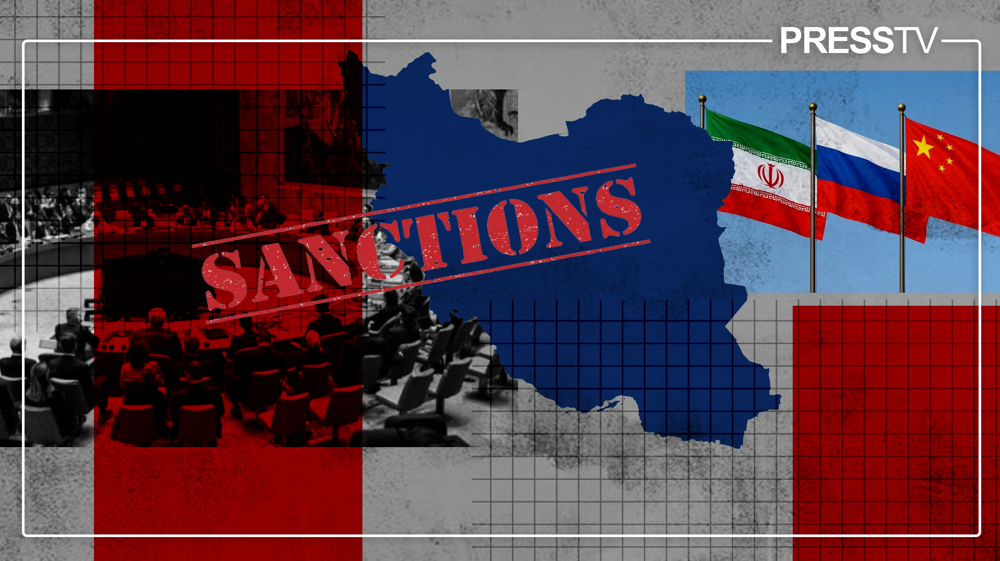
United Nations has confirmed the reactivation of “snapback” sanctions against Iran after the UN Security Council failed to adopt a resolution to extend Resolution 2231 by six months.
It followed the formal invocation of the “snapback mechanism” last month by France, Britain, and Germany, the original signatories to the Joint Comprehensive Plan of Action (JCPOA).
Iran, as well as Russia and China, the other two signatories to the 2015 nuclear deal, maintain that the mechanism is politically motivated and has no legal basis under international law.
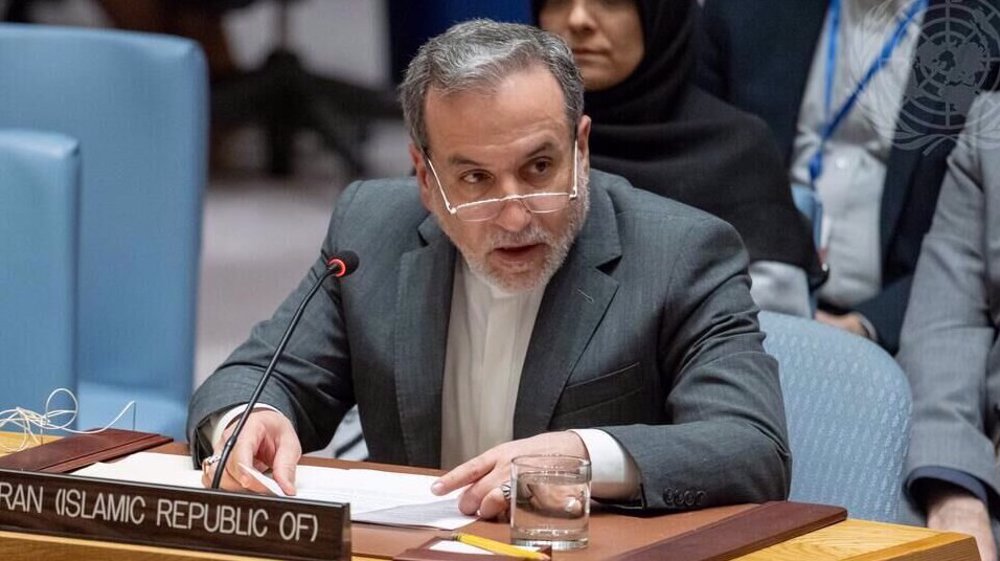
In a strongly worded letter to UN Secretary-General António Guterres, Iran’s Foreign Minister Abbas Araghchi rejected the claims of the US and the European troika.
He asserted that attempts to trigger snapback are “null and void,” noting that the E3 has no legal standing to invoke the mechanism after failing to fulfill their commitments under the deal after the unilateral and illegal American withdrawal.
He also noted that the UN Security Council itself lacks consensus to revive sanctions as restrictions under Resolution 2231 will permanently expire on October 18, 2025, warning that the credibility of international law and the authority of the UN are at stake.
He also wrote a letter to his counterparts, rejecting hackneyed claims by the US and the European troika regarding the snapback mechanism and reinstatement of sanctions.
Araghchi emphasized that “no valid legal act has taken place that could restore the terminated resolutions. To claim otherwise is an attempt to mislead the international community and to impose unilateral political agendas under the guise of United Nations authority.”
UN Security Council voted against a resolution by Russia and China to delay the looming return of anti-Iran sanctions due to the snapback mechanism triggered by the UK, France, and Germany.
— Press TV 🔻 (@PressTV) September 27, 2025
Follow: https://t.co/LWoNSpkJSh pic.twitter.com/IktQMrQvWg
The legal argument
Iran’s case rests on Resolution 2231, which endorsed the JCPOA in 2015. According to Iranian officials, the resolution terminated previous UNSC sanctions on Iran’s nuclear program.
It also set a clear time-bound framework, under which nuclear-related restrictions are supposed to expire permanently on October 18, 2025.
Araghchi, in his letter to Guterres, argued that because the US unilaterally and illegally withdrew from the JCPOA in 2018, it forfeited any right to invoke snapback. He also decried the E3 for failing to uphold their share of commitments under the multilateral accord.
Hence, the recognition or enforcement of these sanctions would itself violate international law.
As the foreign ministry also noted in a statement on Sunday, the US and its European allies unlawfully and unjustifiably misused the dispute resolution mechanism outlined in the JCPOA and Resolution 2231 to reinstate previously annulled resolutions against Iran.
“Iran stresses that no obligations arise for UN member states, including the Islamic Republic of Iran, under the provisions or mechanisms of the annulled resolutions, and all countries must refrain from recognizing this unlawful situation that contradicts Resolution 2231,” it said.
Saeed Iravani, in a separate letter to Guterres, said Security Council Resolution 2231 does not provide any mandate to the Secretary General or the Secretariat to “determine, declare, or notify” member states about the so-called reapplication of terminated resolutions.
He emphasized that the UN Secretariat’s unilateral move exceeds its authority and trespasses into the domain of the UN Security Council, making the whole process problematic.
Iran’s foreign ministry said the E3 violated the provisions of the UN Security Council Resolution 2231 by initiating the snapback mechanism.
— Press TV 🔻 (@PressTV) September 28, 2025
Follow: https://t.co/mLGcUTSA3Q pic.twitter.com/Ex4WDQLnlb
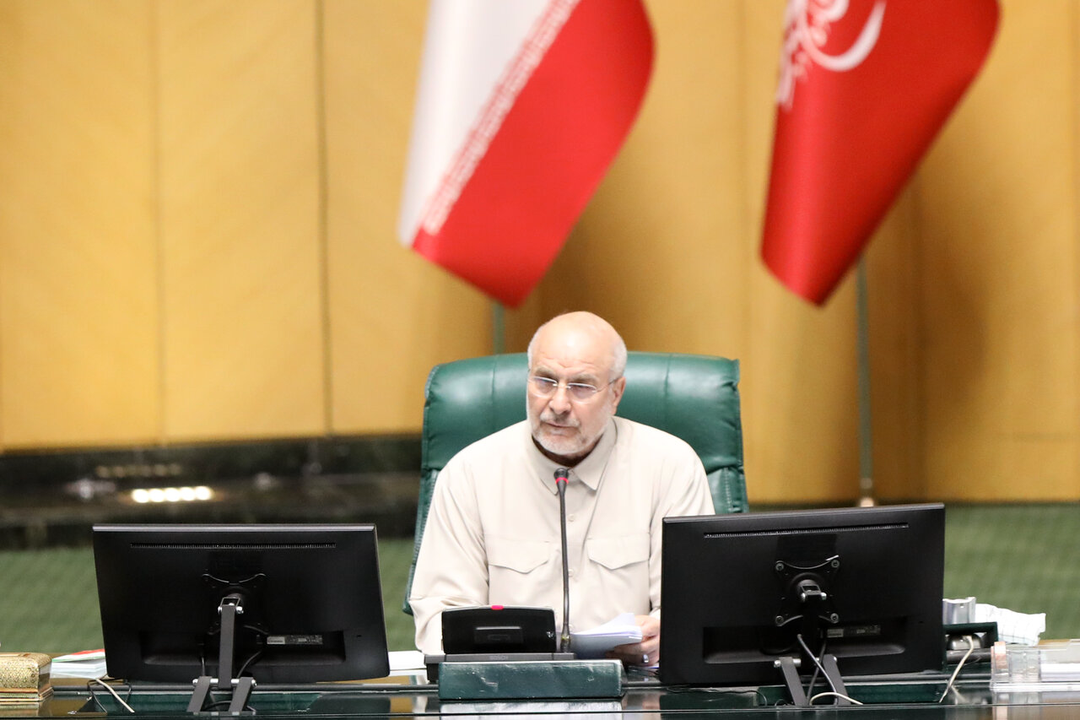
Meanwhile, Iran’s parliament speaker Mohammad Bagher Ghalibaf, in his remarks on Sunday, declared that any country acting against Iran on the basis of sanctions reinstated under the “snapback” mechanism “will face reciprocal action.”
He stressed that Tehran does not consider itself bound by the illegal resolutions, including any suspension of uranium enrichment.
Moscow and Beijing have both backed Tehran’s legitimate stance. At a UN session, Russian foreign minister Sergei Lavrov condemned the West’s approach to Iran’s nuclear program.
He said the West is not accustomed to observing the principle of non-interference in internal affairs, labeling the snapback “invalid” and sanctions against Iran “illegal.”
Russia’s envoy to Vienna-based international organizations, Mikhail Ulyanov, also noted that the procedure had been “gravely violated” by the E3.
China’s foreign ministry also issued a statement, terming the move “not constructive” and warning that it would “undermine the process of a political and diplomatic settlement of the Iranian nuclear issue.”
Divisions inside the UN
The UN Security Council has struggled to reach a consensus on the snapback mechanism, making the whole process deeply problematic and politically driven.
A draft resolution submitted in September failed to secure support. Six out of fifteen UN Security Council members withheld their votes, underscoring how divided the world body remains over the issue.
In the vote on Sunday, four countries voted in favor of Iran, including Russia, China, Pakistan and Algeria, while Brazil and Mozambique, apart from South Korea, abstained. The nine votes against the resolution included the US, UK, France and some American vassal states.
This division proves the lack of consensus in the world body and the influence of the West.
“Nearly half of the Council is unconvinced that the reimposition is justified or legal,” Araghchi said in an interview with national TV on Sunday, slamming the West for trying to “extort radical concessions” by demanding Iran surrender its nuclear material in exchange for a short extension of the snapback deadline.
"The West is not accustomed to observing the principle of non-interference in internal affairs."
— Press TV 🔻 (@PressTV) September 28, 2025
Russian FM Lavrov condemned the West’s rejection of the Russia-China plan, calling the snapback invalid and Iran sanctions illegal.
Follow: https://t.co/mLGcUTSA3Q pic.twitter.com/o3FonkBjth
Whether sanctions will bite in practice, or remain a political tool, will depend on how member states choose to interpret, implement, or resist the politically-driven snapback mechanism.
Russia has categorically rejected the reinstatement of sanctions on Iran. China echoed Moscow’s stance on the controversial measure by the European troika and the US.
Russia and China cannot veto the automatic snapback once initiated, but they can effectively challenge, derail, or delay procedures of actual implementation, according to experts.
Experts note that both countries can block the revival of the defunct Resolution 1737 Sanctions Committee or delay the appointment of its expert panel.
For snapback sanctions to come into full effect in practical terms, the 1737 Sanctions Committee would have to be revived – something Russia and China could slow or completely obstruct.
They could also delay the reappointment of panel members by refusing to endorse consensus decisions in the committee or by obstructing a renewal resolution in the Council itself.
Without the panel, the 1737 Committee cannot effectively monitor compliance or identify potential violations, which is likely to act as a stumbling block for Europeans and Americans.
‘Days of proportionate responses over, recent strikes just the beginning', Iran warns US

Iran condemns US attacks on oil tankers as violation of international law
Iran military warns US of ‘more severe blows’ to warships if aggression continues



Iran’s OIC mission denounces ‘cowardly’ US attack on oil tankers
‘Days of proportionate responses over, recent strikes just the beginning', Iran warns US
Egyptian TV presenter among dozen sentenced to death in major drug case
Ansarullah: Saudi Arabia remains Yemen’s number one enemy
Europe unable to sustain war of attrition with Russia: Military officials
Senior MP: Hezbollah proud of alliance with Iran, will continue resistance
Small in size yet great in scope: Qazvin
VIDEO | Exclusive: Israel demolishes historic house in fresh attacks on south Lebanon


 PressTV NEWSLETTER
now
PressTV NEWSLETTER
now
 This makes it easy to access the Press TV website
