Iran vows to ‘zealously’ defend national security, rejects missile limits
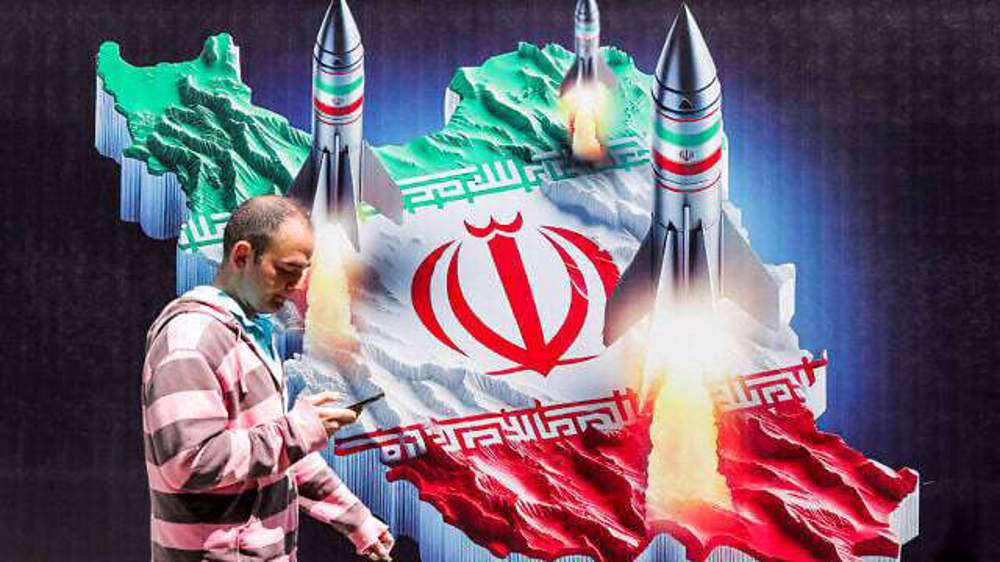
Iran’s top security official says the country will “zealously” defend its national security and reject “humiliating conditions” like limits on its missile range in a sharp rebuke to excessive Western demands.
In a post on his X account on Tuesday, Ali Larijani, secretary of Iran’s Supreme National Security Council, reacted to comments made by US Secretary of State Marco Rubio during his visit to the occupied territories.
Speaking alongside Israeli Prime Minister Benjamin Netanyahu, Rubio claimed that Iran’s missile capabilities are a threat to Persian Gulf states and Europe.
This comes as in mid-June, Israel waged war on Iran, assassinating high-ranking military commanders, scientists, and civilians.
Iran responded decisively by launching waves of ballistic and hypersonic missiles at sensitive Israeli targets in Tel Aviv, Haifa, and other occupied cities.
Larijani had earlier said that US demands for restrictions on Iran’s missile program “set a path that negates any talks.”
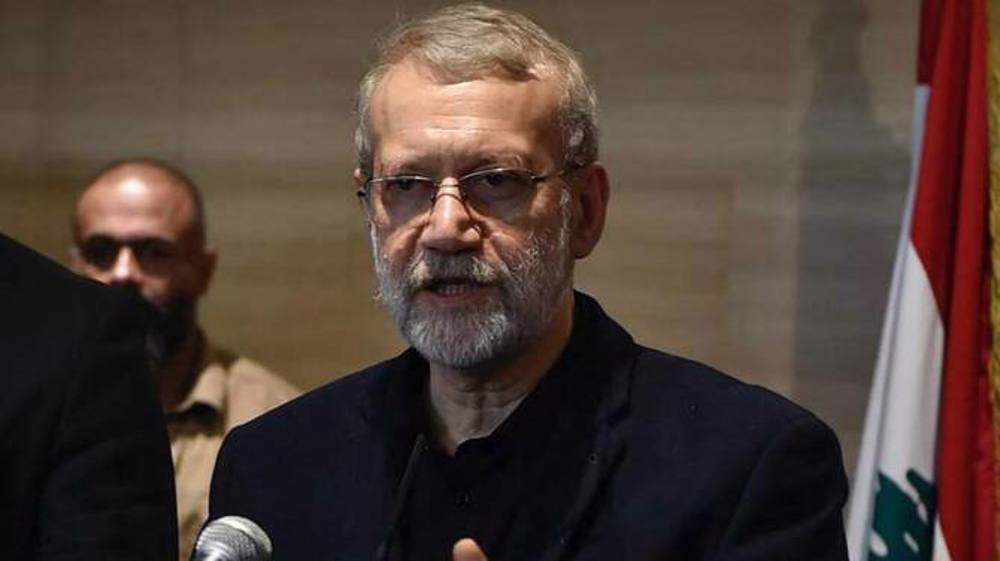
In his X post, Larijani also addressed the Western countries’ stance regarding the 2015 nuclear deal, known as the Joint Comprehensive Plan of Action (JCPOA), saying, “First America withdrew from the JCPOA, then Europe reneged on its promises, and finally they bombed [Iran], and now they are the ones acting as creditors.”
“Iran will zealously defend its national security and will not allow humiliating conditions such as limiting the range of its missiles to be imposed,” he added.
Under the JCPOA, the US and the EU agreed to remove anti-Iran sanctions in exchange for Iran limiting its uranium enrichment and reducing its existing stockpile.
The deal was eventually violated by the US during the first administration of President Donald Trump, who pulled his country from the deal. Despite this, Iran fully adhered to its obligations under the JCPOA, while the Europeans also failed to comply with the Accord.
On August 28, Britain, France, and Germany, as signatories to the JCPOA, notified the UN Security Council that they had invoked the so-called snapback mechanism, a 30-day process to restore all UN sanctions against Iran.
The move followed a vote on Friday in which the UN Security Council rejected a draft resolution that would have permanently lifted the nuclear-related sanctions. Unless a new agreement is reached, the sanctions will be automatically re-imposed by September 28.
Nonetheless, Iran has continued to engage diplomatically and cooperate with the International Atomic Energy Agency, and has stressed that it is ready to revive the agreement if the other parties return to their commitments.
Omani foreign minister to visit Iran to discuss Strait of Hormuz shipping
Iran’s heroic defense, assertive diplomacy source of pride for allies: Lebanese MP
Supporting US economic war is an 'act of war': Iran’s top security official warns



Pezeshkian to US: Drop the bullying, force won’t solve anything
VIDEO | Desperate US ‘Economic D-Day’
Bolivia’s former president hails Iran as ‘model of sovereign resistance against US empire’
Iran’s trade partners won’t listen to US ‘big talk’: Qalibaf
Iran’s top security official says US must change its behavior
Israel denies Swedish MEPs entry to occupied lands over criticism of Gaza genocide
Israeli court extends detention of Palestinian doctor despite heart catheterization
VIDEO | Iran court orders $37 million in US oil funds for Butterfly Patients


 PressTV NEWSLETTER
now
PressTV NEWSLETTER
now
 This makes it easy to access the Press TV website
