Iran roars back to wrestling glory with historic freestyle and Greco-Roman world titles
By Syed Zafar Mehdi
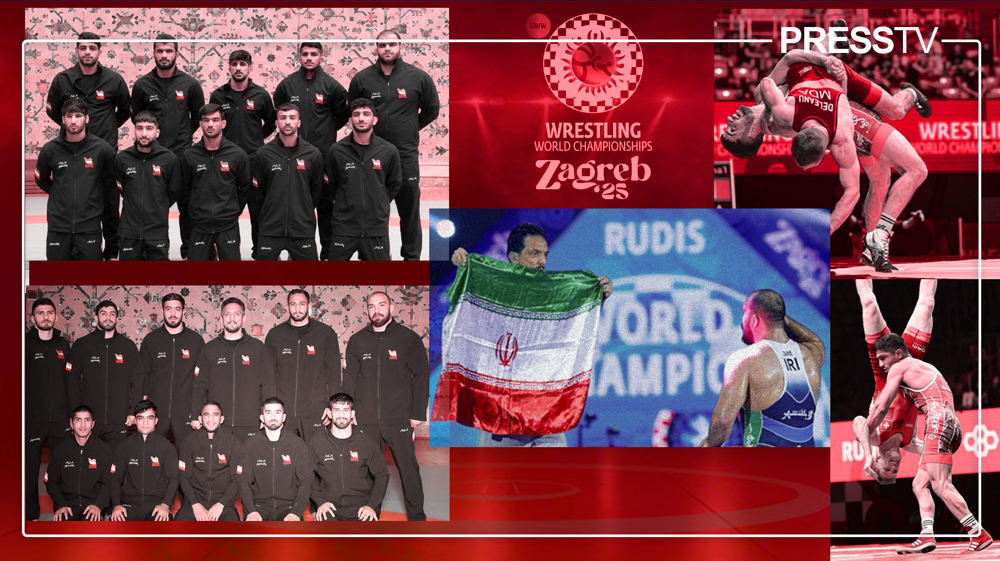
A fascinating week of high-quality wrestling just came to an end in Zagreb. Iranian wrestling teams stormed back onto the global stage, reclaiming both Greco-Roman and freestyle world titles in a historic double triumph, the first time in the country’s history.
For a country where wrestling is more than a competitive sport — where it is synonymous with identity, pride, patriotism and tradition — this was a long-awaited roar of resurgence.
The 2025 World Championships became a defining milestone for Iran’s most celebrated national sport, followed with unmatched passion from packed zoorkhanehs to living rooms across the country. It was long overdue, but sometimes the wait itself makes it all the more worthy.
Iran’s Greco-Roman team ended their 11-year drought in emphatic style on Sunday, dominating across ten weight categories to secure four gold, two silver, and two bronze medals, amassing 180 team points, an astonishing 91 ahead of second-place Azerbaijan. It is a testament to the hard work and dedication shown by both players and coaches throughout the past year.
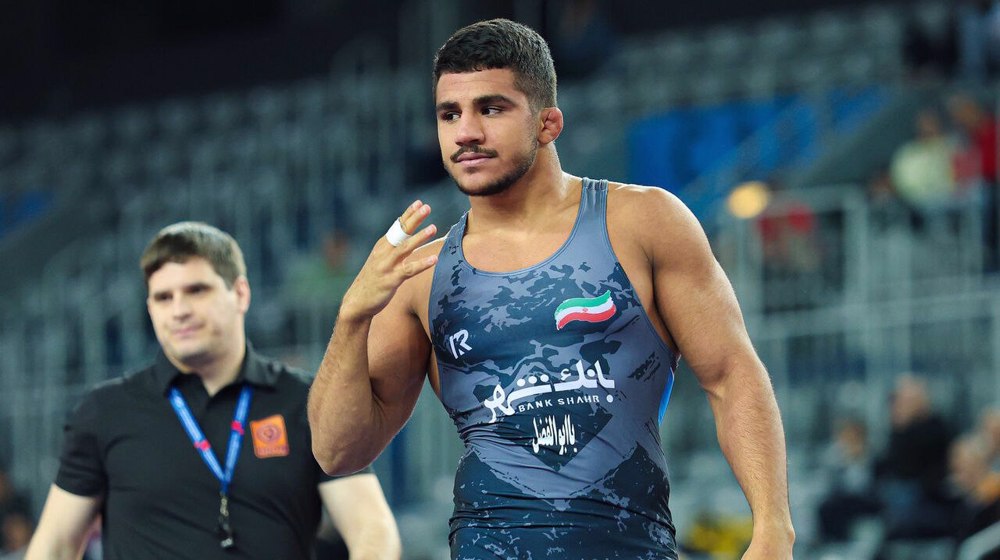
The gold rush began with a young wrestler from Shiraz, Gholamreza Farrokh, at 82kg, who tore through the draw with technical superiority, dismantling seasoned opponents from China, Hungary, Switzerland, and Croatia before overpowering a Georgian rival in the final to clinch Iran’s first gold.
It was Farrokhi’s debut world championship and he didn’t just arrive – he announced his arrival on the big stage with a proverbial bang, setting eyes on the Olympic gold now.
Heavyweight powerhouse Amin Mirzazadeh, who has been a Greco-Roman mainstay in recent years, followed at 130kg, crushing every rival with suffocating par terre defense and upper-body control before defeating Hungary’s Vitek in the final.
From a bronze at the 2024 Summer Olympics in Paris, Mirzazadeh ascended to new heights in Zagreb, but the quest for Olympic gold medal continues.
Paris Olympic champion and Greco-Roman team captain Mohammad Hadi Saravi reaffirmed his dominance at 97kg, sweeping aside formidable challengers from India, Georgia, and Belarus before outmuscling Russia’s Artur Sargsyan 3-1 in a thrilling final
🇮🇷🤼♂️🏆 After 11 years, Iran’s Greco-Roman wrestling team roars back to claim the world title—winning 8 medals and becoming world champions for the second time.
— Press TV Sports (@presstvsports) September 21, 2025
With an average age of just 22.4, it was the youngest squad that sealed the world title by day two.@presstvsports pic.twitter.com/f6gDgWj3Pa
Saravi is a textbook example of how an athlete stays at the top of his game through sheer hard work and unwavering passion for the game. The moment that passion begins to fade, the trajectory also inevitably shifts, as has been the case with some other wrestlers over the years.
Rising star and fellow Paris gold medalist Saeid Esmaeili capped the campaign at 67kg with a flawless run, executing precise throws and airtight defense against opponents from Serbia, Uzbekistan, Norway, and Russia before downing Azerbaijani rival and European champion Hasrat Jafarov in a fiery final to secure Iran’s fourth gold.
At just 22, Esmaeili has already drawn comparisons to Iran’s legendary Greco-Roman wrestler Hamid Sourian, particularly after the Paris Olympics, with his rise nothing short of meteoric. Many describe him as the most technically gifted young wrestler in Iran today.
There was grit beyond the gold as well. At 72kg, Danial Sohrabi fought through injury and adversity, battling back from a controversial quarterfinal loss, marked by questionable officiating and his French rival's vicious blows that left his face bloodied and bandaged, to claim bronze. He had promised his family not to return from Zagreb empty-handed.
At 55kg, the youngest squad member, Payam Ahmadi, just 18 years old, blazed his way to the final with emphatic wins, showcasing outstanding tactical flair and technical prowess.
Though narrowly missing out on gold against a more experienced rival, his silver medal points to a bright future and marks him as one of the breakout talents of the Zagreb championships.
Alireza Mohammadi also settled for silver after narrowly losing 4-3 to Serbia’s Aleksandr Komarov in the final, which again had more to do with poor officiating.
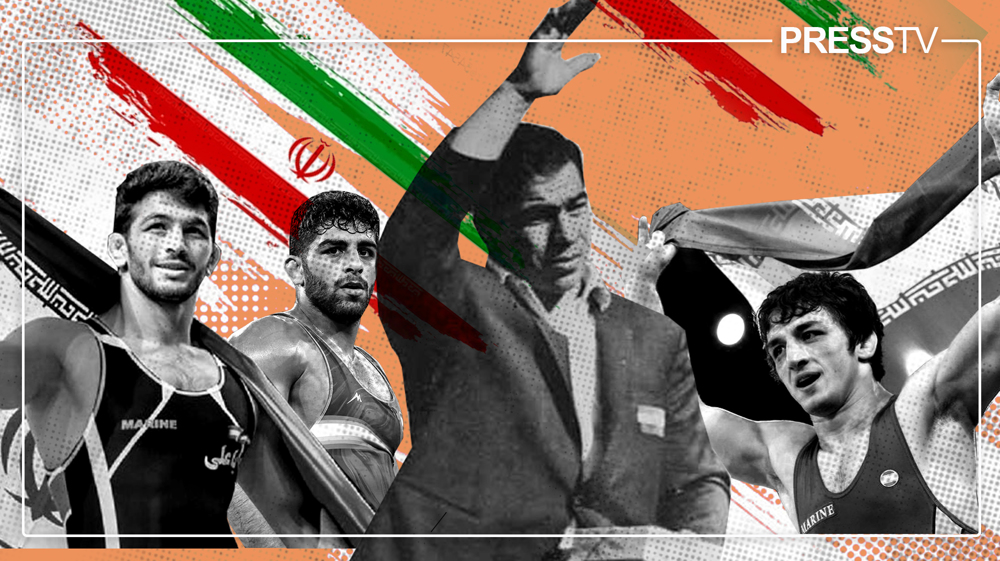
‼️INFOGRAPHIC - Iran's wrestling titans roar back in Zagreb, seizing world title after 12 years, 6th since 1961.@presstvsports pic.twitter.com/6hSsG7HzL5
— Press TV Sports (@presstvsports) September 18, 2025

With an average age of players at just 22.4, Iran’s Greco-Roman squad not only conquered the world but also signaled a golden era to come for Iranian Greco-Roman wrestling.
If Greco-Roman was redemption, freestyle was pure resurrection. After 12 long years, Iran also reclaimed the freestyle world crown, scoring 145 points, well above the United States (134) and Japan (111), and ending more than a decade of American dominance in freestyle wrestling.
The charge was ably led by Amirhossein Zare, the heavyweight superstar and team captain, who stormed to his third world title at 125kg. In the title clash, Zare shut out Georgia’s Giorgi Meshvildishvili 5-0, displaying perfect mat control and unshakable composure.
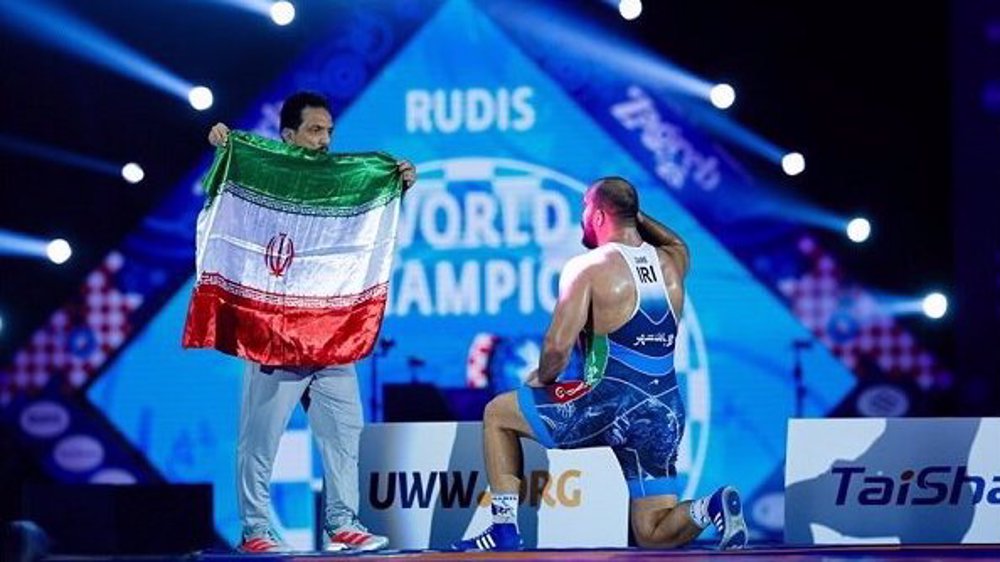
Afterward, he dedicated his sixth world medal to the martyrs of the recent 12-day Israeli-American war against the Islamic Republic, and offered a military salute to the national flag, which made it to newspaper headlines back in Iran.
At 65kg, Rahman Amouzad delivered perhaps the most thunderous performance of the tournament. Facing Olympic champion Kotaro Kyoko of Japan, the same man who denied him Olympic gold in Paris, Amouzad avenged that heartbreak with a nail-biting final, countering Kyoko’s signature attacks effectively to secure his long-awaited world title.
Zare and Amouzad were the two freestyle gold medalists for Iran. Both made it look effortless in the end, not because their rivals were submissive, but because they were at the peak of their powers. For Amouzad, who became a father just two weeks earlier, it carried an emotional value too.
The championship in Zagreb also presented a giant slayer in the form of Amirali Azarpira, a wrestler from Tehran who stunned the wrestling world with a 5-2 semifinal win over Olympic and world champion Ahmed Tazhudinov of Bahrain.
Though Azarpira had to eventually settle for silver at 97kg, going down very narrowly to Kyle Snyder of the US in the finals, his fearless style and upset win enamored fans worldwide.
🇮🇷🤼♂️🏆 Iran’s freestyle wrestling head coach, Pejman Dorostkar, gave a military salute after his team’s world championship victory in Zagreb.
— Press TV Sports (@presstvsports) September 17, 2025
A gesture of pride and patriotism following the historic title win after 12 years@presstvsports pic.twitter.com/tcSckeQg1c
Ahmad Javan, the youngest member of the team, bagged silver in his debut world championship after defeating rivals from Ecuador, Azerbaijan, Ukraine, and North Korea before going down to Olympic champion from Russia Zaur Uguev in the gold medal match.
Mohammad Nokhodi (79kg), Amirhossein Firoozpour (92kg), and Kamran Ghasempour all fought through loaded brackets to claim bronze, contributing to the team’s victory.
Nokhodi made his return to the mat after knee surgery, while Firoozpour, who has impressed all and sundry in recent years, narrowly missed out on a better-colored medal.
As the curtain fell in Zagreb, Iran stood tall and mighty with both Greco-Roman and freestyle crowns, a rare and defining feat in the sport’s history, which brought much-needed cheer to people across the country, especially after the recent events.
Freestyle head coach Pejman Dorostkar’s military salute after lifting the championship trophy captured the pride of a nation whose sporting soul beats to the rhythm of wrestling.
That soul, however, was not forged in Zagreb alone. In Iran, wrestling, known locally as koshti, is not merely a competitive sport but a sacred tradition, rooted in varzesh-e bastani, the centuries-old discipline practiced in zoorkhaneh or “houses of strength.”
Here, athleticism fuses with spirituality, and wrestlers, or pahlavans, are expected to embody humility, generosity, and courage. The very word pahlavan means both “champion” and “hero,” a philosophy that still defines Iran’s greatest wrestlers on and off the mat.
That same spirit, strength and humility – the hallmarks of true Iranian wrestling tradition – were on full display in Zagreb. And the beautiful congratulatory messages from Leader of the Islamic Revolution Ayatollah Seyyed Ali Khamenei to both the winning teams aptly reflected that.
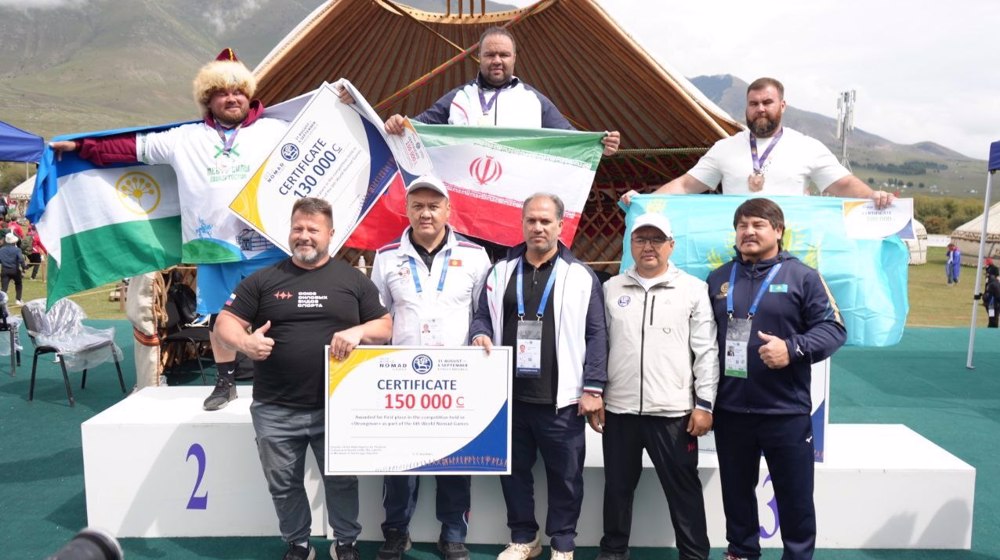
Iran adds two more gold medals at 2026 World Nomad Games
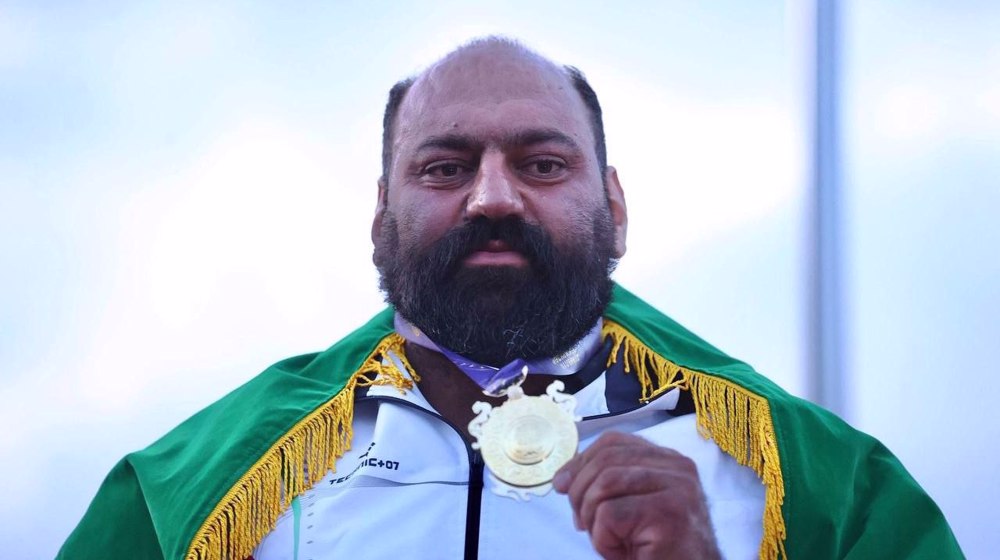
Iran's Gheitasi wins gold in mas-wrestling at 2026 World Nomad Games
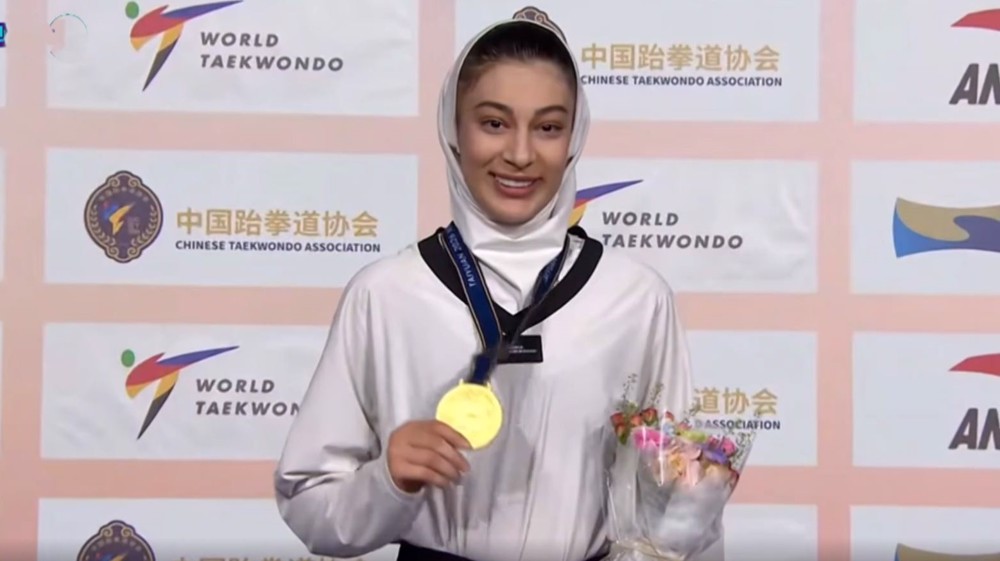
Iran’s Moradi strikes gold at Taiyuan 2026 World Taekwondo Women’s Open Championship



VIDEO | Yemen’s roads, bridges devastated by years of war, blockade
VIDEO | Analyst: Failed cycle of US Iran policy serves corporate interests
IRGC ballistic missile retaliation forces US aircraft carrier, destroyer to flee
VIDEO | ‘US escort a big lie’: IRGC unveils decisive targeting of non-compliant vessels in Strait of Hormuz
IRGC strikes 3 US-linked vessels, 3 trespassing oil tankers in retaliation for American attacks
VIDEO | Trump downplays costs, consequences of war on Iran
VIDEO | News Review: Trump downplays war on Iran, calling it 'small potatoes'
Iran condemns US attacks on oil tankers as violation of international law




 PressTV NEWSLETTER
now
PressTV NEWSLETTER
now
 This makes it easy to access the Press TV website
